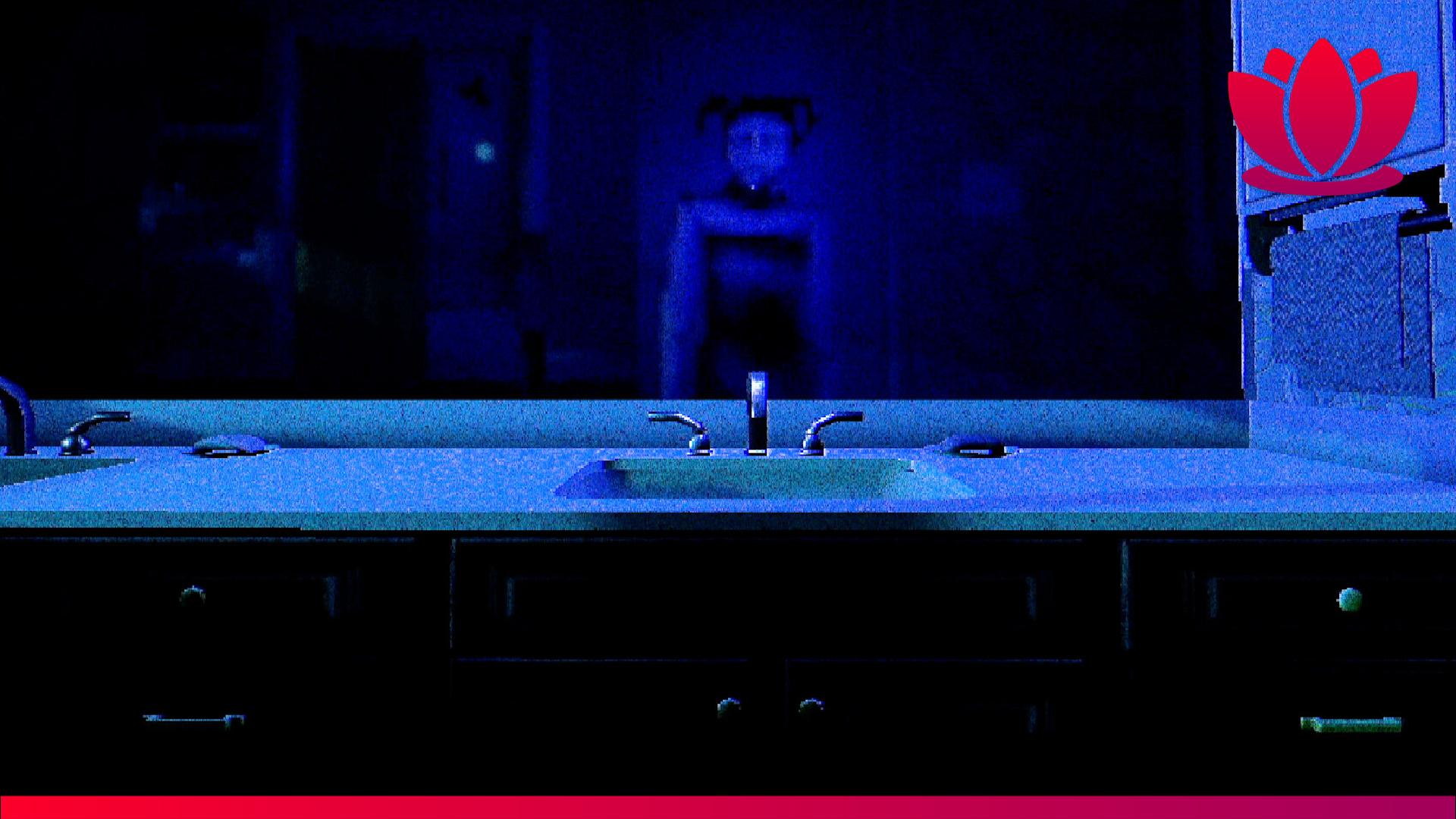
Image credit: Genie Boy Games/Haunted Publishing Syndicate
Horror is a genre that I generally see beauty in. Films like Suspiria and Mother! are gorgeous despite their intensity, games like Silent Hill 2 and ROUTINE are visually stunning despite how terrifying they are – but one genre that I’d never think of as being typically beautiful is hallscapes, or P.T.likes.
Generally, hallscapes are more focused on building dread and looping tension over impactful stories or poignancy, but the demo for T.W.I.R.L. had me reconsidering this. Here’s my first impressions of the T.W.I.R.L. demo.
No, I don’t want to walk down that hallway, thanks

Developed by Genie Boy Games and published by both Genie Boy Games and Haunted Publishing Syndicate, T.W.I.R.L. is an upcoming title that I can see psychological horror fans falling in love with.
At first glance, I admittedly thought that this game would just be a case of walking through scary hallways and being chased by a few ghosts and ghouls. While those sorts of hallscapes can still be fun, I was pleased to find that the T.W.I.R.L. demo has a lot more bite and depth to it.
You play as a kid in 2006, sneaking out of your bedroom at 3 AM and wandering the dark halls of a crucifix-scattered house. The darkness is oppressive, and the house feels much larger than the protagonist, with looming doors and shadows.
The demo is made up of six loops or nights, where you’ll begin in your bed, then have to walk down the hall into various rooms, interacting with objects and zooming in on them to focus on the important details. A simple gameplay loop, but an effective one. It acts as a good foundation for the story.
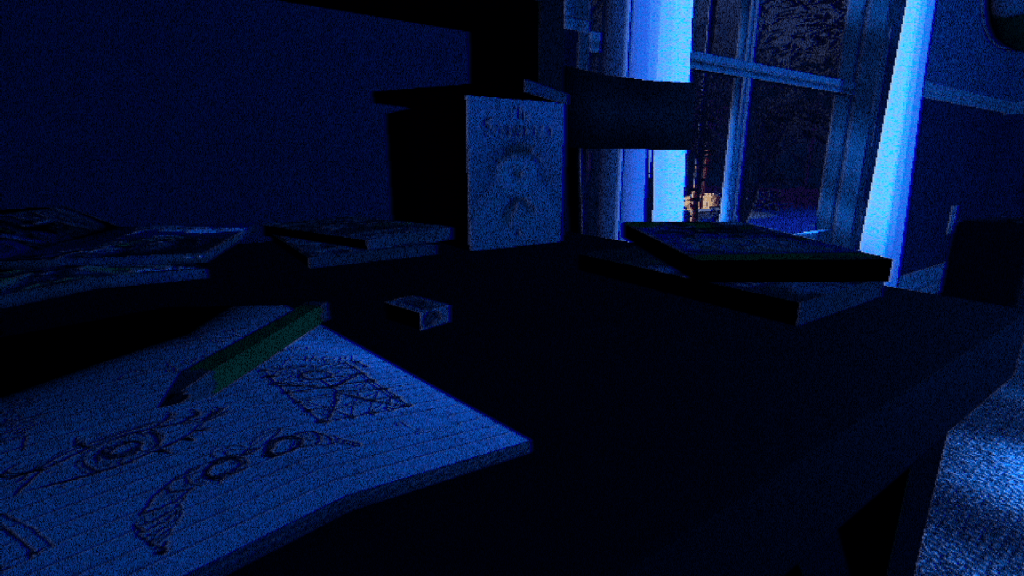
In between nights, there’ll be a small sequence of button mashes or prompts to follow while you’re in darkness to take you through to the next day.
As you might expect from T.W.I.R.L. being a hallscape game, the halls and rooms of the home do not stay the same, and you’re far from alone. Amidst some unfriendly beings – I won’t spoil where the scares happen, as they’re quite fun – you can pet the cat, which is a small detail that I loved.
The home itself is beautiful and ominous, with gigantic religious paintings and statues, an ornate chessboard, and a large, open room visible from the balcony hallway. Despite the constant sense of being observed, exploration feels rewarding and exciting.
An examination of self and identity

Games that are mechanically pared back should have a strong story or narrative themes to carry them, arguably, and I felt T.W.I.R.L. shone here. While it was plenty eerie and atmospheric, there was also a bittersweet, personal melancholy under the surface.
The acronym T.W.I.R.L. stands for Tiptoe, Wander, Ignore, Return, and Look, with Look being the most important out of the quintet.
This is a game that examines identity, the concept of self, and gender. I checked out the game’s trigger warnings before playing the demo out of curiosity – and to see if there were sections that might be rough for claustraphobics; you never know – and was surprised to see gender dysphoria listed there.
I’m nonbinary, and gender dysphoria is something that’s rotted its way through my bones for as long as I can remember, so I was intrigued to see how this would play out with T.W.I.R.L. and what bearing it’d have on the protagonist.
It’s not an easy experience to articulate; everyone experiences it in such different ways, and some portrayals of it in media can feel impersonal or slightly disjointed. Some people might feel it as a constant, nagging pain that floats around them, while others might experience it in waves and have some days where it feels unbearable.
There are slices of T.W.I.R.L. that feel like incredibly personal examinations of gender dysphoria – an unnerving and sad mirror sequence, a dress that feels incorrect and otherworldly, the contrast between characters seen in the demo, and a few poignant dialogue snippets.
I resonated with the portrayal, thinking back on the younger version of myself who couldn’t find the words for it yet.
It felt as if the protagonist was trying to unpick something about themselves and simultaneously bury it while making peace with it. If you’re someone who’s also experienced gender dysphoria, you may find it equally impactful.
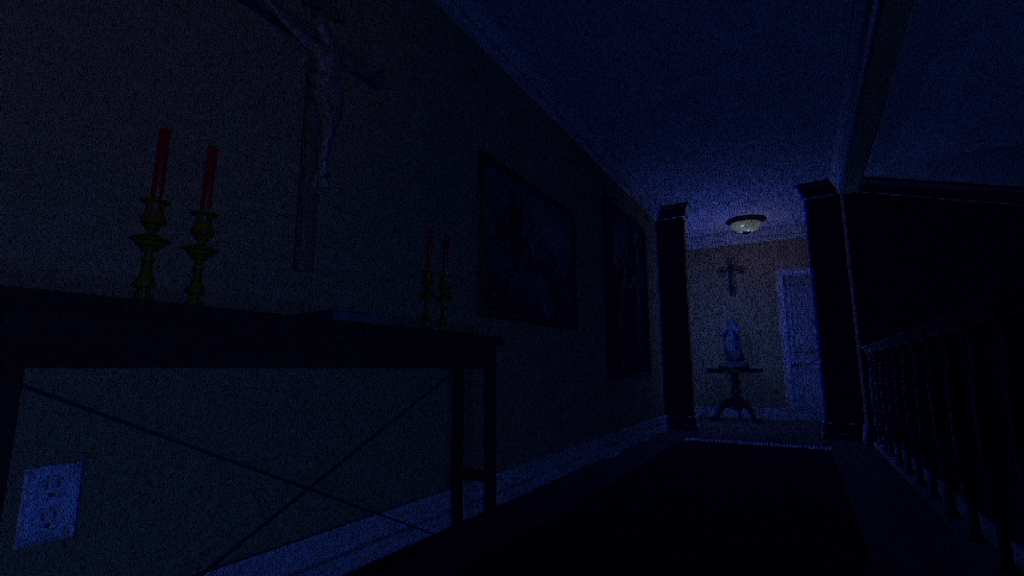
Outside of the narrative being intriguing and emotional, the visuals of T.W.I.R.L. were equally engaging. The game is continuously dark, in tone and in aesthetics, aside from a few bright splashes of neon. I’m a sucker for religious iconography in horror, and I loved the impact that the paintings and statues had on the atmosphere.
Performance-wise, T.W.I.R.L. ran fine during my time with the demo. My PC struggled with it a little more than I expected, but I do have a fairly low-range PC, so this wasn’t too much of a shock. There were no major frame drops, quirks, or bugs to note.
One thing I will note is that I didn’t find the door opening controls to be super intuitive. It wasn’t overly clear when I could open a door or where exactly I should be targeting to interact with the door, which made it feel a little fiddly on a controller.
Other than this, there are no major flaws to note with T.W.I.R.L., with the demo being impressive and emotional.
It tapped into a much more personal side of the psychological horror niche than I’d expected, but it still had plenty of tense moments and fun frights woven in as well. Fans of hallscapes and games like P.T. or Visage should keep an eye on this game; it’s an odd one, and I’m excited to see where it goes with its full release.
FAQs
T.W.I.R.L. was developed by Genie Boy Games and Haunted Publishing Syndicate.
T.W.I.R.L. is a psychological horror hallscape with largely exploration-based gameplay.
T.W.I.R.L. is dark and atmospheric, with a few intense and startling moments.
The scariest video games include ROUTINE, Alien: Isolation, Visage, Silent Hill 2, Dead Space, and MADiSON.

About The Author