Image credit: Saber Interactive
In one of the more surprising reveals from Sony’s State of Play June 2026 show, Stuntman: Hollywood was unveiled to the world, a revival of the tough-as-nails series of driving games from the 2000s. In an event that also saw an extended look at Insomniac Games’ Wolverine, confirmed a Control: Resonant release date, and announced a brand new God of War game, here’s why Saber Interactive’s stab at Reflections Interactive’s IP attracted my attention, and why I’m concerned.
What is Stuntman: Hollywood?
It’s the third game in the storied arcade-style driving titles. While there’s no confirmed Stuntman: Hollywood release date yet, it’s likely to come out no earlier than 2027, meaning it could debut a full two decades after Stuntman: Ignition and 25 years after the original Stuntman from 2002. True to its namesake, this new game lifts iconic scenes from some of Tinseltown’s favorite automotive moments, most prominently recreating shots and stunts from Back to the Future, Fast & Furious, Knight Rider, Miami Vice, Death Race, and (likely) others that are yet to be announced.
If the near-two-minute Stuntman: Hollywood trailer is anything to go by, then it certainly nails the look and feel of those two older games; you are indeed a stunt performer tasked with making death-defying jumps and crashes for the sake of the silver screen. However, as the original developers of both Stuntman and Stuntman: Ignition, Ubisoft Reflections (formerly Reflections Interactive), and the now-defunct Paradigm Entertainment are out of the picture, it casts the authenticity of this third title into question.
The original Stuntman was incredibly difficult

The original Stuntman game from 2002 was developed by the same studio that brought us Driver, and its influence is immediately apparent. If you’ve played Driver for the PS1, then you’ll no doubt be aware of the infamous Interview level, the tutorial, which demanded perfection out of you in an empty parking lot before you had any chance of commencing in any of the actual missions.
You’re given a laundry list of nine total maneuvers to pull off under a strict time limit to pass the test, including (but not limited to) a full lap, a slalom, a brake test, a burnout, a 180-degree turn, a 360-degree turn, and a handbrake test. It sounds easy, sure, but you’re given just 60 seconds to execute this perfectly. This was the primordial DNA that would later spawn Stuntman three years later, this time running on the far more powerful PS2 console.
Stuntman takes this concept and dials it up to 11, being deliberately brutal, challenging, and (often) unfair in its execution. Throughout its 29 levels (called Scenes) in the game. You play through a total of six fictional movies, themselves modelled on the likes of Indiana Jones and James Bond, to thrillers and gangster flicks. The difficulty comes from the need for perfection: a director yells out the moves that you must pull off with immaculate timing and precision, such as a sharp turn, a near-miss, crashing through obstacles, or making a leap exactly as instructed.
It becomes a game of pattern recognition and patience, where trial-and-error gameplay compounds with raw technical ability in tandem. Couple this with the handling of the 36 in-game vehicles (which are often different between scenes), such as a London police car, a monster truck, a military supply truck, dozens of race cars, and even a double-decker bus. Because of how often things change, you need to adjust to the unique weight and handling of each vehicle, then immaculately memorize the route, and then be pitch-perfect on the controls to pass a level properly.
In other words, Stuntman is a brutally challenging release, and it lives in infamy because of what it demands from you as a player, and I should know, I wrote the book on The Hardest Video Games Ever Made.
Stuntman: Hollywood needs to learn from Ignition’s mistakes
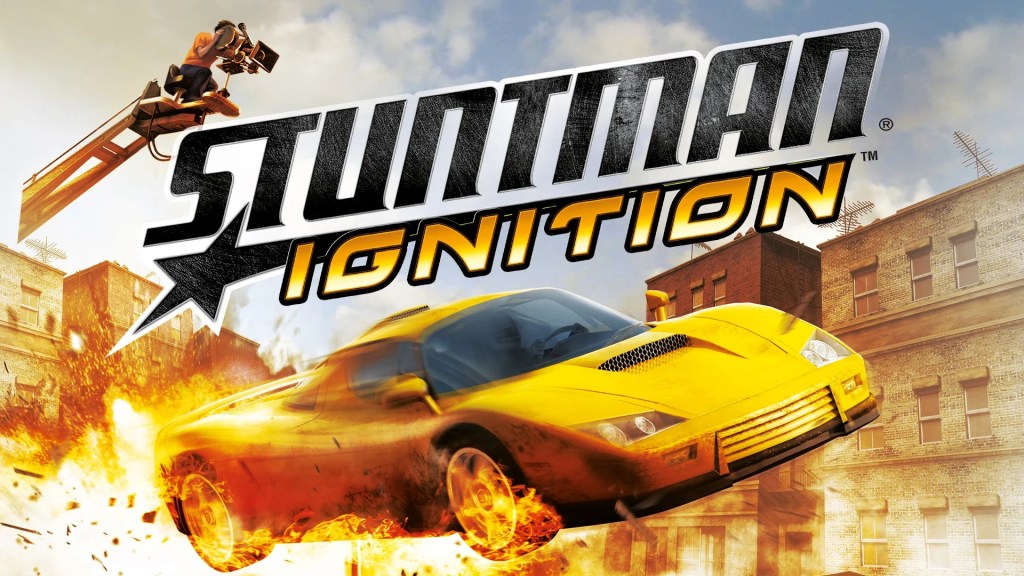
Arriving five years later for the then-new Xbox 360 and PS3 generation, Stuntman: Ignition saw Paradigm Entertainment in the driver’s seat instead of Reflections, and the difference in quality (and difficulty) was immediately noticeable. It’s a solid driving game, and it looks incredible even by today’s standards; however, it diluted the core of the experience in the vain hope of attracting a wider audience and ultimately paid the price for it.
Stuntman: Ignition is considerably easier than the original game for numerous reasons. Chief among them is the fact that the 2007 sequel introduced a five-strike rule rather than the instant failure state of the 2002 game. The only way that a director will yell “cut!” and force a reset is if you make five mistakes or destroy your vehicle, effectively eliminating the need to master what you’re driving, memorize the route, or take things with any degree of seriousness. The game also featured instant restarts instead of the longer loading times of the first title, too, owing to the far more powerful hardware of the time.
The cues from the director were also reworked and made easier to follow as well. In the PS2 game, the commands would come with little warning, so it was a case of do-or-die. In Stuntman: Ignition, an entirely new UI was developed and presented on-screen, with clear yellow markers indicating what you needed to do and when to be able to pass properly. You could (effectively) ignore the director’s audio cues and blindly follow the yellow paint instead, which is a design trend that’s (sadly) only become more prevalent in modern games over the last two decades.
That isn’t to say that Stuntman: Ignition was an easy game, per se. The true difficulty curve could be found in its mastery system, as you were scored out of five stars for your in-game performance. Achieving a perfect score requires mastery of the mechanics (and a ton of practice), where you need to string together sequences as fluidly as humanly possible; a replay at the end shows how exceptional you can look when it all comes together, too. It’s worth reiterating, though, that this is very much optional and, therefore, not required to finish the game.
Can Stuntman: Hollywood live up to the original game’s challenge?

For as excited as I am about Stuntman: Hollywood, I remain unconvinced that the upcoming driving game will push players in the same way that the 2002 PS2 original had the guts to do. I hope I’m proven wrong when the release date rolls around, but everything I can ascertain from the reveal trailer is pointing towards the opposite. It’s no secret that gaming is bigger now than it’s ever been, and that Saber Interactive is (no doubt) wanting this game to appeal to as many people as possible. With this mantra in mind, it remains unlikely (but not impossible) that the game will be as difficult as old-school fans are hoping for.
Many modern racing/driving games feature assisting features that dilute the gameplay experience in the name of accessibility; it isn’t uncommon for the likes of a rewind feature (a do-over button) to be present in the likes of Forza Horizon 6, or driving aids in Screamer. While it’s a possibility that these could be toggled off in a settings menu (if even used in the first place), the game’s design will factor in help as standard; you simply cannot design a challenge in a video game around a crutch, it betrays its purpose wholesale.
At the bare minimum, I am confident that Stuntman: Hollywood will be a fun time and a good return to form for one of my favorite gaming franchises. Let’s face it, it’s been 20 years since the last entry in the franchise; things change, as nothing stays the same. I’m just glad it’s back at all, even if I’m hopeful for a return to those glory days of old. I can’t wait to have the director yell in my ear a thousand times.
FAQs
Stuntman: Hollywood was announced during Sony’s State of Play for June 2026.
The Stuntman: Hollywood platforms include Xbox Series X/S, PS5, and PC.
No official Stuntman: Hollywood price has been announced yet; however, it is expected to retail for the industry-standard $60-70 / £60-70 that many AAA games do in 2026.
The Stuntman: Hollywood release date is currently unknown; however, current marketing material suggests the game is “coming soon”. Considering we’re halfway through 2026, it could be released before the end of the year or early in 2027.

About The Author