Image credit: Riot Games, Netflix
The connection between film and video games has always been a hot topic, and it’s the centre of the Screen Play event at the London Games Festival. This year, the discussion focused on the idea of transmedia narratives and the potential for worldbuilding across media.
It used to be that films and TV could occasionally have a video game adaptation, but it wouldn’t be there to grow the world, rather to just support the sales of the original IP. Now, video games are the hot commodity of the money, and they’re using other media types to tell whole new stories for their audience.
Welcome to the new world
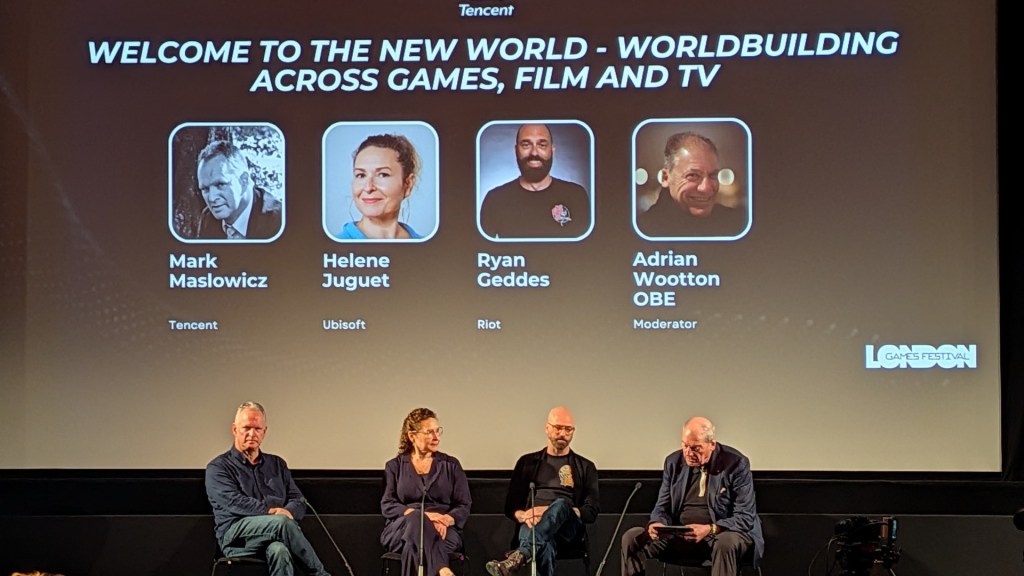
The main panel on worldbuilding focused on three main speakers: Ryan Geddes, the Director of Publishing Product Management at Riot Games; Helen Juguet, Head of Film and TV at Ubisoft; and Mark Maslowicz, Vice President of Partnerships and Investments at Tencent.
These speakers all came from different places on the topic of transmedia narratives. Riot Games’ success with Arcane pushed Geddes into a very different perspective than Juguet, as Ubisoft has had a significantly less successful run pushing into other media.
The Assassin’s Creed film flopped back in 2016, and while Werewolves Within had critical success, it was a financial failure. Ubisoft Film and Television’s greatest success was probably with the Apple TV+ series, Mythic Quest, which wasn’t actually based on any Ubisoft IP.
Maslowicz had a very different set of perspectives still, as while Tencent has a film division, called Tencent Pictures, it doesn’t produce anything from Tencent’s own IP. Rather, Tencent Pictures has had a hand in co-producing films as disparate as Warcraft, Terminator: Dark Fate, and Men in Black: International.
Rather, Maslowicz’s main offering here was business strategy. After all, Tencent owns Riot Games and has a significant investment in Ubisoft, so it has a vested interest in the broader success of the whole panel’s IP. The whole discussion actually started with Maslowicz saying that transmedia strategy just isn’t one of the biggest concerns when it comes to worldbuilding.
Maslowicz said the wider scope of storytelling isn’t as important for reaching audiences as actually making a hit game, which is a sobering starting point, but remains an important one.
Juguet, on the other hand, has a wider scope in her opinion, claiming that fans and gamers are no longer interested in just a singular story. The world has to be the starting point, and it needs to be in a position where it can be reinterpreted by the audience, allowing them to feel like they can expand their own stories.
Geddes sees worldbuilding more like a conversation between the developer and the audience, throwing things out to see what players connect to and then expanding on that.
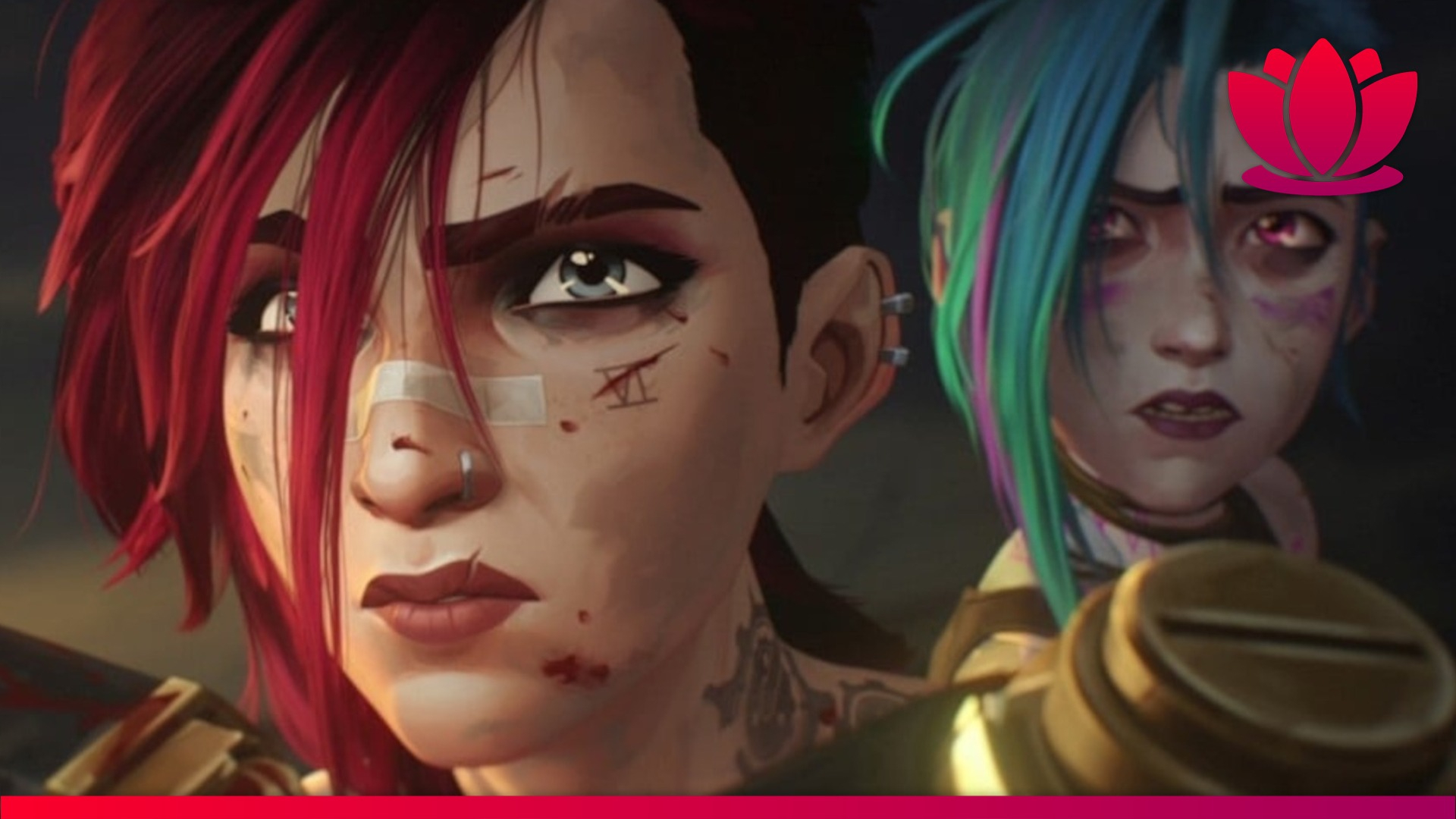
He spoke with the most successful experience on Arcane, a game with a solid foundation of lore that was able to work in tandem with League of Legends, and where fans were able to appreciate the solidifying of the world and lore.
The power of intellectual property
The relative power of the video games and film industry has really shifted over the last few years, especially as audiences’ interest in superhero films has started to wane. Even though video game movies and shows have a poor reputation in quality, they’re still some of the most bankable IPs out there in terms of returns.
According to Juguet, 25% of the big Hollywood movies coming out in the next few years are based upon video games, and it’s not just the old guard IPs like Mario that are finding success.
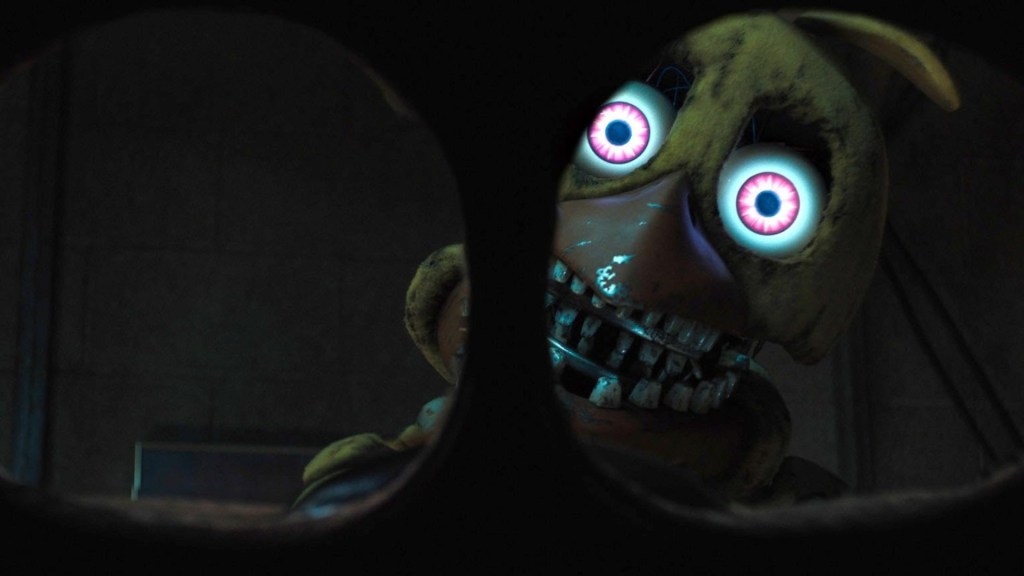
The Five Nights at Freddy’s films might not have found great critical reception, but they punched above their niche genre when it came to performance.
Maslowicz pointed out that the key feature here could be the relative budgets. It used to be that games were able to be churned out cheaply and quickly, but now development times are much longer, and often game budgets are bigger than movie budgets.
As gaming becomes more accepted in the wider culture, it makes sense that transmedia narratives would fill the gaps where more frequent game releases used to reside. Geddes spoke about how Arcane was built to be an outlet for League of Legends lore, as a chance to give passionate fans the chance to experience the story in a new way.
Fans are the key point for Geddes at every turn. Arcane was able to bring fans in, as well as lean on the creator ecosystem to drive engagement and discussions. However, he acknowledges that different companies have different strategies for their stories, and the creative journey doesn’t always pan out that way.
Future opportunities

Now is a time for experimentation for companies when it comes to playing around with their intellectual property. Audiences are responding more and more to the different kinds of media based upon subjects they already love, which can encourage playing around with different formats and styles of storytelling.
Maslowicz focused on the success of Fallout and The Last of Us, where the series was able to keep the link to their main gaming audience through references and keeping as faithful as possible. This was done while also managing to find an audience with the usual television-watching audience.
There’s an ongoing push and pull over creative control behind the scenes, especially as film has to accept that it is no longer considered a more ‘legitimate’ form of content.
Juguet spoke of the opportunities outside of the usual storytelling of any of the forms of media, where the ‘creator economy’ allows for completely different kinds of opportunities in format and execution.
Different storytelling mediums are being tried out across the board, despite the inherent risks of the scattershot approach, because it’s all about keeping the IP fresh and seeing what audiences latch onto.
The panel at Screen Play had three very different perspectives on the topic. It had both ends in terms of an almost clinical business focus from Tencent to the passion-driven fans-first thoughts from Riot Games, while Ubisoft commented on the rising tides that would hopefully benefit their huge stack of recognisable IP.
Whether the focus is on telling the best story or making the most money, video game stories are going to be hitting even more screens with force.
FAQs
The Watch Dogs live-action adaptation has been in production since 2013, and is being produced by Regency Enterprises, which also worked on the 2016 Assassin’s Creed film. It will be directed by Mathieu Turi, who has a record of making different horror movies.
Mortal Kombat 2, Resident Evil, and Street Fighter will all be released in 2026.
As well as owning mobile game developers like Supercell, Tencent also owns Riot Games, and has a 26.32% stake in Ubisoft’s Vantage Studios subsidiary, which manages franchises like Assassin’s Creed.