Image credit: Asobo Studio
Resonance: A Plague Tale Legacy is the first step into a larger world for Asobo Studio and the Plague Tale series. This prequel shifts protagonists, location, and time, taking us far from A Plague Tale: Innocence’s initial setting of a France ravaged by the vermin-tide of the Black Plague.
Rather, when I got the chance to play a preview of Chapters 5 and 6 of Resonance: A Plague Tale Legacy, I found myself in sunny Crete on a light-hearted adventure, far from the dourness and darkness I expected from the series. Except, as you’ll also find when Resonance releases on August 27, 2026, there’s still plenty of unknowable darkness to be uncovered.
On an Odyssey
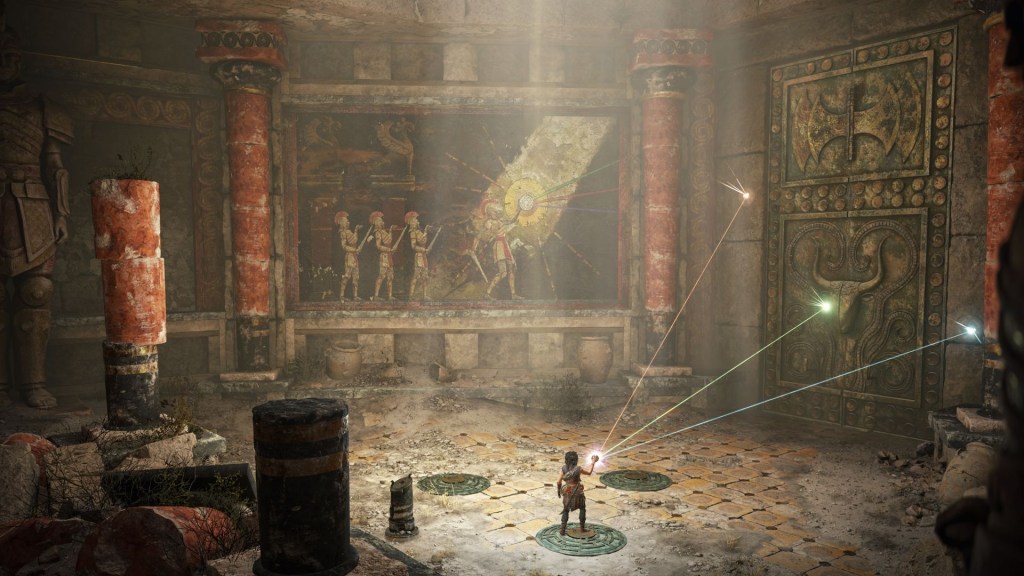
We’re no longer following the exploits of Amicia de Rune, the previous protagonist of both A Plague Tale: Innocence and Requiem. Resonance is trying out a new lead to the story and opening up more opportunities for the franchise going forward.
Our new lead, Sophia, was introduced in Requiem as a pirate smuggler, where she took a position as both ship captain and emotional support adult for Amicia and her younger brother, Hugo. Resonance, however, is set over a decade before the start of A Plague Tale: Innocence.
In Resonance, we follow Sophia as a young woman, finding her own path and exploring her experience with her own strange and mystical connection to the past. Sophia feels more set to lead an Uncharted spin-off than Plague Tale, with a determined and optimistic attitude that contrasts with some of the series more dour moments.
She also introduces a whole new connection to magic and myth to the series. In something that feels like some of the stranger excesses of the Assassin’s Creed series, Sophia isn’t just an ordinary pirate rogue. Instead, she seems to have some kind of intrinsic connection with the classical Greek legend, Theseus.
Theseus, as you might know from his appearance in Hades, was best known for slaying the Minotaur, held in the massive Labyrinth beneath Crete. As you might expect, this comes into play as part of Resonance’s story – though from what I played, you’re not facing something so simple as a beast just half man and half bull.
Monster Hunted
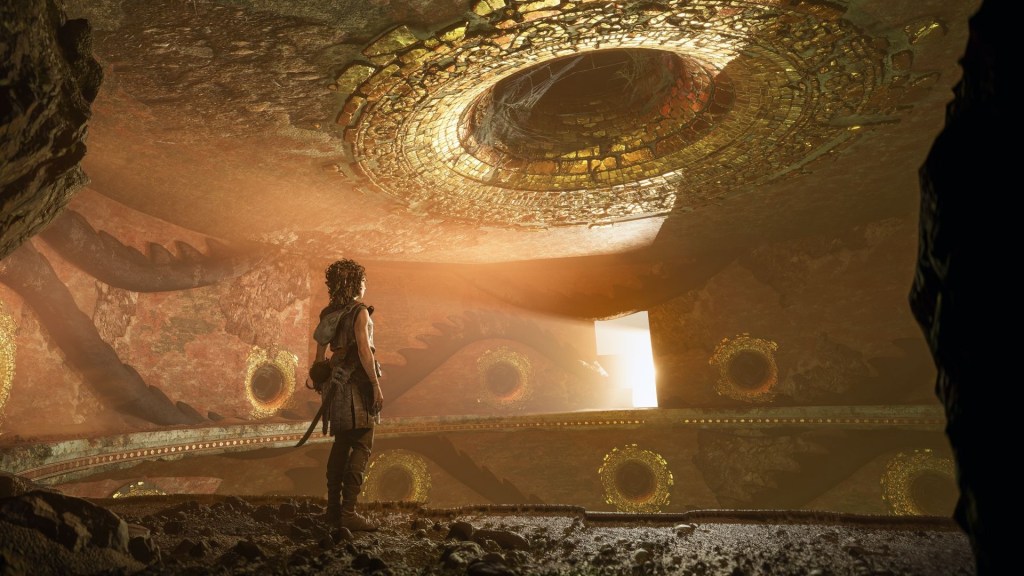
After Chapter 5 eased me in with some good old-fashioned action and adventure, fighting would-be raiders and besting ancient trials, Chapter 6 changed the game entirely. After being cast down to the depths of the island, you’ll find the labyrinth, but also a monster.
It’s hard to describe this monster – and as part of Resonance’s embargo, I can’t show it to you – so for now, imagine an ever-changing plant of rot that turns to dust in sunlight, and can petrify its victims.
It feels more like a play on the classical Gorgon, that snake creature that could turn men to stone, than it does the bullish Minotaur of Crete. It also brings Resonance back closer to the Plague Tale I know.
This creature feels like the reason this is a Plague Tale Legacy, as it could be tied back into the Prima Macula. In A Plague Tale, the Prima Macula is an affliction that allows the bearer to control rats, but also inevitably unleashes devastating plagues around them.
In Requiem, Amicia and Hugo visited a prison of a Prima Macula victim who accidentally caused the Justinian Plague in the 6th century. I think Sophia may be about to experience her own adventure surrounding a much more impressive prison for another devastating plaguebearer. That’s all speculation on my part, though.
It’s All Fun And Games When Someone Gets Hurt
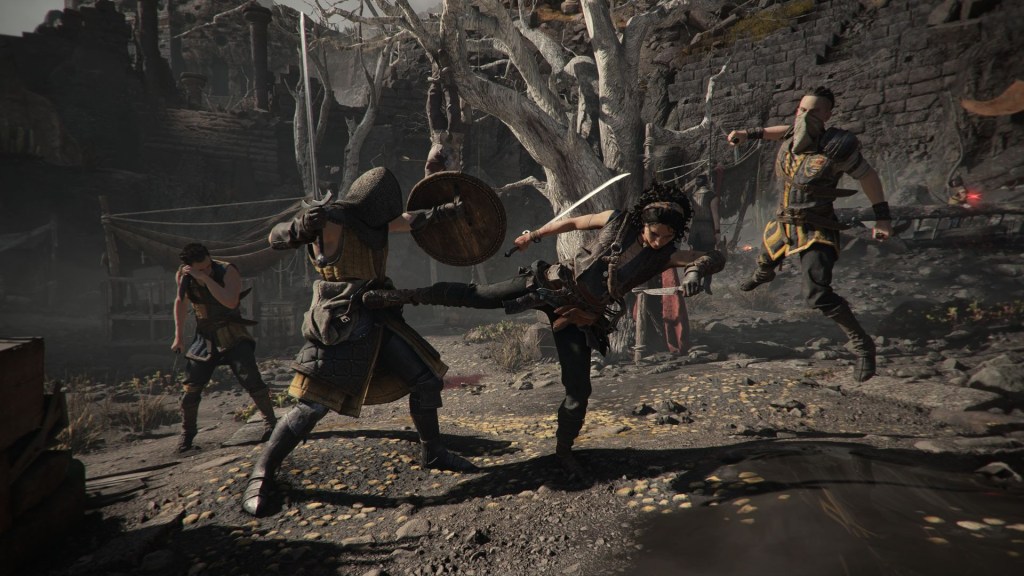
In Resonance: A Plague Tale Legacy, Sophia is a lot more confident in combat than Amicia ever was. Rather than stealth and slings being your best weapons, by the time of the Resonance preview, Sophia is an experienced up-close-and-personal fighter.
She has a pretty limited health pool, so you’ve got to make sure to dodge and parry, but Resonance doesn’t want you to play defensively. Every time you dispatch an enemy, you gain some of your health back, so aggression keeps you alive.
I really enjoyed Resonance’s streamlined combat, and especially the added flair that let you fight dirty. Whether that’s using a grappling hook on far-away foes, kicking enemies off edges, or picking up and throwing bottles with a single button press during combat. It sold Sophia’s skill and speed, but also her ability to not let any advantage go to waste.
When I wasn’t slicing and dicing, I was completing trials in my own 14th-century Tomb Raider. None of the puzzles so far have been particularly complicated – jumping on tiles in the right order, or reflecting light to the right places – but they’re small challenges that feel good to complete, and more than set the tone of the adventure.
They’re short, sweet puzzles to make you think and then keep your momentum, utilising the quick and responsive movement that makes the exploration and traversal easy. Sophia’s already a ready-made athletic action star from her criminal upbringing, perfect for this side of Resonance’s adventure.
In Chapter 6, though, there’s a shift in gameplay. When faced with an enemy you can’t stab, you’re left with running and hiding. In the underground, I had to make my way between whatever pockets of light were available for just a moment of safety.
If I moved too fast, then the monster could start following my trail. Go too slowly, and then I might get caught by the creature anyway as they start to sweep the area. It’s all about moving from cover to cover to light to cover.
The whole sequence feels suitably tense, and it was mostly clear when it was time to slow down or start booking it for the exit. Even when I messed that up, though, the deaths don’t linger, letting me get straight back to the action.
Vibes and Vistas
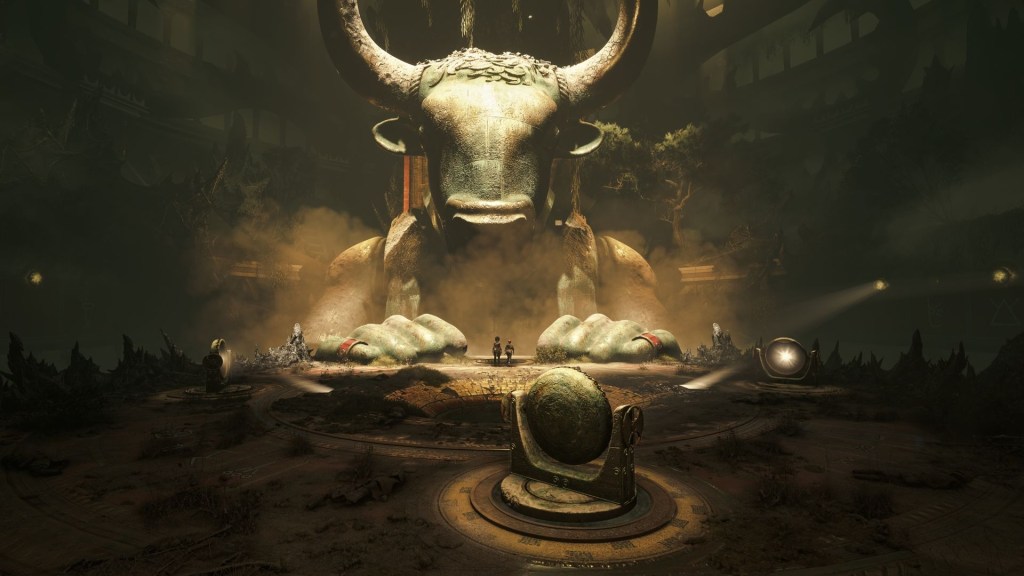
Resonance manages to cram in a lot of incredibly interesting visuals in just a couple of chapters. Topside, Crete has some wonderfully grand sweeping vistas and interesting ruins, while the depths are horrifying and decrepit catacombs, wonderfully showing off the game’s changing mood.
Much like some of the dramatic setpieces of the previous Plague Tale games, Resonance loves playing with scale, presenting backdrops and possibilities much larger than life. By the end of my time with the preview, I was already wondering where things were going next, and just how much stranger they could become.
I was initially quite confused when given control of Sophia in Resonance, because it felt more Assassin’s Creed Black Flag than it actually did Plague Tale. However, Asobo Studio has created an interesting mix of high adventure and the horror that lies beneath that feels in keeping with the series so far.
Even just across this preview, it was sometimes light-hearted, sometimes horrifying, and sometimes heavy in ridiculous lore. I enjoyed this brief insight into Resonance: A Plague Tale Legacy, and I’m looking forward to seeing the full result and whether or not any tides of rats show up when the game comes out on August 27.
FAQs
Resonance: A Plague Tale Legacy is releasing on August 27, 2026.
Resonance: A Plague Tale Legacy will be releasing on PS5, PC, and Xbox Series X/S.
No, Resonance: A Plague Tale Legacy is a prequel to the Plague Tale series. Though it follows Sophia, a character first introduced in Requiem, there’s no prior knowledge needed. Saying that, it wouldn’t hurt to understand how the game will inevitably tie into the series proper.
Resonance: A Plague Tale Legacy is set around 1334, 15 years before A Plague Tale: Requiem.