Image credit: Capcom
In the world of horror games, subgenres like survival horror and sci-horror often conjure up images of matte black pistols, pocket knives, or baseball bats. Horror protagonists usually have a way to defend themselves in a game – but I wish they didn’t.
While combat can make up a fun part of horror games, I’m convinced that it makes the overall experience feel far less scary. Horror games with clunky, slow combat – or even no combat – are much more intense than their action-packed counterparts. Here’s a deep dive into why.
Facing your fears, one footstep at a time
One of the main reasons why horror games are generally considered to be so much scarier than their movie counterparts is the level of control that they give the player.
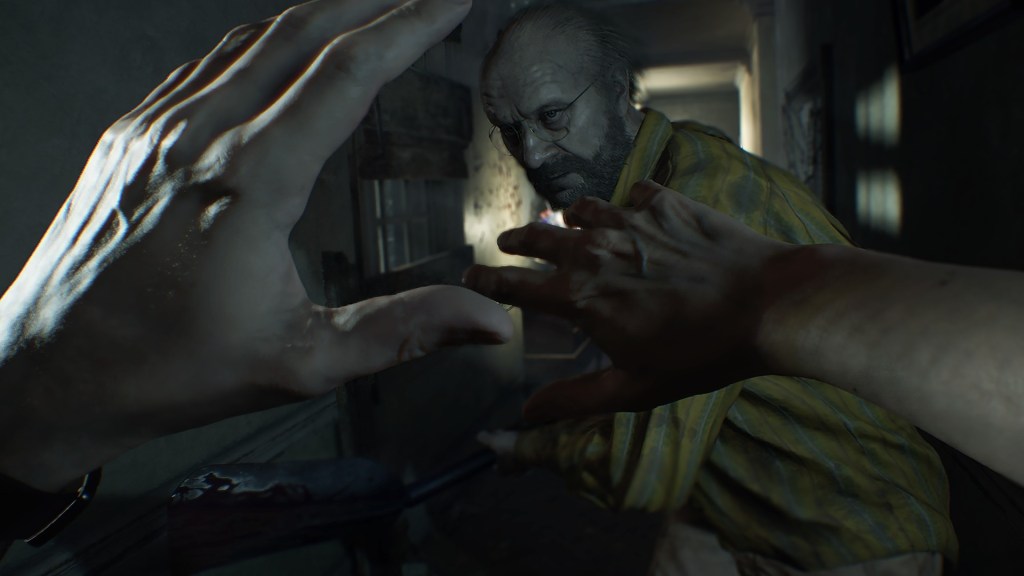
If a character in a horror movie rounds the corner and sees a dark hallway with flickering lights and an ominous figure at the very end, you know that they’re going to walk towards it, no matter what you do. The character may pause or call out, but inevitably, they’re going to walk, and inevitably, there’ll be something scary.
It’s frightening, sure, but it’s out of your control, so you can sit back and enjoy the build-up without being involved at all.
In horror games, however, you’re the one who has to push forward down the hallway, not the main character. You can hide in the pause menu, return to the safe room, or kill time checking your inventory, but whatever you do, you’re going to have to press W or Up and make your character shuffle down the hallway.
This puts the classic horror principle of “tension and release” directly in your hands. Horror as a genre, no matter the medium, follows the structure of building tension, then providing a release, usually in the form of a scare, a chase sequence, or a fake-out.
After some time watching horror films, you can almost always predict the pattern of tension and release, no matter if you’re watching a slasher, an arthouse piece, or a grindhouse flick.
With horror games, the pattern is entirely dependent on how quickly you want to progress, which ties back to how scared you are and how willing you are to move forward. If the game’s done a good job, you’ll linger at the start of the hallway and put off the first footstep, meaning the tension builds further.
One element that throws this pattern off entirely is combat. Giving a character a magnum or a shotgun can, in some cases, entirely kill the building of tension; after all, why should you be fussed about walking down a dark hallway when you can pepper a zombie with bullets?
The tension build-up in this metaphorical dark hallway comes from the unknown threats that lurk in its imaginary shadows. What is the figure at the end of the hall, and could it harm you? Will something chase you or grab at your legs?
There’s a vulnerability and sense of risk here, which I’d argue is nullified if the character can simply shank the zombie or shoot it in the kneecaps.
Clumsy combat is better than chainsaws and backflips
The argument of whether horror games are scarier without combat or not always brings me back to the Silent Hill versus Resident Evil debate. I’m rabidly obsessed with both franchises, but I’m convinced that the former is scarier than the latter, particularly when it comes to Silent Hill 2.
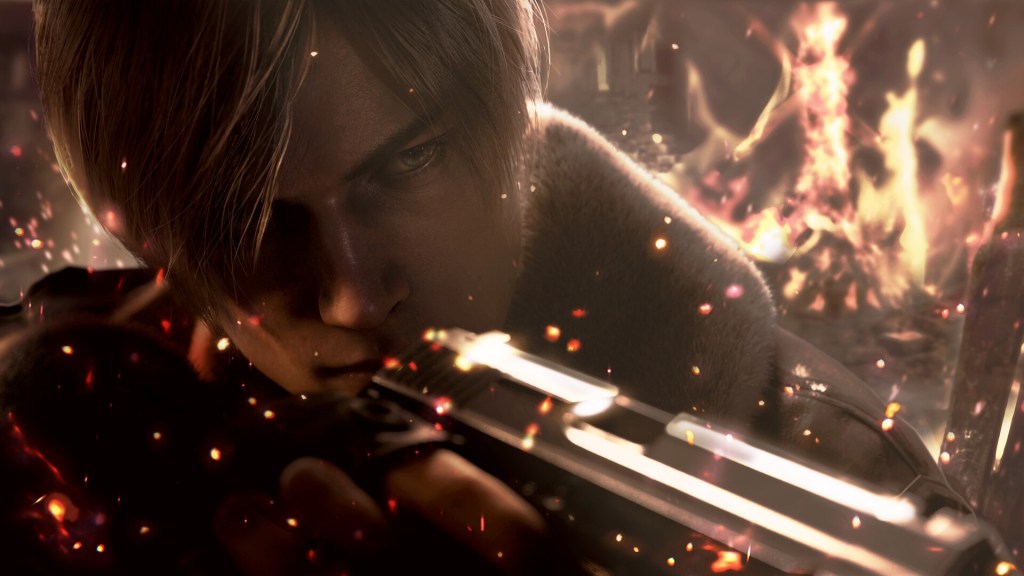
There is combat in Silent Hill 2, of course, but it’s not comparable to a game like Resident Evil 4 in the action department. RE4 is much more hands-on with action and combat; while I adore the original and the remake, I don’t find it anywhere near as scary as Silent Hill 2.
Silent Hill 2 is slow and deliberate with its combat, but it feels clumsy and panicked, too. This makes sense considering that James Sunderland, the main character, is not a combat expert – he’s confused why he’s in Silent Hill, he’s scared, and he’s panicking about finding his wife.
When he fumbles with the steel pipe, it makes sense, and it adds to the level of immersion, too, particularly in the earlier stages of the game. While it’d be a funny mod, giving him a machine gun or letting him rip through the monsters with the ease of Leon Kennedy on his day off would make it far less impactful.
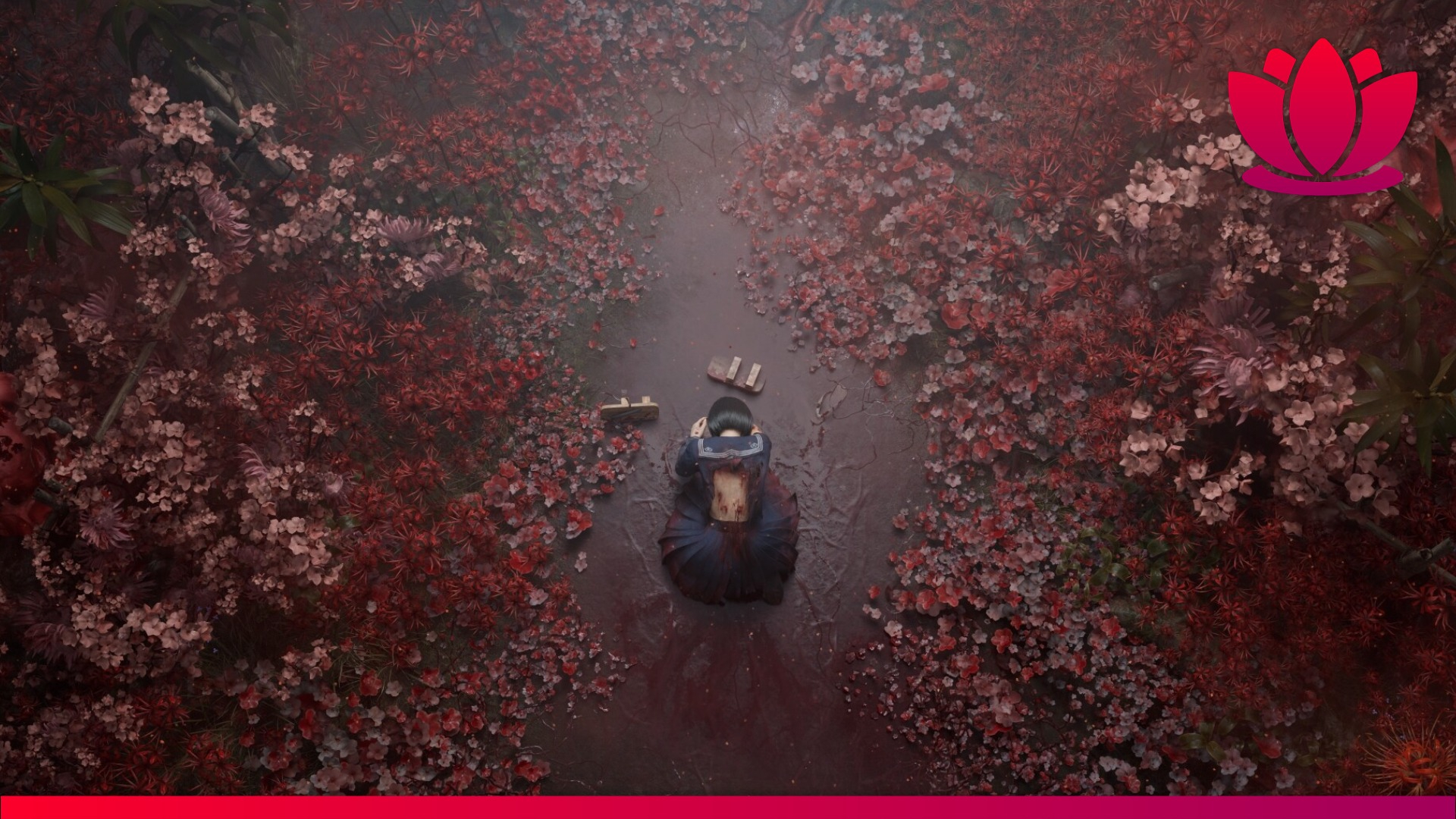
Silent Hill f is another game that does clumsy, anxiety-inducing combat perfectly, too. I have plenty of arguments that the combat is too slow or heavy, but I couldn’t disagree more with this.
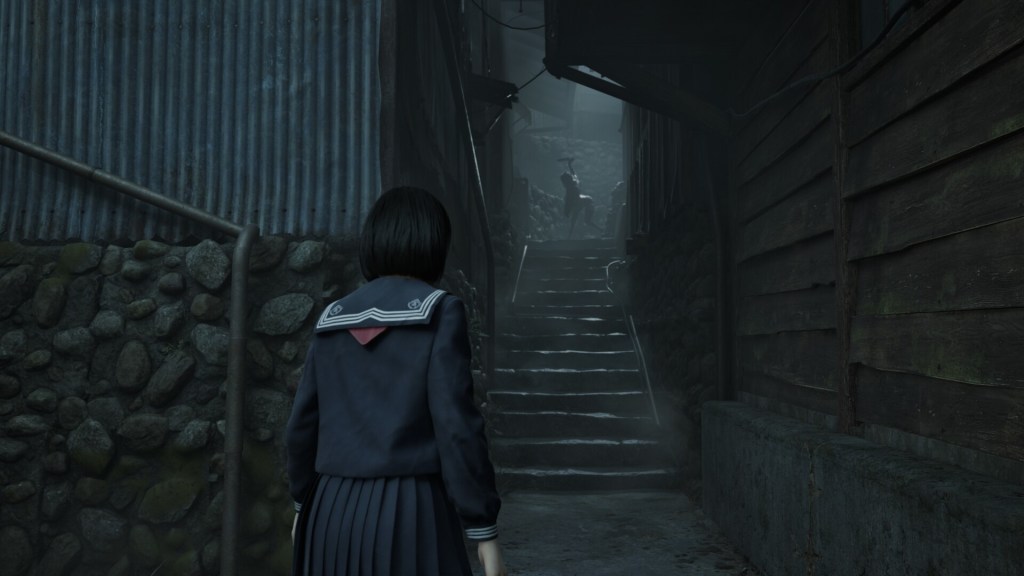
Hinako is not a fighter. She’s ended up flitting between hellish planes of existence, thrown from a seemingly normal life into one full of viscera and pain, so it feels only fitting that she’s awkward and heavy-handed in battle.
While I would’ve been keen to see what Silent Hill f was like without combat at all, frankly, I love that the game’s combat is slower and harder to get a handle on. It makes the game feel more intense and adds to the overall atmosphere nicely, restoring the balance of tension and release.
A lack of combat or a weak, clumsy combat style can add a new level of scariness to a game by making players plan and worry about their resources or whether an enemy might hear them trying to sneak past.
Generally speaking, a horror game can be scary with or without combat – while I love games like ROUTINE where you can’t fight the enemies, I am also a dedicated Resident Evil and Dead Space geek. These franchises are still terrifying in places, and if you haven’t explored them yet, they’re well worth your time.
Games with no combat or with minimal combat are much more intense than their action horror counterparts, though. These games tap into a sense of inevitability and terror that action horror can’t compete with, and they often skew towards a more slow-burning, atmospheric type of fear.
Horror games are beautiful, terrible things that can offer up a myriad of experiences; while the big, action-leaning franchises like Dead Space are striking and worth experiencing, there’s something uniquely terrifying about games that don’t let you fight back but expect you to keep walking onwards.
FAQs
The scariest horror games include ROUTINE, Alien: Isolation, MADiSON, Visage, Dead Space, SOMA, Amnesia: The Dark Descent, and Outlast.
While the definition of horror games’ big three does change from player to player, generally, it refers to Resident Evil, Dead Space, and Silent Hill.
Horror games can be scary for a variety of reasons, including upsetting themes, tense chase sequences, jumpscares, or gory imagery.
Some of the best developers to keep an eye on in the horror space include Chilla’s Art, Puppet Combo, Frictional Games, Konami, Bloober Team, and Rayll.