Image credit: Capcom
It’s official, Resident Evil Requiem is another standout “harrowing” experience from the franchise. Even though critics each have their own reasons for praising or criticizing the upcoming release, many are united in their admiration for its horror segments. It’s this return to horror that is key to Resident Evil’s continued popularity.
From the beginning, it’s always been the chill that runs down your spine that evokes the strongest reaction, as opposed to bloated action that provides meaningless spectacle. Action can and does have a place in horror IPs like Resident Evil, but only when it’s a secondary element. Horror creates vulnerability.
Exposed like a fresh wound
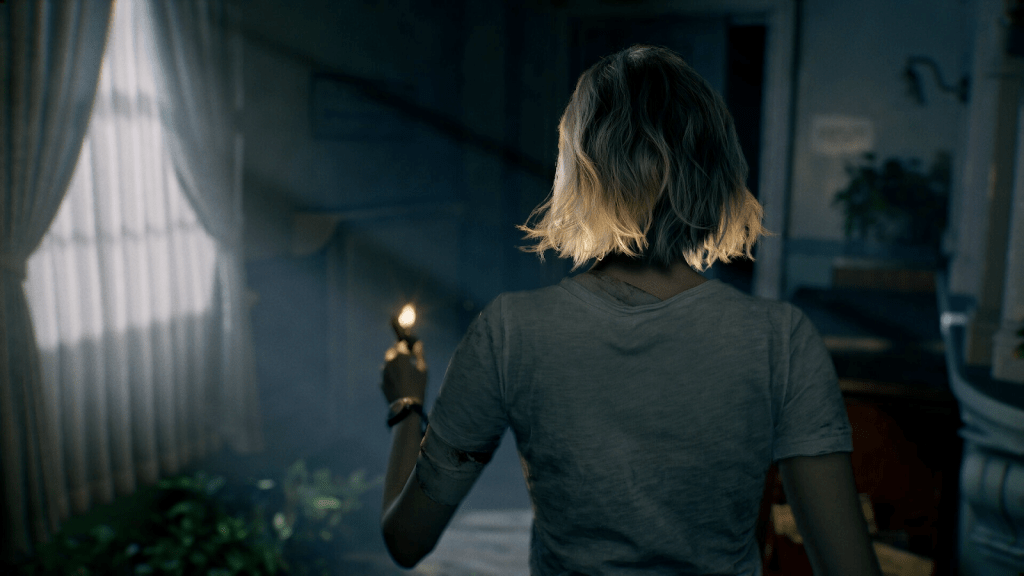
Leon’s return always had me concerned, not because I dislike him – on the contrary, I have a soft spot for his witty commentary – but because he’s an action-heavy character. We rarely see him scared, with our horror heartthrob choosing to solve his problems with whatever weapon is close to hand.
This is why Grace’s segments are vital both for the narrative and the franchise as it currently stands; her presence facilitates a means for Capcom to explore the nuances of horror, specifically the vulnerability it creates.
It’s difficult to feel at risk when there’s a horde of weapons to rely on. Armed with a bare bones arsenal, Grace’s sense of agency is dramatically reduced. Trapped in shadowy, confined spaces, she feels too exposed, too easily preyed upon.
Palpable tension permeates Grace’s sections, just as it did in Resident Evil 7: Biohazard and House Beneviento in Resident Evil Village, with the latter two examples being regarded as among the best horror moments of Resident Evil.
In these instances, action isn’t totally removed; however, it’s been greatly reduced to capitalize on the terror of feeling powerless.
At the mercy of the unknown
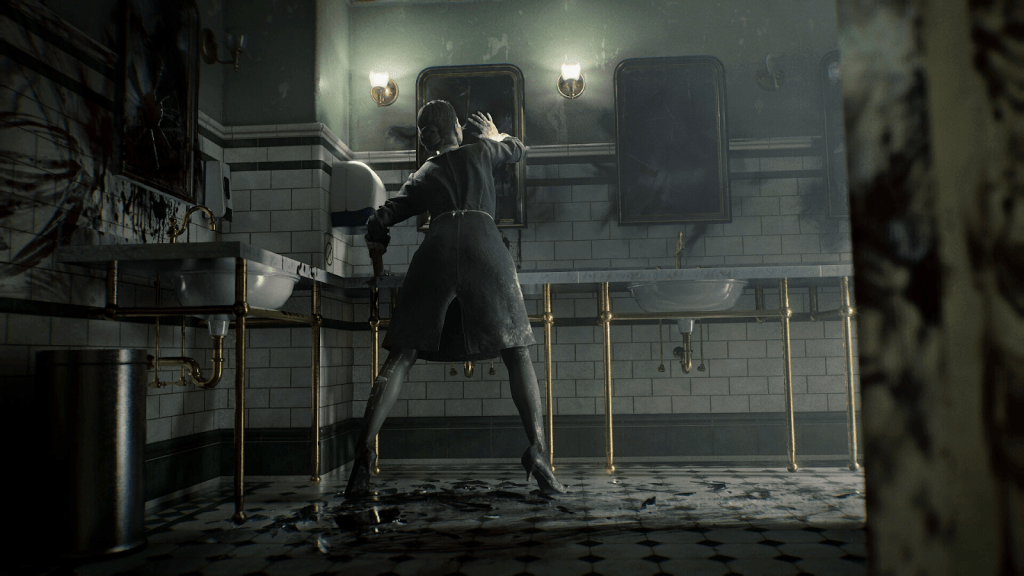
Resident Evil’s use of horror doesn’t just elicit a prey-like response, it also reintroduces an element of the unknown. In an IP about zombies, predictability is an inevitable obstacle for the developers to overcome, arguably because zombies are such a complex horror creation.
Horrific though they are, they’re also traditionally man-made, which makes them feel conquerable – this isn’t a specter without form, but one made of flesh that can be easily wounded and killed. By relying on action over horror, Resident Evil just becomes a rehash of soldiers versus zombies, and although fun, it gets old fast.
By shifting gears back to pure horror, the steadfast zombie rules feel less certain, meaning we’re not as self-assured going in. Of course, Resident Evil always follows conventions of the genre, so it’s unlikely we’ll ever be truly taken by surprise; still, our equilibrium can be shaken.
The first time we understood that a mind-controlling pathogen was to blame in RE7 and not the T-Virus, proved disconcerting due to our lack of knowledge. We were on the backfoot, learning in real-time rather than having a plethora of information already memorized.
Consequently, by the time RE Village was released, we felt fairly certain of what we were dealing with. Although Village still managed to surprise us, it was never on the same scale as its predecessor, nor did it unnerve us in the same way as the Baker family did.
Only select moments shone through, and that was because we were closed in, hunted like an animal, and lost to the shadows. Ethan was suddenly returned to the vulnerable man he was in RE7, but sadly not for long enough.
FAQs
We think so. Kyusai’s own Em Stonham said: “If you’re a long-time Resident Evil fan, there’s a lot to get excited about here”.
Resident Evil Requiem has blended the two to try to satisfy both sides of the fandom, with Grace’s section being predominantly horror while Leon’s is action-based.
That’s the million-dollar question right now. With fans and critics alike anticipating the next Resident Evil to be another rework of its older games, Capcom has a remake dilemma on its hands.
Resident Evil Requiem was released today, February 27, 2026.

About The Author