Image credit: Shueisha Games
The older we become, the more apparent it becomes that our lives aren’t linear. They’re much longer than we might realize, and the weight of all the moments we collect slowly becomes heavier. Photography is a way to preserve these changing moments of these lives so we can hold on to them in a manageable way.
But no matter how fondly or painfully we look back on them, these moments remain in the past. So how do you hold onto those same feelings you had in those moments, even when you know they’ll soon become memories?
It’s not just photographs that are the focus of Opus: Prism Peak, but the act of photography itself. This new entry in Studio Sigono’s Opus series is made with a deep respect for the art of photography, a quality seen in the Fatal Frame games and in very few others. But instead of horror, this new indie narrative-adventure game is filled with memorable characters and nostalgic hand-painted scenery that make any Studio Ghibli fan’s eyes water. Beyond its limitations is a profound story about loss, memory, and the bittersweet necessity of letting go.
A natural connection

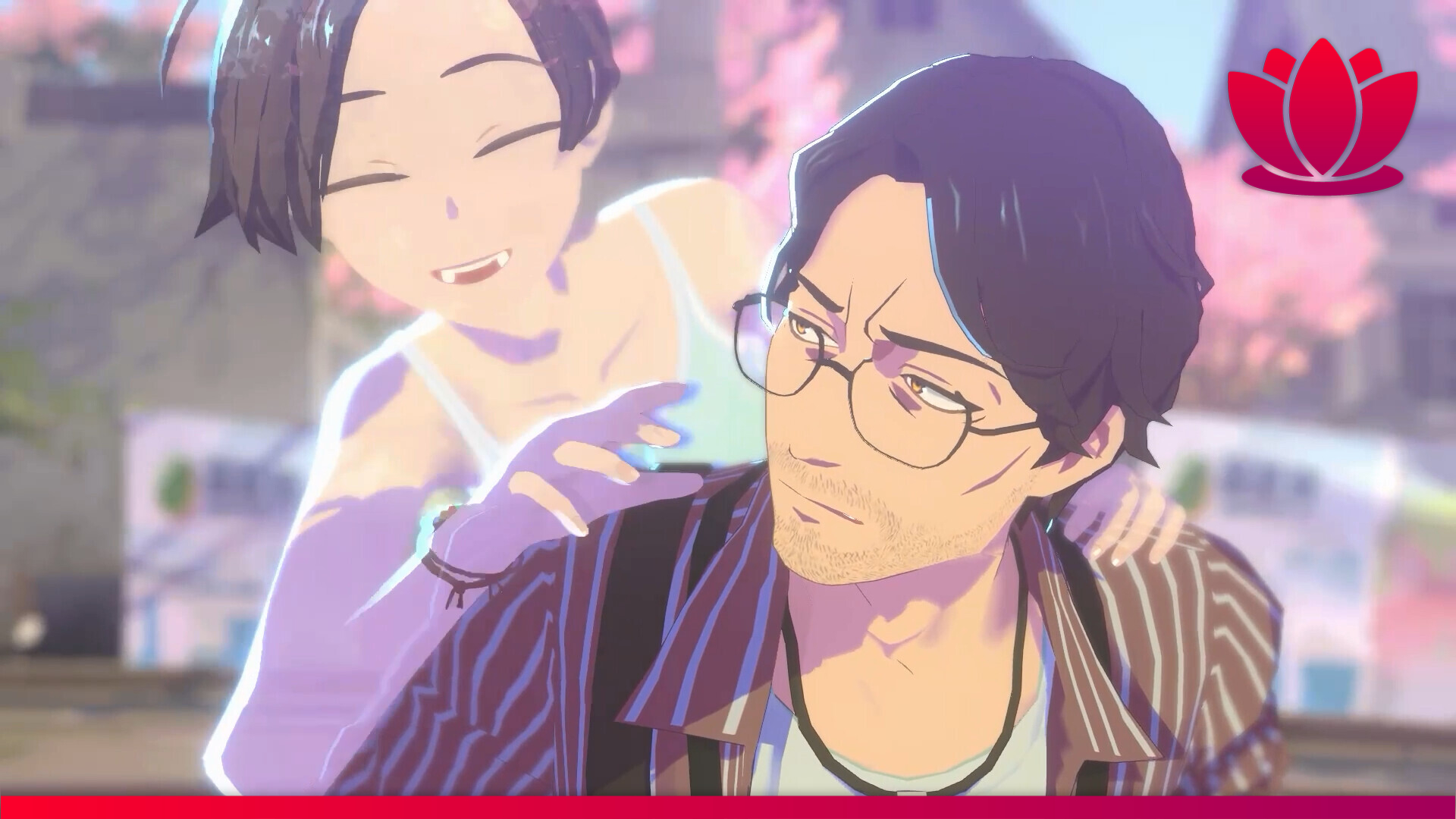
40-Year-old Eugene is a photojournalist, cafe owner, and husband, but come the beginning of this journey, he’s none of those things. He’s divorced, lost his job, and sold his camera, and you’ll step into his shoes as he drives to his grandfather’s funeral, the one who inspired him to become a photojournalist.
This is until he’s caught in a rockslide on the road, from which he wakes to find himself in a new yet not-so-unfamiliar world inhabited by spirits. It’s in this world that he wakes to meet a young girl with amnesia who is later given the name Ren, but it’s moments after they meet that he has to save her from a dark shadow pursuing her called the shade.
After rescuing her from danger, the two begin a journey of self-discovery through Eugene’s memories to bring Ren home to her home at the top of a distant mountain. These memories are beautifully represented in the environments you visit along the way, from an abandoned station to a long-forgotten city to a theatre that once showed magical movies.
Throughout these beautiful environments, Eugene meets different spirits that represent the different people who have come and gone from his life. By speaking with these spirits in visual-novel style cutscenes, Eugune slowly comes to terms with his past.
Eugene records all of these encounters in his journal, a place filled with the thoughts, feelings, and photographs you gather along the way. There are multiple sections in the journal, such as a place to put photographs, a place to fill in information about each spirit, and a page used to gradually translate another language you hear during the journey.
You’re encouraged to take your time filling this journal, making it feel longer than the 11-hour runtime. You’re encouraged to wait for the perfect photograph, to learn about each spirit, and to spot as many details as possible along the way. Faster-paced action sequences are few and far between, so this is really a journey that’s made for those with plenty of patience and an eye for detail.
This gives the game the same type of cinematic quality that you’d find in Telltale games, right down to the text boxes that tell you how each of the characters is feeling. Your connection to these spirits also encourages you to consider how you respond to them, with certain responses leading to unique endings. There are only gentle indications when certain endings will trigger, so there’s no pressure to respond a certain way. Rather, you’re encouraged to respond naturally to the spirits when you meet them.
There’s more to a photo
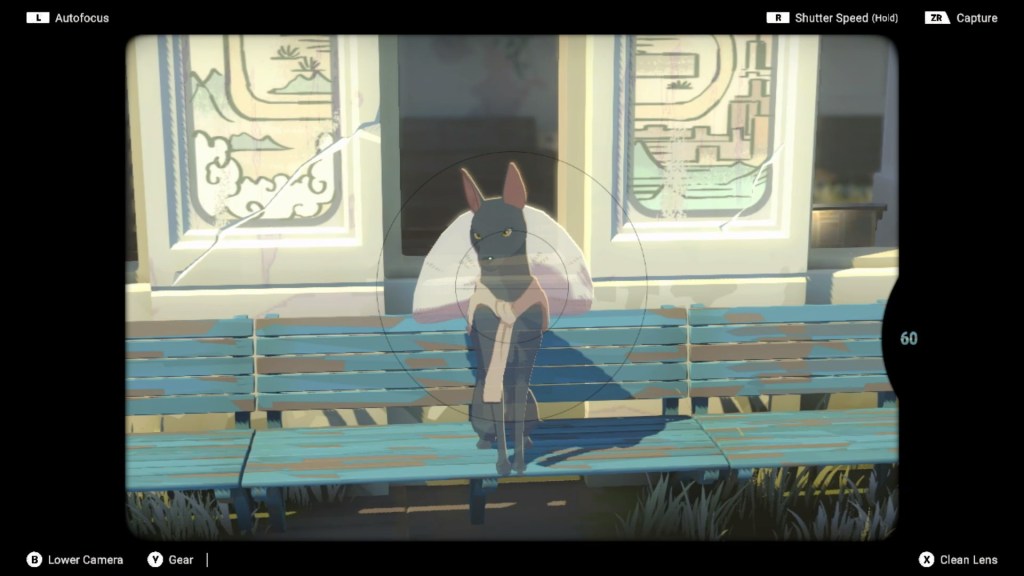
This is only possible because Eugene gets his camera back, which you’ll use to take plenty of different photos to advance the story. The camera is more than just the main lens through which you’ll experience the journey, but a well-developed gameplay mechanic that is just as nuanced as taking photos with a real camera.
You’re encouraged not to take photos just for the sake of it, especially as you can only store a limited number at a time. Each shot requires careful adjustments, including manually or automatically adjusting the focus and the shutter speed to control the brightness of each photo. You can also switch lenses to see things from different perspectives, with some, like the Dusklands lens, letting you make out hidden details on landmarks.
Soon enough, each photo becomes its own process. I’m the kind of person who takes multiple photos of something at once, so I appreciated how the gentle-paced gameplay loop encouraged me to take a step back, slow down, and carefully consider how I framed each shot.
Offering these photos to the firepits you come across in each area and to the spirits encourages you to think carefully about each shot, and to make sure you preserve each moment in the way you want to. This gets you all kinds of rewards, such as backpacks, new lenses, and different memories, but you’re not guaranteed to get these all on a first playthrough. There are many moments when I missed my chance to get the perfect shots and lost out on a few rewards because of it, but I wouldn’t have it any other way.
You can go back to all the most significant moments of the story thanks to a chapter select option, but this is the kind of experience you’ll want to have organically. There’s something special about Eugene’s journal showing you how much of the game you’ve managed to naturally take in, something that perfectly suits the game’s themes of memory and perception.
Inspirational audio

As pleasing as the Ghibli-like art style and beautiful backgrounds are, the game isn’t graphically intense. It’s hardly a surprise that I found the game to run smoothly on the Nintendo Switch 2 in both docked and handheld modes, but I found that handheld mode made for the best way to enjoy this short but bittersweet experience.
You’ll even get little insights into the development process as collectibles, in the form of audio logs where developer Brian Lee explains parts of the game’s creation process. These audio logs are something that I wish more games did, and it’s surely this kind of insight into the development process that will inspire people to create their own games.
Where the audio does get a little jarring is the voice acting, which has very obvious lip-syncing issues and certain editing issues where audio clips seem to play too fast or too slow. But that isn’t to discredit the voice performances themselves, which still have immense heart. It’s clear how much each actor cares about their character, with Eddy Yeung as Eugene giving a particularly standout performance.
Not only do the voice actors set the tone for every scene, but so too does the music that plays throughout. The two tracks by composer Kevin Penkin, in particular, struck a chord with me and perfectly accompanied the game’s most climactic moments.
Dare to try again

So rarely do we get to play as people like Eugene. Not a bright-eyed protagonist starting their hero’s journey, but a middle-aged everyman you could meet anywhere. But he has all kinds of past successes and mistakes to learn from, and by making the main focus not just the story but the entire experience, the game communicates a very clear message. That letting go is necessary for growth.
This idea is perfectly presented through Eugene, and it’s thanks to his willingness to face his past and let it go that he becomes a compelling character. The game may not explore much outside of this idea, but it’s communicated so well through its gameplay, collectibles, and characters that making it the focus feels like the ideal choice.
I may not remember every detail of the game, nor every photo I took, but I will always remember the message Opus: Prism Peak gives its players. To be brave enough to move into the future, even if it means letting go of the past. Even if this moment becomes a memory or every photo were to be lost, that message is unforgettable.
FAQs
Opus: Prism Peak follows 40-year-old Eugene and a young girl he calls Ren. The game focuses on their journey through a realm of spirits to get Ren home to the mountain peak.
There are four main Opus games. Opus: The Day We Found Earth, Opus: Rocket of Whispers, Opus: Echo of Starsong, and Opus: Prism Peak.
The Opus games are not directly connected. Rather, they are an anthology series set in the same universe, with each episode featuring a different cast.
The first Opus game is Opus: The Day We Found Earth.

About The Author