Image credit: Riot Games
Since first watching Paper Rex vs EDward Gaming, I became completely and utterly obsessed with VALORANT. Sure, I was actively watching the game at a high level, but it wasn’t until I actually attended the VCT Masters in London that the game finally clicked for me. I started playing from zero, and racked up more hours in-game in a matter of weeks than in any other title over several years.
I had big dreams of one day reaching Immortal rank, just like Kyusai Managing Director Josie Clark had time and time again. The thought that (eventually) I could even take part in Premier playoffs filled me with excitement, even if that flame seems snuffed out now. Here’s why VALORANT placement matches should change, and a look at the experience as a new player in 2026.
Starting in VALORANT

If there’s one immediate thing that I can praise VALORANT for when learning the game, it’s how in-depth its dedicated tutorial mode and The Range are for teaching you the basics and getting your aim to where it needs to be. As someone with good FPS fundamentals (I wrote the book on video game difficulty), stellar reaction times, and calm aim, I took to VALORANT‘s various guns pretty quickly; Counter-Strike‘s rules apply here: stand still when shooting, first bullet accuracy, aim for the head, counter-strafing, and effective weapon distance.
Specifically, of VALORANT‘s arsenal, I was vibing most with the Ghost, Spectre, Phantom, Guardian, and Vandal, becoming adept with all of these weapons, which prioritized clean, calm aim over frantic spraying. The Range was particularly good for teaching you distances, with its dedicated target board that can be tweaked as far away as 50m, with a bot you can toggle, too. There are even flying drones that you can use to practice flicks and spray patterns; it was an exceptional introduction to its systems overall, and Riot Games should be commended here.
Where VALORANT beats the CS2 learning experience

To play Competitive in VALORANT, the game’s main mode, you need to be Level 20. This is similar to what happens when you want to properly play CS2, which requires a Prime-enabled account and Sergeant Rank 10 as standard. While I still maintain that CS2 is awful for new players, VALORANT doesn’t suffer from the same issue. You still need to reach an arbitrary level before the training wheels come off (which took me around five days of moderate playing); however, unlike with Valve’s shooter, you can fully experience the “real game” without its main mode locked behind this restriction.
As a new VALORANT player, you have access to the full-fat experience with Unranked, but also Swiftplay and Spike Rush, which can help you learn movement, shooting, aim, character abilities, and more of the fundamentals. You just won’t earn a VALORANT rank yet. Riot Games has kept things simple and concise with how you can climb the ranks, too. Counter-Strike 2 features a confusing and alienating dual ranking system (CS2 map-specific ranks (from Silver to Global Elite), and your overall Premier rating (number and color). Everything is easy to understand here, and there’s a linear progression bar for how well you’re doing, too.
The double-edged sword of VALORANT’s accessibility

To establish a CS2 Premier rating, you have to win 10 games. In VALORANT, you only have to play five. The operational word here is “play”, because it takes your average MMR of the whole team for the placement matches; the ones you win, the ones you lose, and assigns you a VALORANT rank accordingly. If you play five games, it means it’ll only take you around two to three hours of back-to-back queueing, provided you feel calm, confident, and ready to play where it actually begins to matter.
My VALORANT placements games (largely) went incredibly well; I even got match MVP in a landslide victory in my final match. Did I win all five games? No, but the games I did lose, I was top fragger on my team (and the server in general), always having a positive K/D, a sky-high KAST rating, and a (relatively) decent headshot percentage considering I had only been playing the game for a couple of days.
Discouraged Ones

I was taking VALORANT incredibly seriously. I was watching countless guides from Immortal and Radiant players, rewatching Paper Rex’s VCT games, and spending hours on The Range as well as both Aimlabs and KovaaK’s with their dedicated VALORANT playlists. I was working on my crosshair placement, pre-aiming angles, and getting the speed of my flicks to a high standard; If I was going to play VALORANT Competitive mode properly, I wanted to aim for a good rank, and after five placement games, it was time for the result. Was I good enough to hit Silver? I’d take Bronze if it meant giving me a place to start.
No. Iron 1, the lowest possible VALORANT rank in the game. To say that this was a blow to my confidence was an understatement; after hours upon hours of grinding matches, practicing, studying, and learning the game, I was given the worst rating, positioning me among players who didn’t understand the fundamentals of this FPS, and potentially hadn’t even played a PC game in general before. It was here that the problems began to start.
Welcome to (Low Elo) Hell
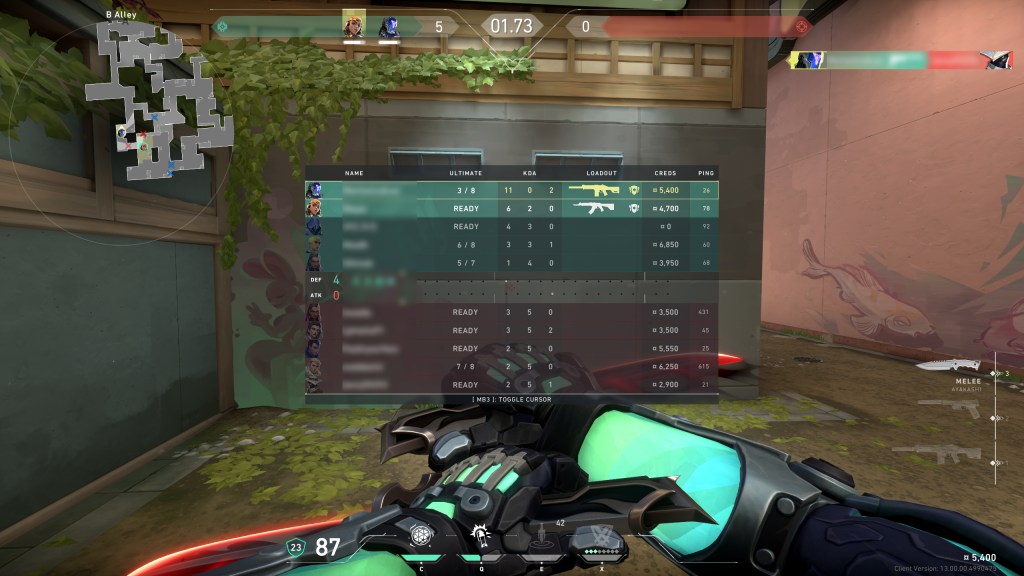
At first, it seemed like I was just getting lucky. I was loading into VALORANT Competitive matches against Iron and Bronze players and routinely becoming the top fragger on my team. Because VALORANT is a team game, it doesn’t necessarily reflect on you if you lose, only that you must win; in my case, it meant dozens of games where I was having to hard carry VALORANT players who were aiming at the ground, running while using rifles, wasting utility, and loudly running around the map, blissfully unaware of the magic of the Shift key.
I had become hard-stuck in Low Elo hell, constantly rubber banding between the bottom few ranks, going on a solid winning streak, only to see Bronze players erase the four members of my team in a landslide loss, which crippled my progression away from a higher rank, destroyed my MMR, and made me angry and upset. Yes, unfortunately, I was getting tilted; I am good at video games, I’m solid at competitive FPS titles, sure, but that doesn’t mean much because I can’t regularly win a 5v1 despite my best efforts.
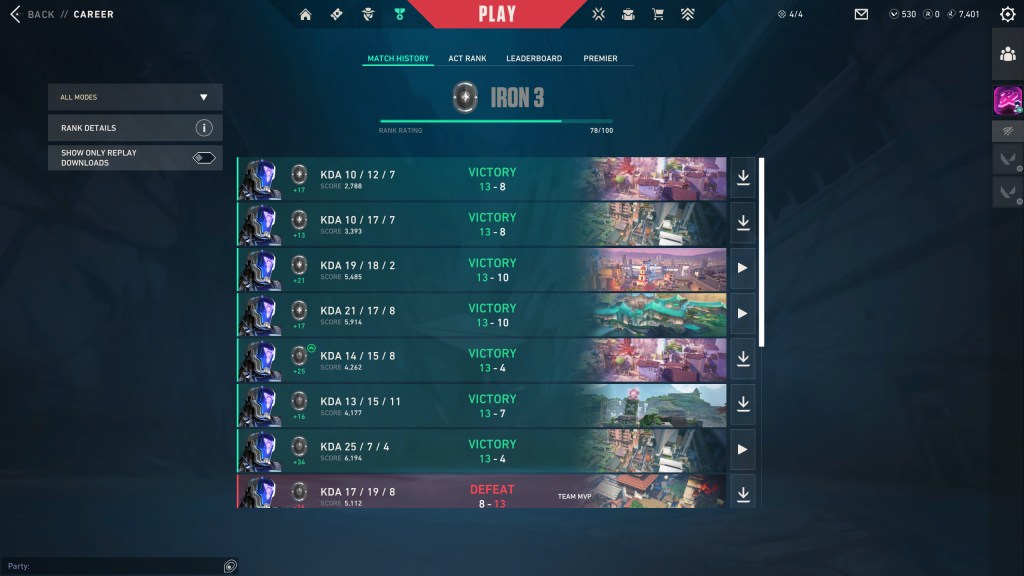
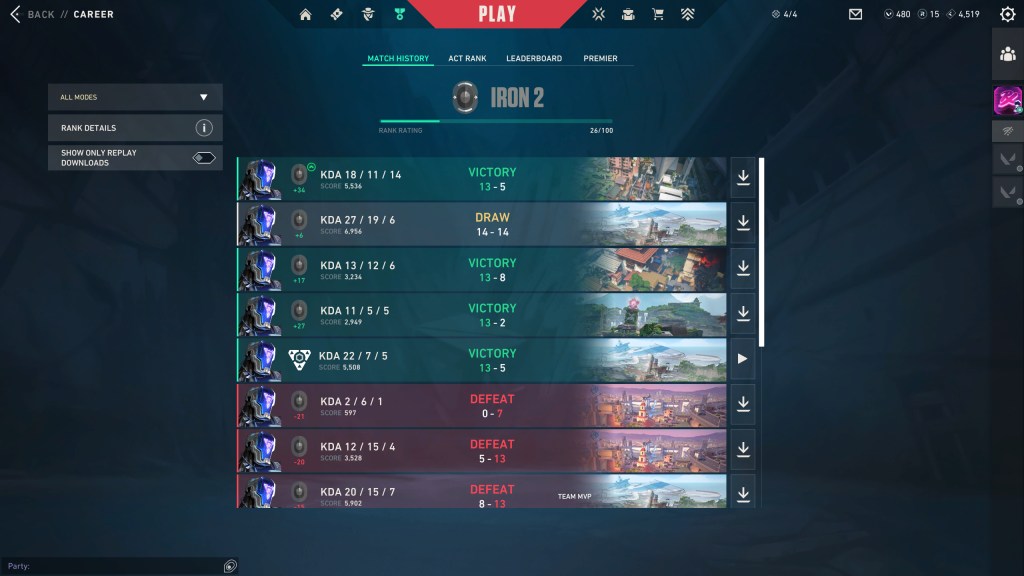
For lack of a better term, being restricted to this low level of VALORANT because of the placement games’ performance has felt like banging my head against a concrete wall. I see the Act Rank, those triangles filling up, and the bottom of the mountain, as I am taunted from the Summit. At the time of writing, there’s just over a month of the current season left. There are two ways this can go now, looking ahead. Maybe I push through the dead weight and prove I am a viable player in the brand-new game I love, or I let the handicap consume me and drop it completely.
Keep an eye on the future of Kyusai’s Esports section to see what happens in the near future. This could be the beginning of my eventual rise from Iron 1 to Radiant, the ultimate redemption story. Or the far more likely option is that I was yet another prospective VALORANT player with big dreams who couldn’t cut it when it mattered most. I’d hate for that to be how the story ends. I just wish I had been given more of a leg up when I needed it most. Until then, my heart feels broken.
FAQs
It certainly can be! Your rank performance depends entirely on how you and your team perform as a whole. You could be top fragger on the server and still suffer a devastating loss that tanks your MMR.
The top 1% of VALORANT players are reserved for Immortal and Radiant players, who have proven themselves to be masters of the game’s mechanics, characters, map, and game sense.
VALORANT ranks do not decay as with other competitive games. However, they are reset with each act/season, and you’ll need to play in placement games again to gauge your true skill level and corresponding MMR.
The rarest and best VALORANT rank is Radiant, which accounts for just the top 500 players of the game worldwide. This is the rating usually reserved for top esports players and high-level game streamers.