Image credit: MSI
Mini PCs are, by and large, viewed as space-efficient business productivity tools. If you’re short on room and need a good all-rounder, mini PCs tick quite a few boxes. But what about gaming – can they act as an entry point into PC gaming for those of us unable to afford and/or build a gaming PC? As someone who relies on her Steam Deck to fulfill all of her PC gaming needs, I was keen to find out.
With the Cubi neatly positioned on my desk, inconspicuous and unassuming, I eagerly downloaded Dragon Age: Inquisition. If you’re wondering why, it’s because I don’t own a console copy anymore – long story – and you can’t play it on the Steam Deck without some jiggery-pokery I can’t be arsed with. Plus, it’s a sizeable game, so if a mini PC can’t run it, it has no hope with newer, bigger titles. Now that the stage is set, let’s see what the Cubi can do.
Compact versatility

Bigger doesn’t always mean better; the Cubi is proof of that. Designed with limited space in mind, its 0.826-liter chassis allows this mini PC to slot into your life effortlessly. For some, its lack of oomph will be seen as a con – it lacks the personality that gaming PCs, particularly those you design yourself, can offer. However, I prefer its unassuming appearance.
To the untrained eye, it’s a box, and a small one at that – it couldn’t possibly deliver an experience that rivals quote-unquote gaming PCs. Well, you’re wrong. Outfitted with an Intel Core Ultra 9 288V processor and local AI acceleration, it can achieve 120 TOPS (Tera Operations Per Second). If you don’t speak tech, that simply means that it can run multiple AI features at once.
Although I’m not a fan of AI – that’s an understatement, really – I can appreciate that 120 TOPS is high-end processing that allows the Cubi to be more than merely a gaming PC: it morphs into a multifaceted tool, optimized for business but also well suited to recreational fun. While my MacBook Air is my primary device for work, having another option on hand that also doubles as a mid-level gaming PC is undeniably the best of both worlds.
If you only want a machine purely for gaming, then for the price of the Cubi, which retails at approximately $1,500, you may prefer to splash your cash on something better suited to your needs. That said, if adaptability and versatility are important to you, the Cubi deserves your serious consideration.
The happy medium
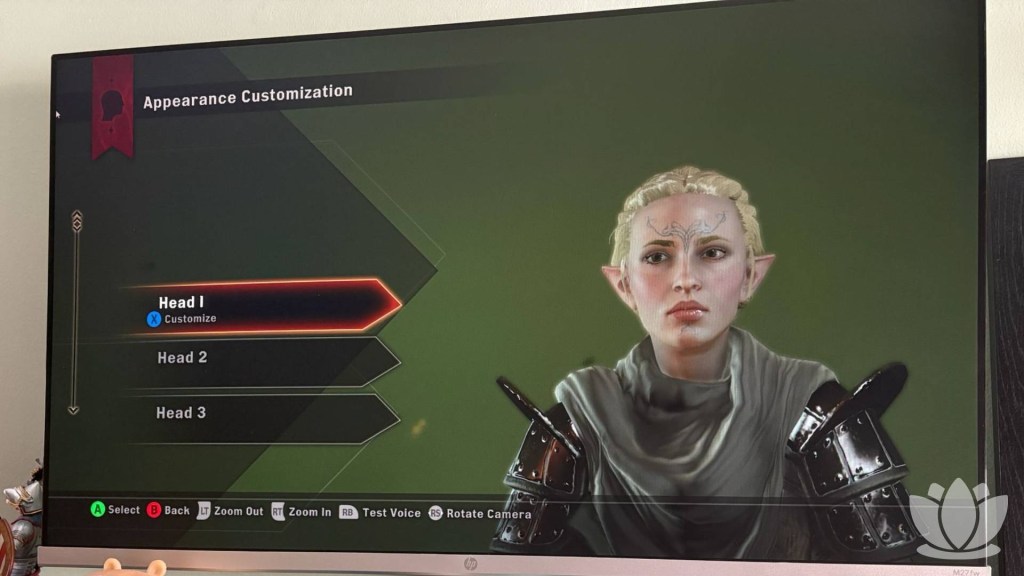
It would be a lie to say that the Cubi can handle AAA games without issue, not just because it’s not designed to do so, but also because I don’t typically play graphically demanding titles. Stardew Valley, while very dear to me, isn’t going to push the Cubi past its limits. It can be argued that neither will Dragon Age: Inquisition, however, I’m not so quick to agree.
Despite being over a decade old, it has many moving parts that some would claim put its newer sequel, Dragon Age: Veilguard, to shame. I’m not here to get into that debate, but I am here to say that what my Xbox struggled with, the Cubi handled with ease.
There’s one specific scene early on in DA: I when the Xbox 360 failed to load dozens of NPCs simply because it didn’t have the power. I went years not realising this until I bought an Xbox One, and was suddenly greeted by a crowd of people when none had previously shown up. The Cubi, like the Xbox One and Xbox Series X/S, loaded in the world with such beautiful fidelity that I felt transported back to when DA: I first launched.
That’s what its 32GB LPDDR5X and 1TB SSD have to offer: quick loading times with minimal stutter or heavy textures jarringly appearing as environments load in. We’ve all been jumpscared by a rogue NPC abruptly materializing, and would prefer to avoid it if we can. 1TB SSD may have little bearing on your framerate, but it ensures a smooth experience that, when playing older titles, is much appreciated. For the Cubi’s full specifications, you can learn more here.
What it comes down to is what you want out of your PC. If you’re looking for a happy medium that handles light-to-medium gaming without a hint of lag, while also delivering space-saving simplicity and optimized office support, the Cubi is hard to beat. If you want a machine that’ll be able to match the promised immersion of GTA 6 (if it ever releases), then you need an unadulterated gaming PC.
FAQs
As previously mentioned, it’s a matter of personal preference; for a lot of people unable to afford high-end gaming PCs, the Cubi is a more affordable entry point.
Yes, you can; however, it isn’t always a smooth experience. If you only play the odd AAA title, the Cubi will see you through, but if you exclusively play AAAs, it’s going to hold back your experience somewhat.
It’s fair to say the Cubi is cheaper, though by how much varies depending on the brand you’re comparing it to. The Cubi costs $1,500/£1,159, which is cheaper than the OcUK Gaming Jade – GeForce RTX 5060 Ti Pre-Built Gaming PC, for example, which retails at £1,639.99.