Image credit: HONOR
Mobile gaming gets a bad rap, yet if we’re totally honest, many of us play games on our phones. It’s one of the industry’s worst-kept secrets: with over 3 billion people using their mobiles to game, it’s easily the most widely used gaming platform. As so many reach for their phones during their downtime, having the right smartphone to handle the games you play becomes mightily important.
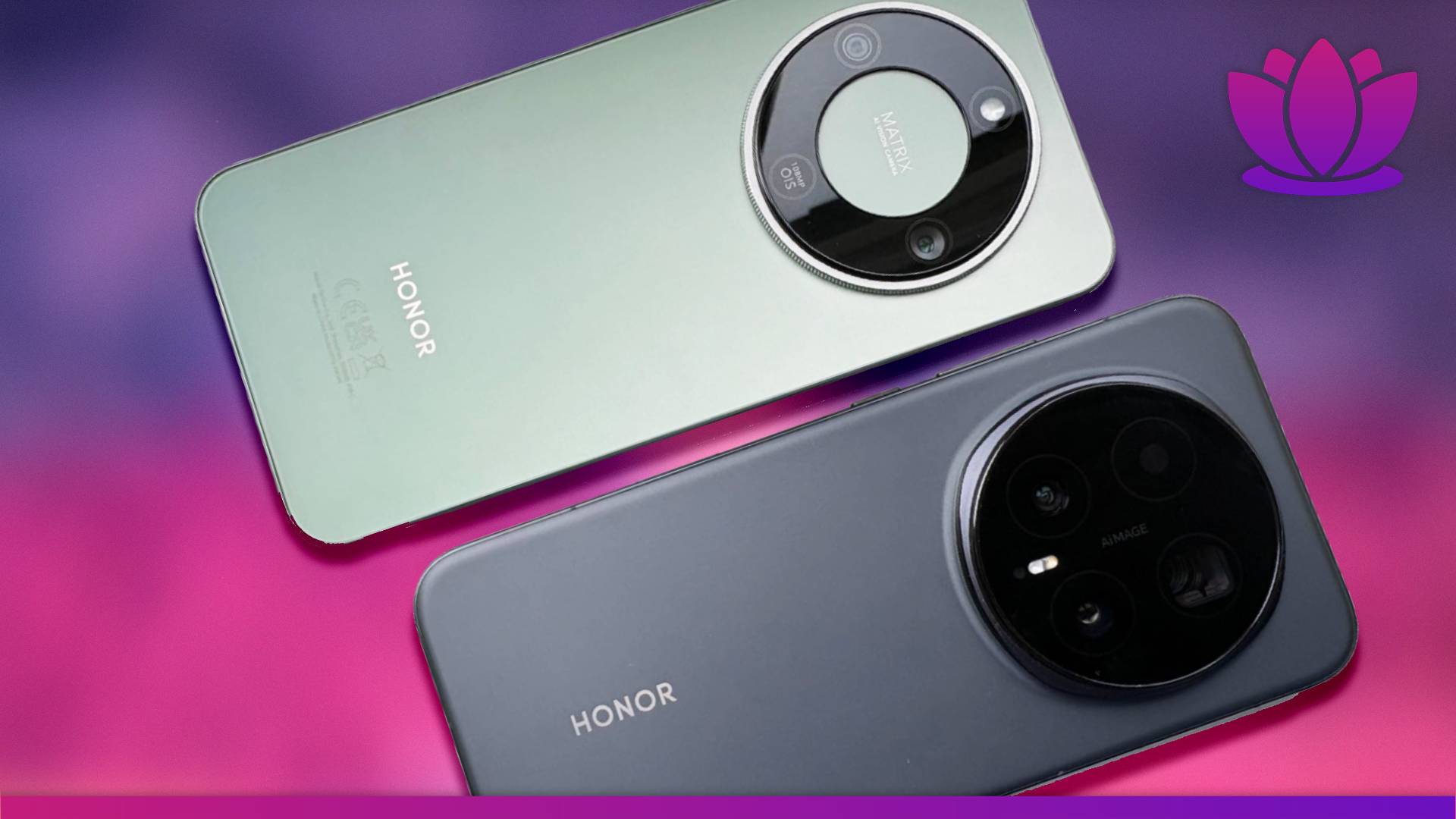
Ever dedicated to discovering the best platforms for your gaming needs, I’ve been putting HONOR’s Magic8 Pro and Magic8 Lite to the test. One is the brand’s 2026 flagship phone, for those looking for impeccable quality, while the other is a mid-range but still impressive budget option. In the battle for mobile gaming supremacy, which one comes out on top?
HONOR Magic8 Pro: An exemplary gaming experience

To ensure a vigorous test of the Magic8 Pro’s Snapdragon 8 Elite Gen 5 chip, I chose to play Infinity Nikki. While I mean no disrespect towards Candy Crush Saga, it isn’t exactly a game that’s going to challenge what’s been dubbed by critics as a “revolution in mobile gaming”.
Developed with GPU-NPU Heterogeneous AI Super-Resolution and Frame Generation technology, it’s designed to “deliver higher frame rates, smoother visuals, and lower power consumption in heavy-load gaming scenarios.”
It’s been quite some time since I’ve been astounded by technological advancements, especially when it comes to smartphones. Having experienced the heyday of the Nokia 3210, I’ve witnessed the humble mobile transform into a palm-sized PC. Ergo, I’ve become somewhat desensitized to crystal clear graphics and quick download speeds. Or so I thought.
I was left in awe with the Magic8 Pro. Infinity Niiki downloaded quickly – and that’s despite my godawful wifi speeds – and it ran at a stable 60fps without any lag. Not to exaggerate here, but my Xbox Series X often isn’t that reliable with titles of a similar graphical fidelity.
Naturally, while the 8 Elite is the power behind the Magic8 Pro’s gaming capabilities, its 6.71-inch LTPO (Low-Temperature Polycrystalline Oxide) OLED display, with an HDR brightness of up to 6,000 nits, provides the perfect canvas. It brings everything into stunning clarity. And before anyone remarks that 6.71 inches is small, may I politely remind you that the original Nintendo Switch (not the OLED model) only had a 6.2-inch screen.
HONOR Magic8 Lite: Smaller, less mighty, but still superb

Comparing the Magic8 Lite to the Pro may seem unfair – after all, the Pro was given that title for a reason. However, I can assure you that HONOR’s more budget-friendly smartphone is still a stellar choice for gamers. Even more so if larger screens are your thing.
Yes, surprising though it may be, the Magic8 Lite sports a slightly bigger screen, measuring in at 6.79 inches. Despite its size, however, its display is AMOLED rather than LPTO, meaning it isn’t quite as crisp as its top-tier counterpart. Truthfully, the difference between the two is minimal and only becomes apparent when comparing them side by side.
Partnered with this display is a less robust processor: the Snapdragon 6 Gen 4. Let me be clear, this generation of processor vastly improves on its predecessor; however, it’s still budget hardware. It still runs Infinity Nikki, though it occasionally lags.
Generally, I was unable to play at 60 fps on the Magic8 Lite, with 30 FPS recommended to avoid “lag and overheating.” I’m not someone obsessed with FPS, so I’m not too perturbed by this. Still, it’s evident that HONOR’s Lite isn’t geared up for AAA games in the same way that the Pro is.
FAQs
Prepare yourselves: the Magic8 Pro starts at $899, and prices increase quickly based on your storage and RAM choices.
For the Magic8 Lite, you’re looking at between $440 to $540 – I think you’ll agree, that’s quite the difference. That said, the Magic8 Pro is top-tier, so it has a price point to reflect that.
As someone who doesn’t currently have a mobile controller, I’m fortunate that playing Infinity Nikki was easy-peasy on both the Magic8 Pro and Lite. Do I think a mobile controller would provide a better experience? Yes, but that’s based on my own preferences rather than due to any fault of the devices. I’m a creature of habit, shall we say.

About The Author