Image credit: Creative Assembly
It’s now been ten years since Creative Assembly released Total War: Warhammer, and the series has been growing since. A game that started with just five playable factions (with the day-one DLC) and eleven playable Lords will soon have 110 playable factions across 25 playable races when the Lords of the End Times DLC releases on 24 September 2026.
Despite the finality of the name, this is not intended to be the last expansion. Creative Assembly is hoping to take that energy forward when Total War: Warhammer 40k releases, wanting to get another ten years to satisfy the players appetite for even more content. Total War: Warhammer 40k will be able to avoid many of the restrictions of the fantasy-based Total War: Warhammer series by heading to space.
Suffering from success
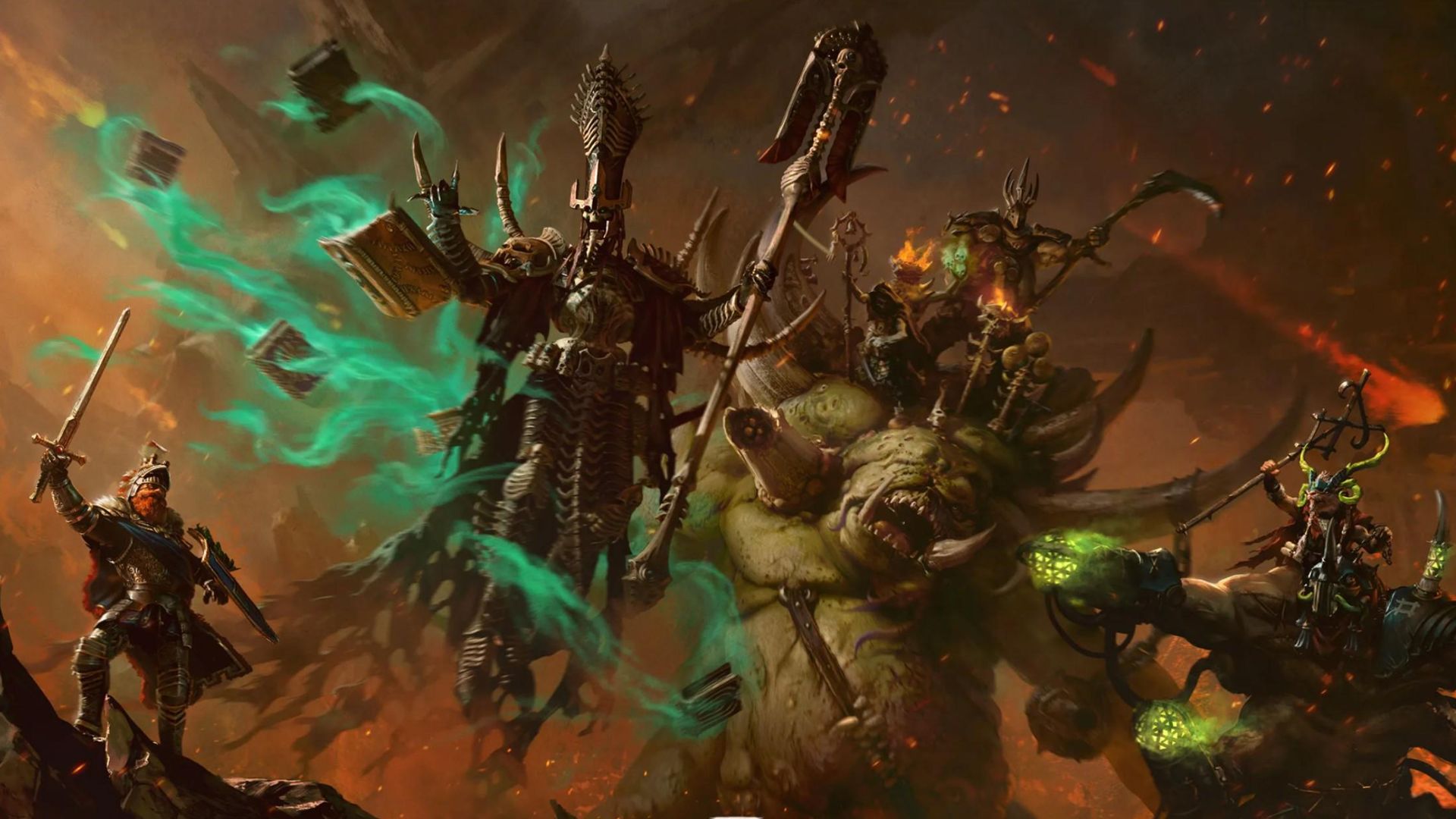
The Total War: Warhammer series has increasingly struggled with fitting in all of its available content. While the map kept growing with each entry, so too did its roster, leading to powerful and unique factions all over. Most of the nearly 300 factions in Total War: Warhammer 3 are minor factions – NPC enemies designed to act as buffers between the more important playable Legendary Lords.
However, as the number of playable factions increases, the more difficult it becomes for those buffer factions to mean anything. They will quickly disappear, only leaving the major factions to duke it out. This leads to a more interesting struggle, but it does mean that some factions are stuck facing off against a truly titanic threat right away.
Some areas are worse than others. In The Empire, a fantastical play on the Holy Roman Empire, there are increasing numbers of Legendary Lords all crammed into a single area. The problem is that there are only so many places that these factions can make sense, because they are beholden to the lore and the geography of the map.
While Creative Assembly tries to put more Lords into Cathay, the fake China of Warhammer, some of the ones already added are quite tenuous.
This is a familiar problem in Lords of the End Times, then, that even more factions are being added. Those who are not landing in or near the Empire will still have cause to go there due to their individual victory conditions – simply because that is what makes the most sense.
Total War: Warhammer is thus a victim of its constrained map and established setting lore, in the same way some folk might consider World of Warcraft to be. Total War: Warhammer 40k is not shackled in quite the same way.
Endless space

Total War: Warhammer 40k allows Creative Assembly more breathing room than they’ve ever had before. Rather than being limited to one rigid map, usually constrained by either real-world history or fantasy lore, Warhammer 40k allows wars over planets and systems, none of which have a set expectation for what they have to look like.
If there’s anything you ought to know about space, it’s that it’s really big. Total War: Warhammer 40k has access to a whole galaxy of different planetary set-ups, and a near-endless available configuration for people to battle it out.
This means that so long as Creative Assembly wants to add a faction, or a battle map, or just some quest battle they thought sounded cool, all they need to do is add it in and reshuffle the galaxy.
Warhammer 40k has a similarly near-endless font of content to include, much like its fantasy counterpart. Total War: Warhammer 40k will only be starting with four different factions, but there’s plenty more to come, as obvious or as obscure as you like.
On top of this, Creative Assembly has already said that they want to allow for customizable faction leaders as well as lore figures – adding even more possibilities that mean that players could be engaged for that full ten-year plan.
Too big to fail?
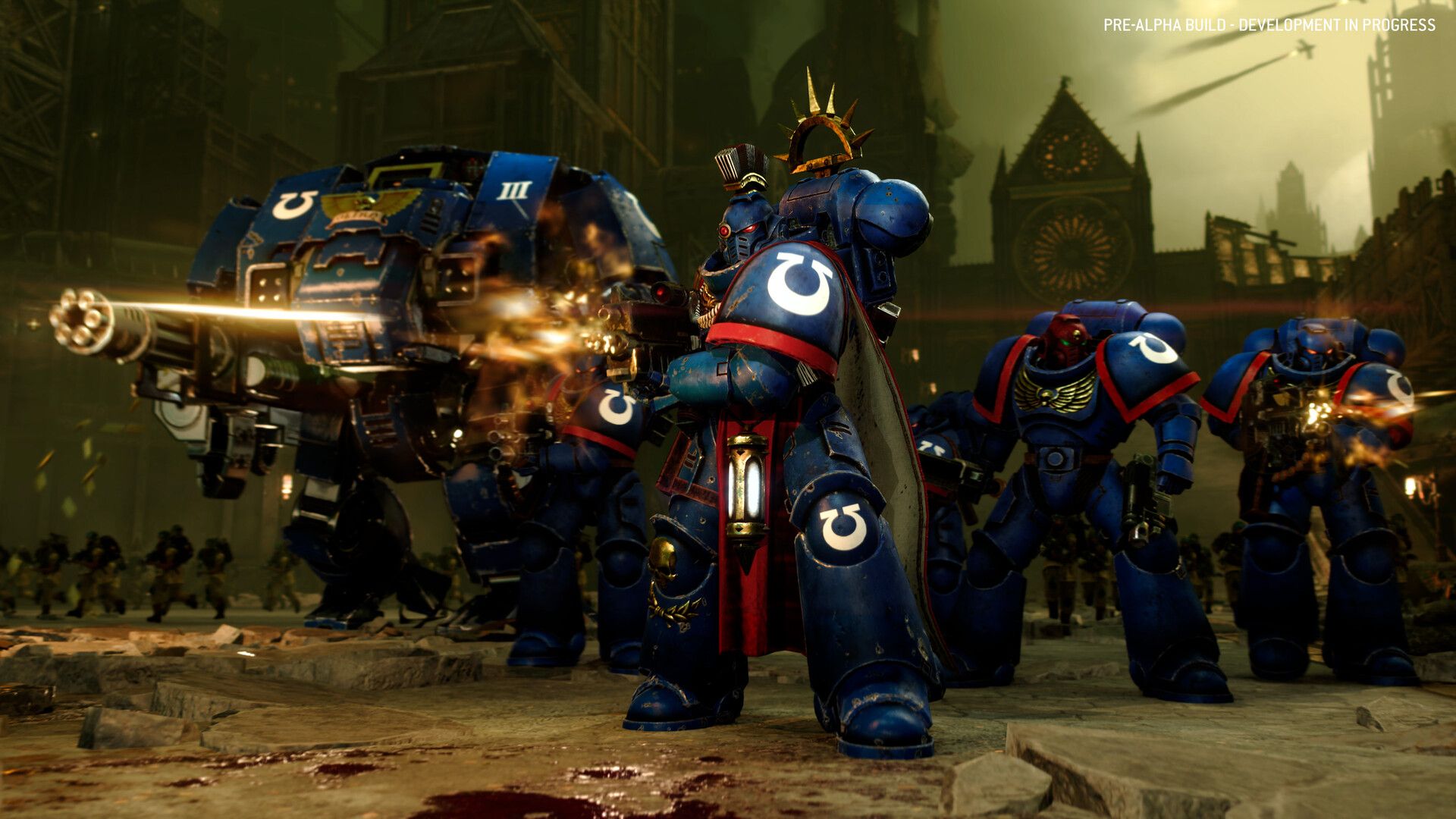
Creative Assembly’s new idea – one Total War: Warhammer 40k game that continuously updates, rather than the different base games of the Total War: Warhammer series –does come with some definite downsides. When the first Total War: Warhammer game released back in 2016, it was certainly exciting, but it was also limited.
Limited not just in scope, but also in quality, and in creativity. As Creative Assembly created new factions, new interesting mechanics, and fleshed out the world, the game continuously improved. When Creative Assembly moved focus to Total War: Warhammer 2, the team was able to make massive improvements across the board that they might not have managed if they had simply iterated on that first title.
It’s only now that we’re in Total War: Warhammer 3, with plenty of experimentation and revisions, that the game is in its true form. It could be that by trying to go straight out of the gate with one monolithic Total War: Warhammer 40k, Creative Assembly will hamstring their ability to really innovate going forward.
This is a particularly big risk, even with the near-guaranteed win of the Warhammer 40k name, as Creative Assembly have had some sizable misses in recent years. As much as the Total War: Warhammer series has had critical and commercial success, other titles like Total War: Pharaoh and Total War: Troy died shortly after they were released.
While a giant Total War: Warhammer 40k game will no doubt be hugely exciting, Creative Assembly needs to make sure that they have a winner before they fail to keep audiences engaged in what is essentially a live-service strategy game.
FAQs
Right now, Total War: Warhammer 40k doesn’t have an exact release date, though it has a confirmed release window of 2027.
No, you only need to own Total War: Warhammer 3 to play Immortal Empires, the main giant map that all of the factions play on. However, you will only have access to the factions connected to the game and DLCs that you own.
Kind of. If you own either of the first two Total War: Warhammer games, you will also be gifted Total War: Warhammer 3 for free. However, you need to buy the individual games and DLC to play their associated factions and Lords.
No, Creative Assembly has confirmed that support for Total War: Warhammer 3 will continue after the Lord of the End Times release.

About The Author