Image credit: Exnilo Studio/Raw Fury
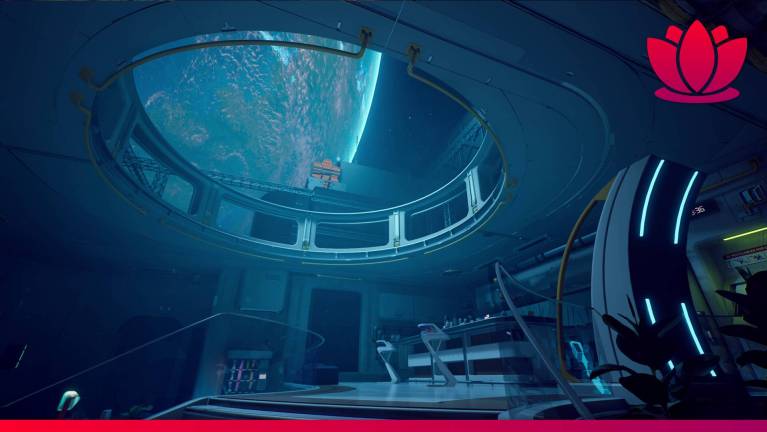
Games that mess with loops and time-travelling dynamics can be incredibly hit or miss, whether you’re looking at horror, sci-fi, or puzzle games. Rivage is the latest celestial puzzler to dip its space-toe into the pool of time loops and skips, set aboard an almost-abandoned space station.
If you’re curious about getting Rivage for yourself and want to know how the game plays, here’s Kyusai’s first impressions of the sci-fi experience, including the core gameplay loop, intergalactic setting, and puzzle quality. This impressions piece was completed on PlayStation 5, courtesy of a code from the game team.
There’ll be minor discussion of puzzles and theming in this article, but it’ll be spoiler-free for the most part and won’t mention any key parts of the Rivage lore.
Escape room, but make it galactic

Rivage is a sci-fi puzzle adventure game, developed by Exnilo Studio and published by Raw Fury. As someone who discovered their all-time favorite sci-fi game from the Raw Fury slate – ROUTINE, if you’re interested – I was intrigued when I saw this game title pop up in my inbox.
In Rivage, you play as a space-farer named Miranda, waking up on the A.R.E.S. space station to discover that her crew has gone missing. Some sort of “space phenomenon” has taken place, and it’s Miranda’s job to figure out what happened while trying to get out of the space station at the same time.
Other than a couple of cute little robots, Miranda is, functionally, alone in the space station, and can only rely on her wits, notes left behind by her crew, and the strange K9 system. Said system is a cerebral memory container of sorts, helping Miranda keep track of key items between time loops.
Time loops are at the center of Rivage. There’s a finite amount of power on the space station each day, which can be spent on opening doors, using ship functions, and accessing tools. Once the power is used up, there isn’t much that can be done in the way of progress, so Miranda has to reset her time-loop using a retro arcade machine.
Rivage acts as an escape room with the time loop mechanic at its core. You start off in Miranda’s room and have to work your way outwards, picking up increasingly higher-level key cards and tools to help you access certain parts of the world, utilizing codes and passwords from previous loops.
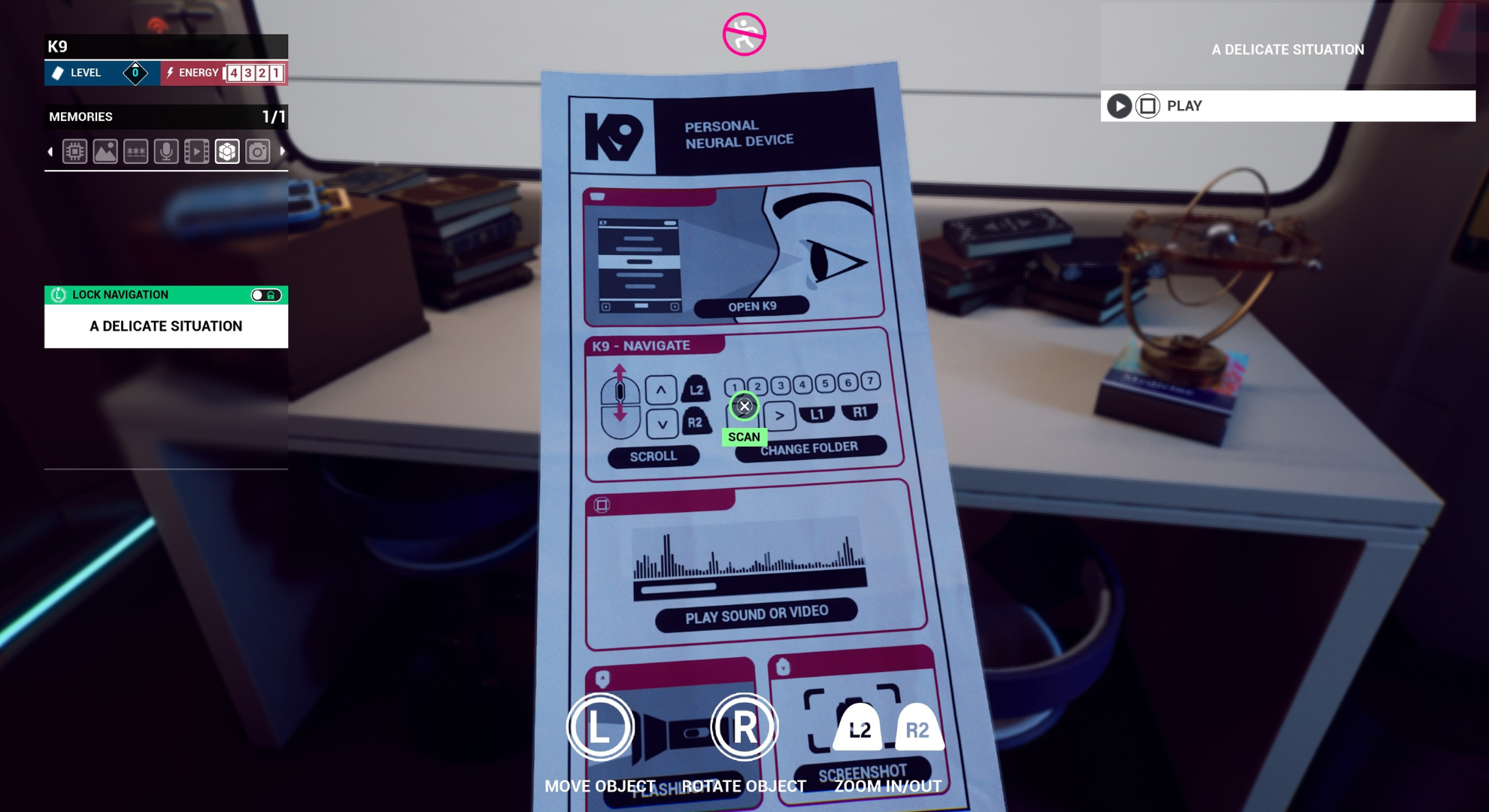
There’s a smart control tutorial in the form of a pamphlet on Miranda’s desk. I love when games implement their tutorials in the game worlds themselves, as it feels thematically appropriate and thoughtful.
The main gameplay loop involves exploring the space station, listening to audio logs or reading notes, and solving puzzles. Puzzles vary from finding passwords and inputting codes, to switching mechanical key parts around to open lock boxes.
Whenever I review or test out puzzle games, I’m always intrigued to see whether a puzzle can be brute-forced before I try to complete it as intended i.e. can I mash buttons and get the desired end result without thinking. It’s out of curiosity more than anything; usually, it shows me whether a puzzle has multiple solutions fairly quickly. I do go back and play the puzzles as intended after this for continuity, though.
In Rivage, I found I could brute-force my way through a generous chunk of puzzles. Some of them were decently interesting and made me work for it, but others felt like they’d been padded out somewhat; for the latter category, I found I could just mash buttons or guess passwords without needing to skip to my next loop.
There was a difficulty curve in Rivage, but not an excessive one. The puzzles got somewhat trickier as I progressed, but not unreasonably so – I spent a good amount of time focusing on the aesthetics and lore snippets instead of the puzzles.
Something that I did find tricky was puzzle inputs on the controller. Some puzzles felt like they had been designed around a keyboard and mouse, and felt incredibly fiddly to input with my DualSense controller e.g. a sliding pattern that doesn’t have a backspace option if you misinput. It’s a game that I can see being a better fit for PC players.
Round and round
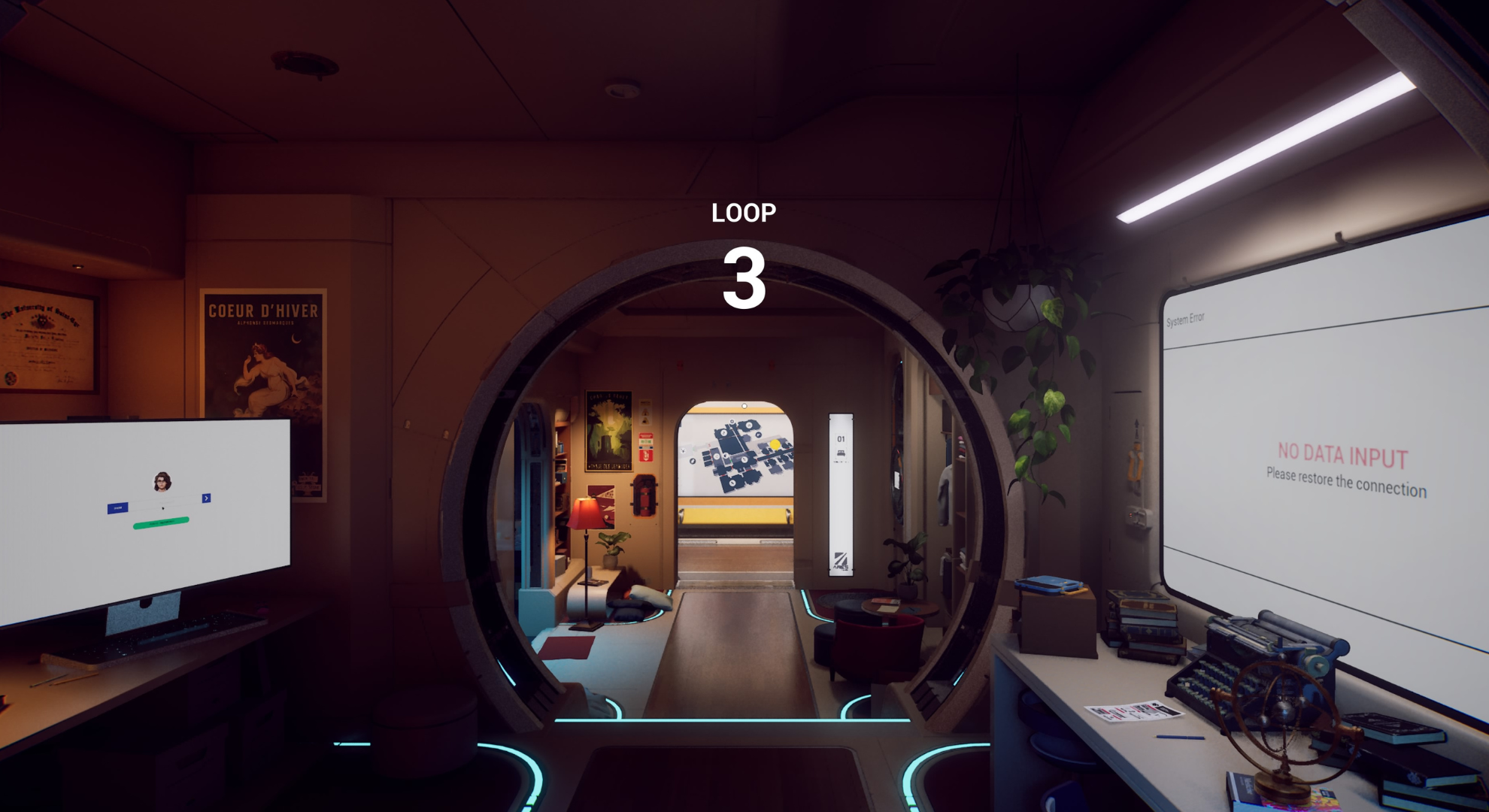
Time loops are a fascinating thing in video games. When they’re well-implemented, they can be exceptionally compelling. In other cases, though, they can lead players to feel like they’re backtracking unnecessarily.
Rivage fell into the latter category for me. While I appreciated the time loop mechanic thematically and did enjoy it in principle, as I spent more time with the game, I found myself muttering “don’t make me loop back and have to do the doors again” whenever I made progress. It felt like I lost momentum each time I had to loop.
This will come down to preference with pacing, though; I can imagine that players who want shorter bursts of gameplay will mesh a lot more with this time loop mechanic than I did. Rivage has a suggested runtime of about 10-12 hours, though, and I wanted to finish as much of it in one go as I could.
The characters in Rivage were decent enough – I enjoyed the notes scattered throughout Miranda’s room and found myself imagining how hard it’d be to be a planet away from the people I loved. I found the dialogue to be wooden in places, but largely, the space crew felt interesting as a group.
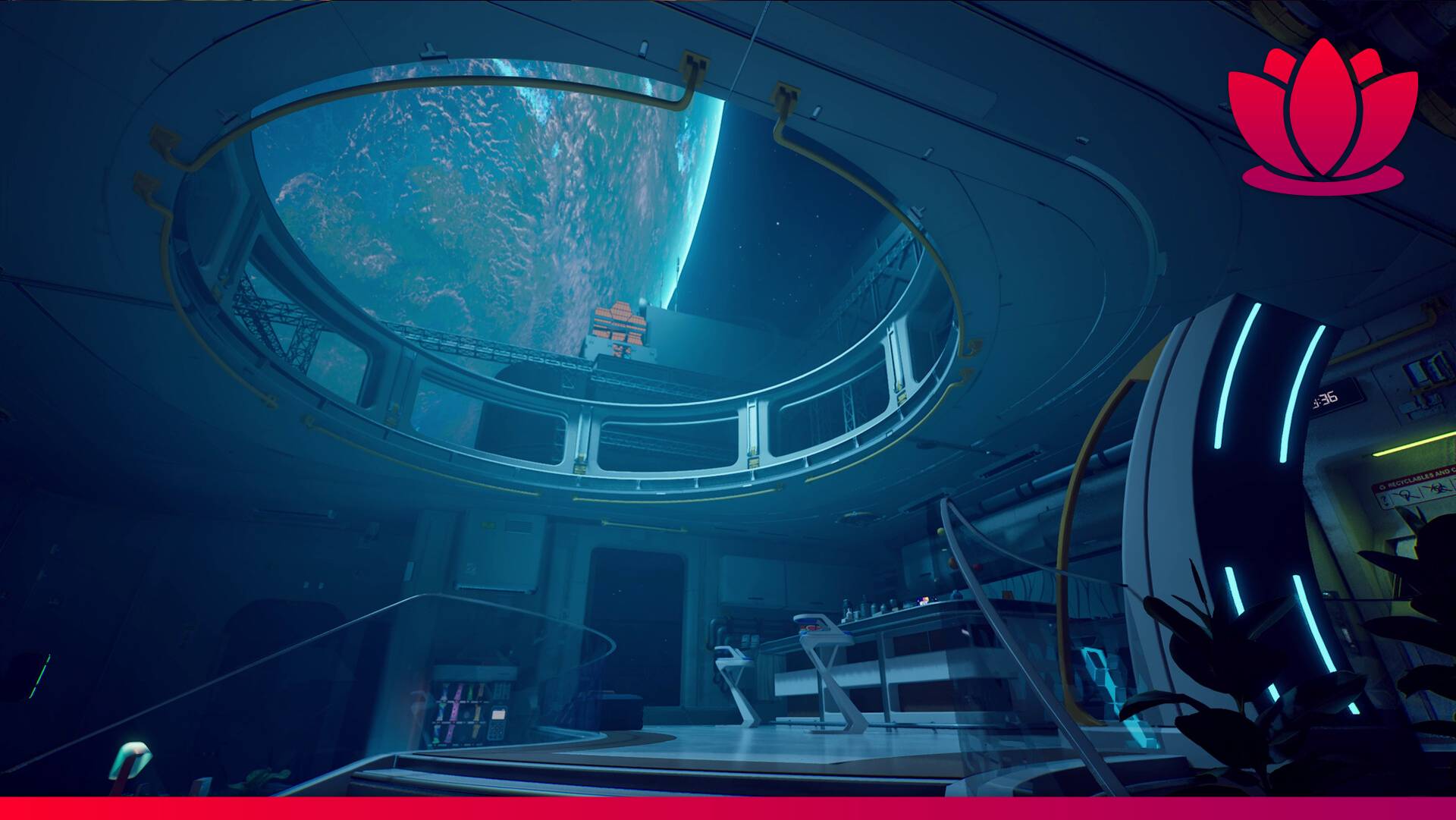
Visually, the game was pleasant to explore, with plenty of interactive items scattered around the space station. You can pick up items and flip them around, scanning them for secrets and hidden details.
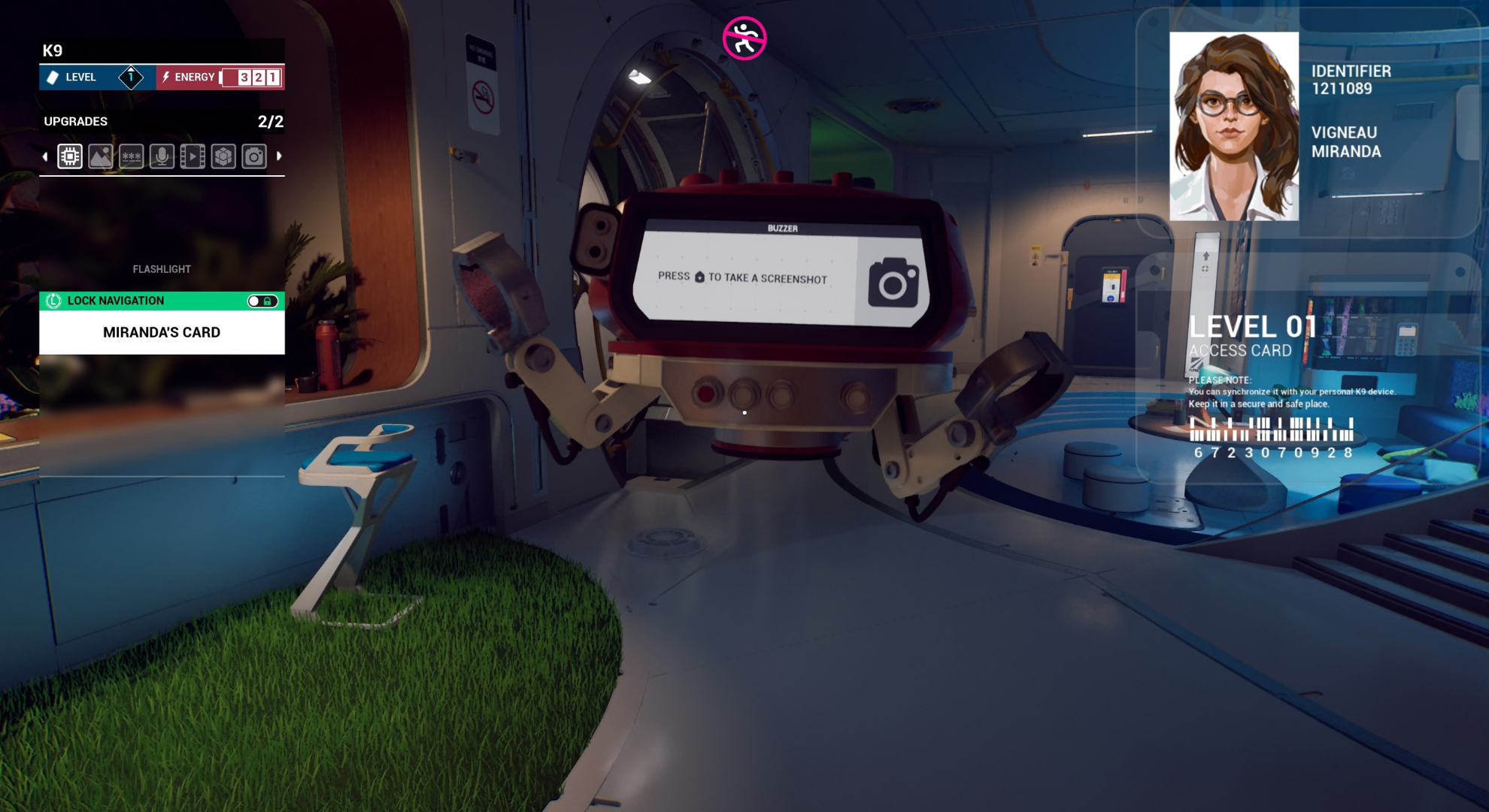
There’s a segment in the kitchen area where you can fully switch out a part of the room, tabbing between a garden, a workbench, and a lounge area, which was whimsical.
Said swappable room did raise my blood pressure somewhat, though, thanks to its relation to a puzzle. I won’t spoil the actual puzzle or locations here, but to summarize, you have to find a set number of items in this swappable area, but you can only hold one item at a time and can’t place things down for safe-keeping. It felt like artificial padding.
Performance-wise, Rivage ran well during my time with it. There were no noticeable bugs or visual quirks, and it ran smoothly on the PS5. That said, I would recommend playing on PC if you’re someone who doesn’t enjoy making very precise movements with a controller.
Something that’ll be a sticking point for some players is that Rivage’s Steam page has an AI disclosure. The disclosure notes that AI was used during the prototyping phase of development, listing “game design iteration and research” as the key areas, and while the disclosure notes that AI assets are not present in the game, it may still be off-putting for some folk. For others, though, this’ll be a non-issue.
While Rivage’s core gameplay loop didn’t gel with me, I can see it being a delightful experience for some sci-fi puzzle lovers. The game is beautiful and there are some fun story snippets to uncover while exploring. If you’re a fan of sci-fi games and escape rooms, you might get a kick out of this title – especially if you’re a fan of cute little space robots zooming around as you explore.
FAQs
Rivage is a sci-fi puzzle adventure. It plays like an escape room.
No, Rivage is not multiplayer. It’s a single-player title.
Rivage is available on PlayStation 5, PC, and Xbox Series X/S.
As per the game’s official Steam page, Rivage used AI during “early prototyping to accelerate game design iteration and research for the game,” but notes that “No AI generated content is present in the game, everything is human made.”

About The Author