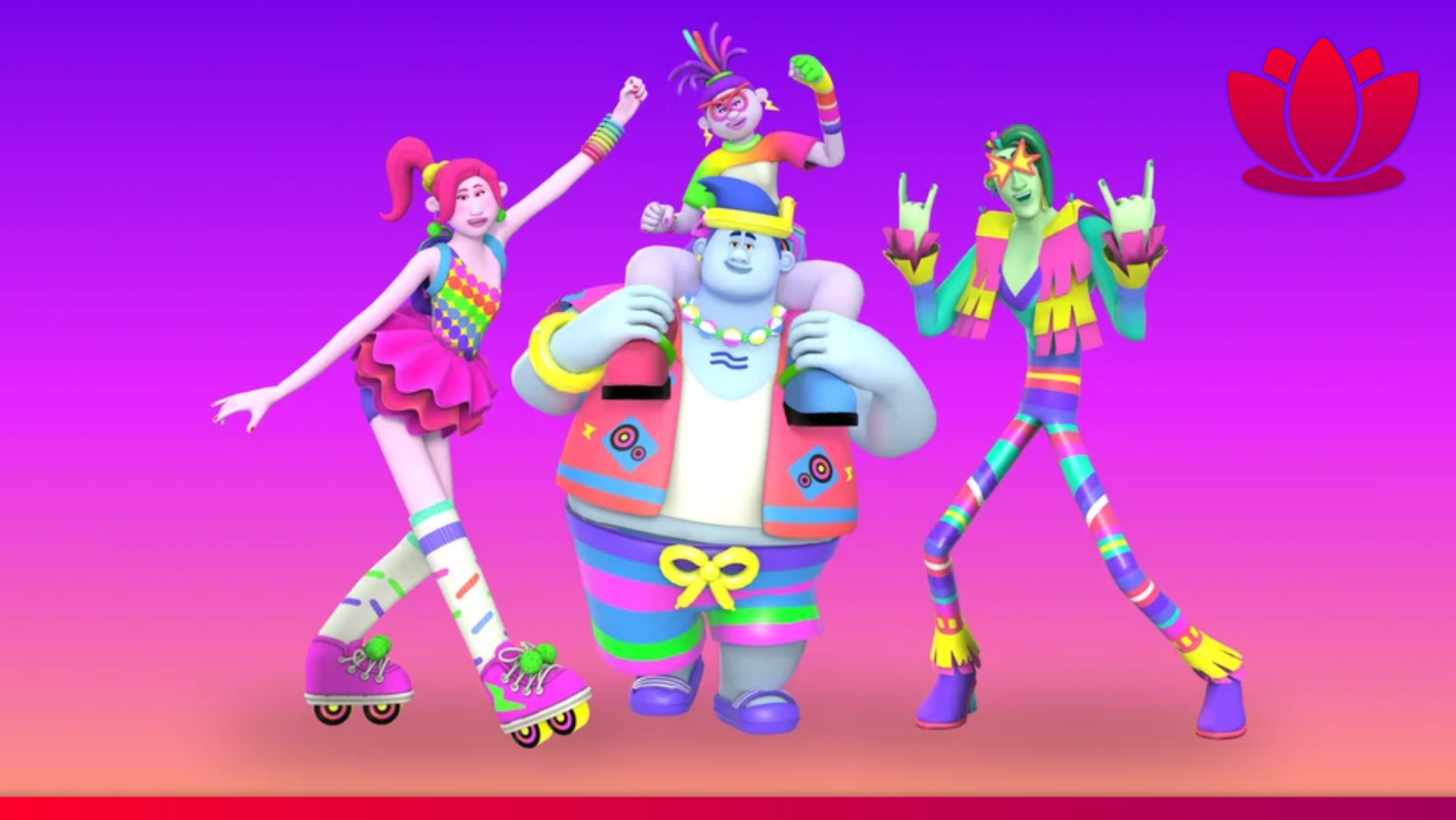
Image credit: Voxler SAS/THQ Nordic GmbH
Karaoke is a ritual for me. Almost every week without fail, you’ll find me at my local pub with a microphone in hand, and whenever I travel for work, the first thing I look up is where the nearest karaoke bar is. I sang in a band as a teenager, and I spent an embarrassing number of hours with SingStar on the PlayStation 2.
So, when Let’s Sing 2027 landed on my Switch 2, I was more than ready to bring the pub home. Here’s a full review of Let’s Sing 2027, completed with a SM7B routed through an audio interface. I’ll be looking at both the game and the free companion app, thanks to a code provided by the game team.
Your living room, but prettier
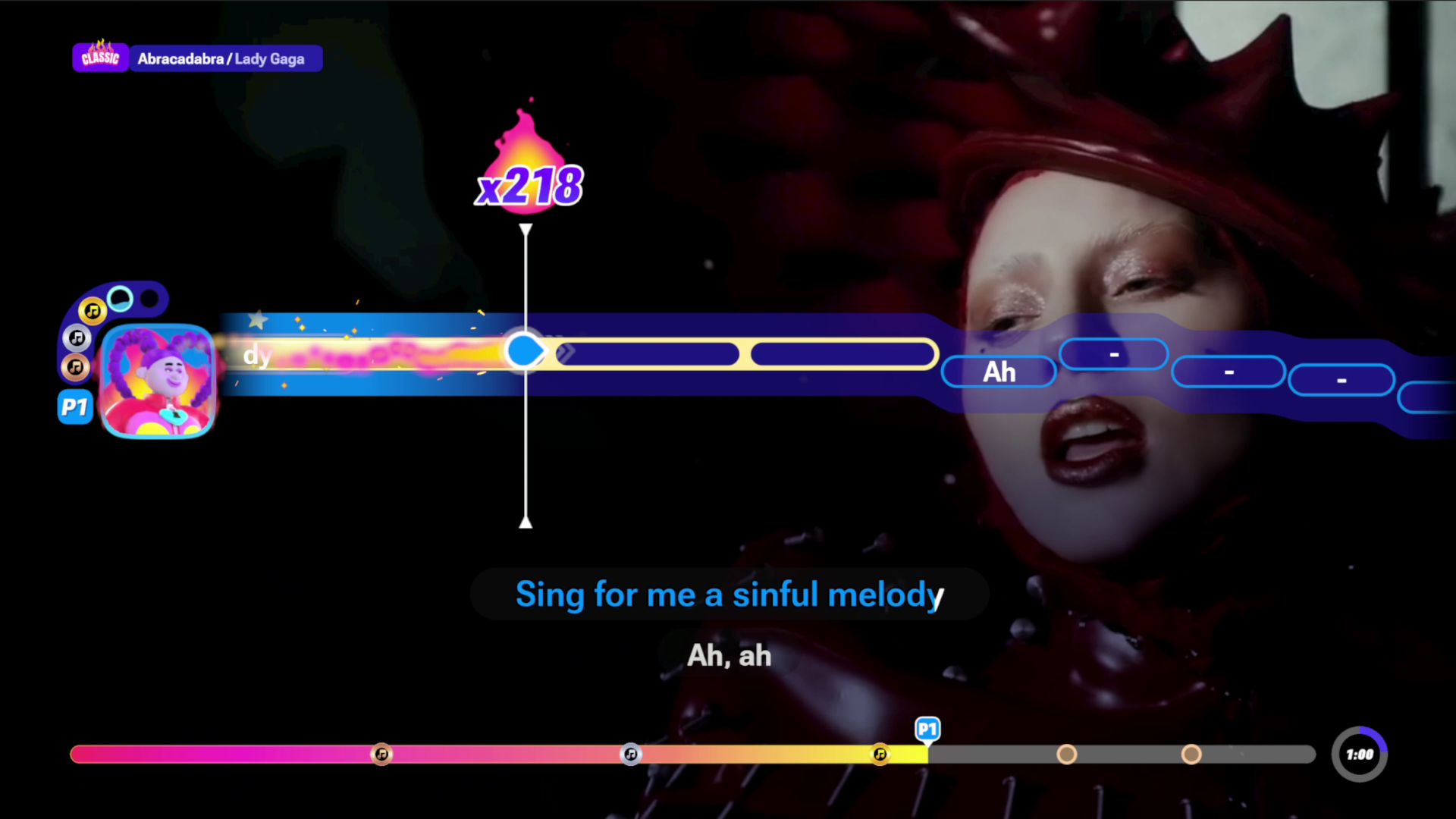
Let’s Sing 2027 is colorful, bright, and pretty, and the menus are a joy to move through. Songs play over their original music videos, which turned out to be a lovely bonus. There were several songs in the game that I’ve known for most of my life, but I’d never seen the video up until it started playing behind the lyrics.
There’s plenty to unlock, too. Skins, emotes, poses, titles, and banners all come from simply playing, with some tied to the genres you sing and others to how much you play. Your profile then shows up whenever you land a high score, which adds a nice bit of pride to every performance.
My superstar moment came when I finally claimed the number one spot on a song amongst everyone who’s played it, and I’m not ashamed to say I celebrated.
The modes on offer cover all the bases. Classic mode settles who the best singer in the room is, Feat mode has you singing together in harmony, and the new party mode sends you to Soundtown for three mini-games and a light-hearted story against DJ Hush, for up to two players. I really enjoyed the story side of things. It’s silly, it’s charming, and it fits the game’s personality perfectly.
A setlist for every generation
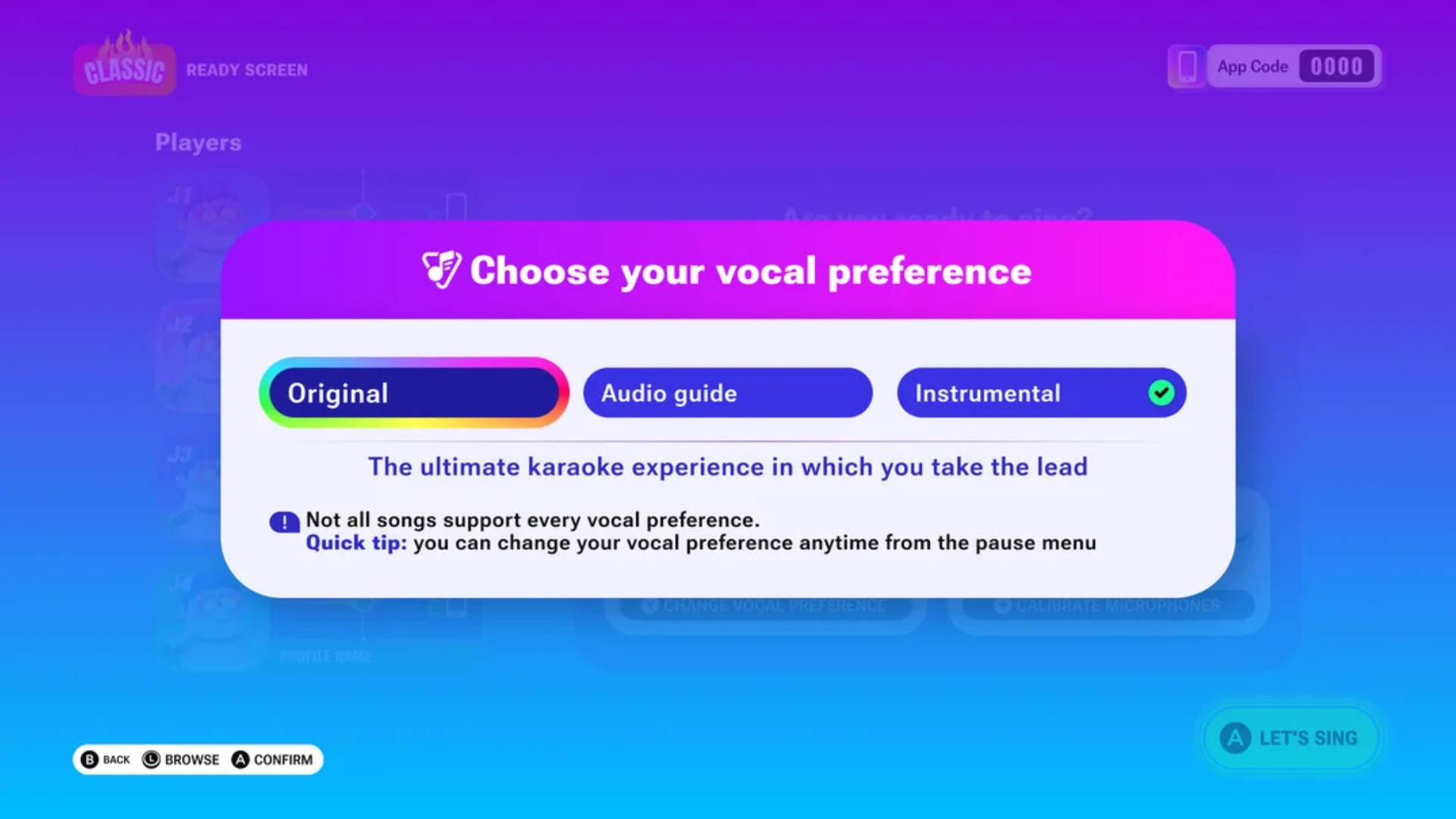
The base game comes with 35 songs, and I think the mix of newer and older tracks is well judged. My standouts so far include Ariana Grande’s We Can’t Be Friends (Wait For Your Love), Sabrina Carpenter’s Espresso, Shawn Mendes’ There’s Nothing Holdin’ Me Back, Olivia Dean’s Man I Need, and Chappell Roan’s The Subway.
I was also thrilled to see something a little more alternative in MGK and Bring Me The Horizon’s maybe, sitting happily alongside The Goo Goo Dolls’ Iris. I’ll admit there were quite a few songs I didn’t know, but that may just be me falling out of touch with the charts.
The bigger question is the VIP Pass, which unlocks more than 150 additional songs. The Standard Edition and the microphone bundle each include one month of it, and the digital Gold and Platinum Editions extend that to three and twelve months respectively.
Realistically, anyone buying this game should expect to want the VIP Pass, because 35 songs only stretch so far on a proper karaoke night. I’d also love to see the licensing reach further back, so the songs from previous Let’s Sing entries come along for the ride.
Mic drop, and not the good kind
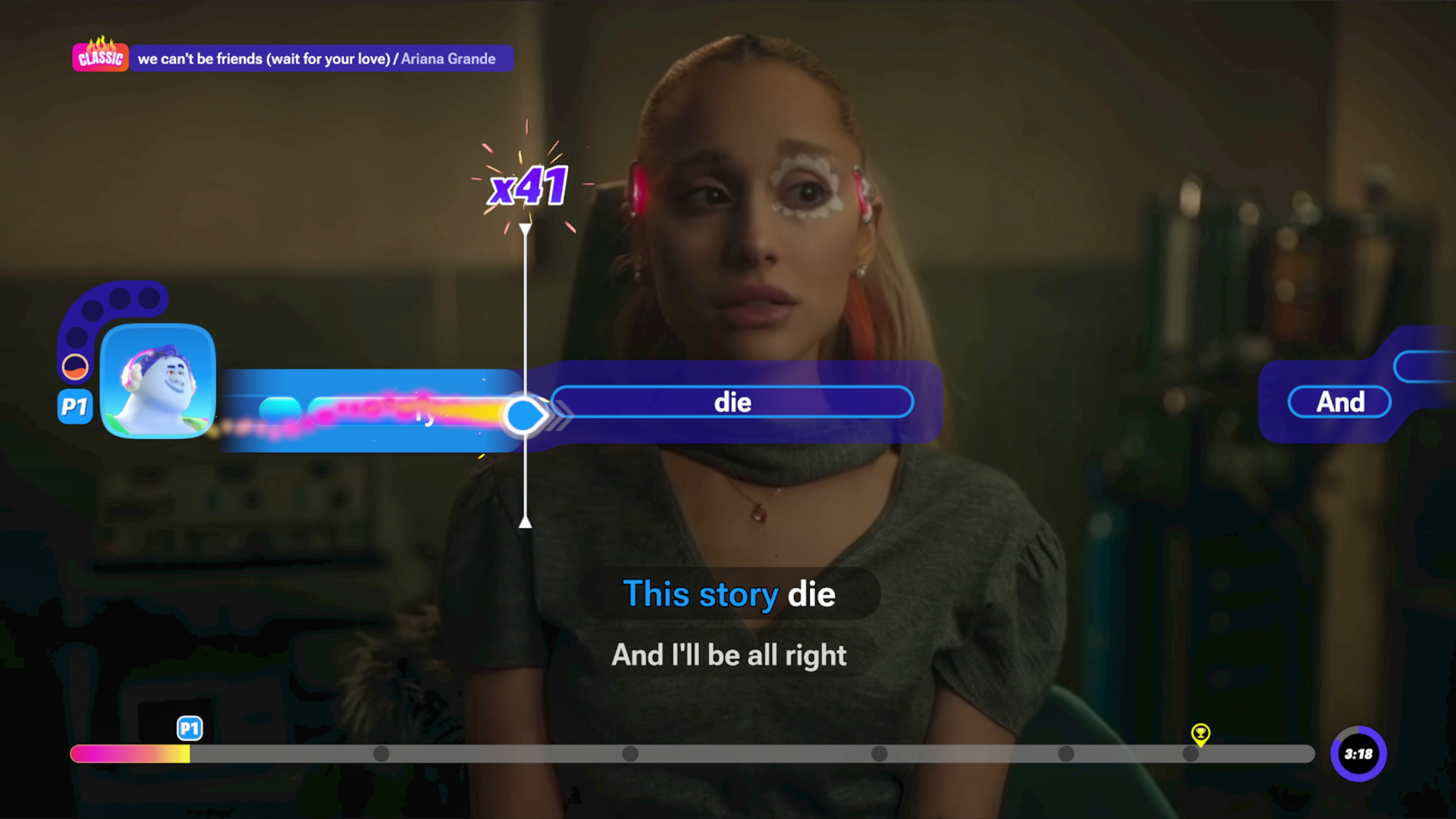
Now for the part that matters most in a karaoke game: actually singing. The pitch detection itself is fine, though you’ll only score on the lead melody, so anyone who loves dropping into harmonies won’t be rewarded for it. The real problem is timing. The vocal tracking seems to start a little too early, especially at the beginning of songs, which means you have to come in noticeably sooner than the music tells you to.
Sometimes it evens out partway through a song, but it’s frustrating every single time. The in-game latency offset only helped a little, and it doesn’t feel like a simple input delay either. As someone who sings in front of a room full of strangers every week, I can tell you the timing on a real stage doesn’t work like this.
I hoped the companion app might fix things, but it made them worse. The latency increased, and the connection kept dropping out unless there was a constant stream of audio going into the phone. Because real singing has natural pauses, I actually got much better results humming the melody than singing it, which rather defeats the point. The app currently sits at 1.3 stars on Google Play, and I can see exactly why.
I can’t rule out that this is a Switch 2 issue, or an issue with my specific audio interface, though both the microphone and my audio interface work perfectly on my PC. Let’s Sing 2027 is also available on Switch and PlayStation 5, and I didn’t have either version to compare. Either way, it’s the one thing that kept pulling me out of an otherwise lovely experience.
One more song?
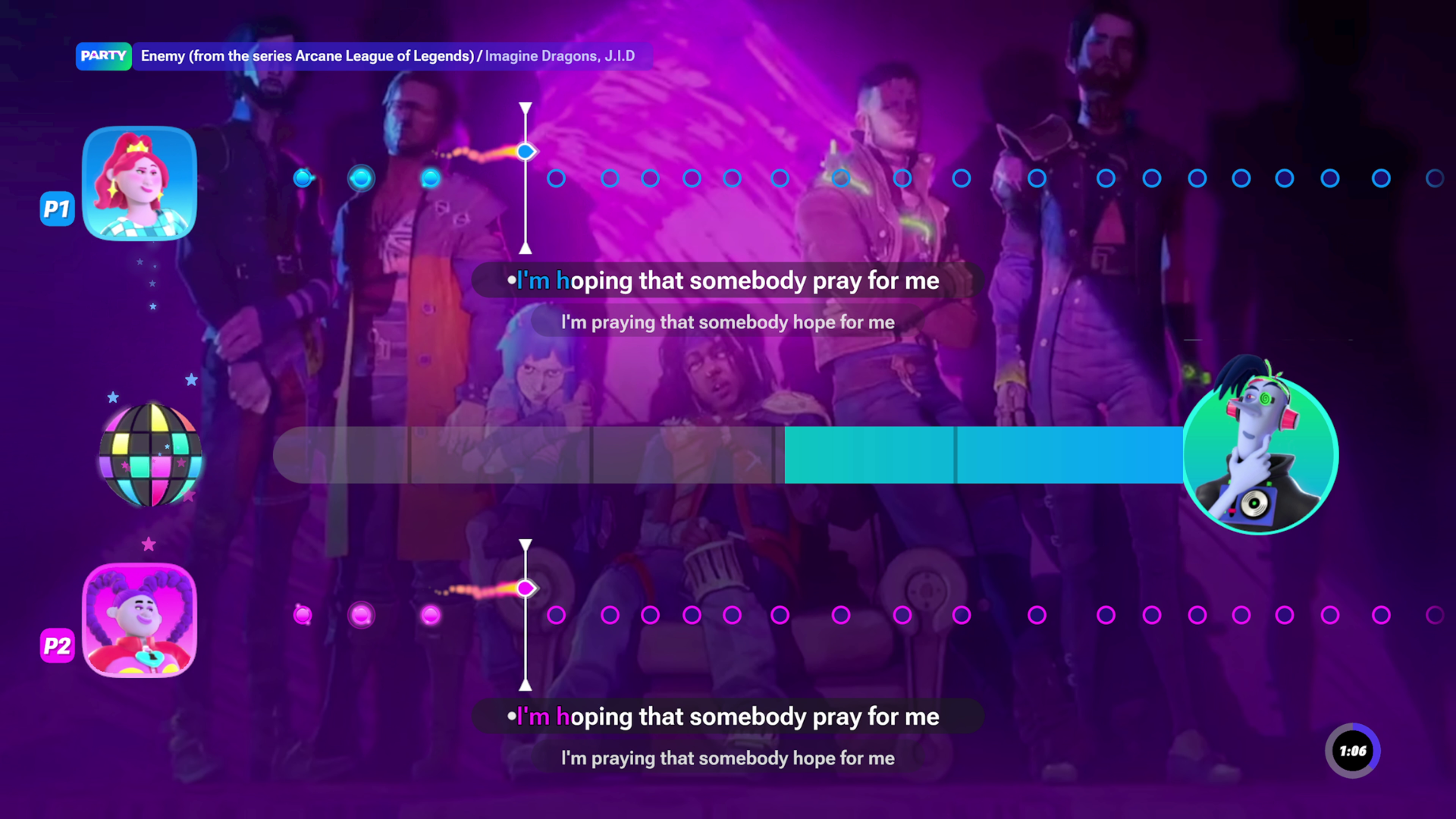
Everything surrounding the singing in Let’s Sing 2027 is a joy. The presentation is gorgeous, the customization gives you a reason to keep going, the party mode is charming, and the setlist bridges the generations nicely. If you’re planning a night in with friends, there’s a lot here to love, especially once you factor in the VIP Pass.
But a karaoke game lives and dies by the microphone, and right now, that’s where this one stumbles. If THQ Nordic and Voxler can sort out the vocal tracking and the companion app, this could easily become a staple of my weeknights. Until then, the mic at my local pub still wins.
FAQs
Let’s Sing 2027 was developed by Voxler SAS and published by THQ Nordic GmbH.
Let’s Sing 2027 came out on November 3rd, 2026.
Yes, Let’s Sing 2027 is on PlayStation 5, along with Nintendo Switch and Nintendo Switch 2.
Let’s Sing 2027 can be enjoyed with 1-4 players.