Image credit: Blizzard
World of Warcraft Forever has already shown that this more nostalgic WoW experience is more than just Classic again. Between being able to explore a pre-Cataclysm Mount Hyjal and Dalaran opening up its magical dome long before Wrath of the Lich King, the game’s timeline has clearly diverged from established canon.
This is an alternative World of Warcraft, locked at level 60 and the vague time period of ‘vanilla’ WoW, but not one that is stagnant. Just because the events of the future expansions will never come to pass doesn’t mean that new stories can’t be told, such as those of the newly playable Skyborne. When the future isn’t set in stone, World of Warcraft Forever creates interesting new lore and gameplay opportunities.
The Blood Elves
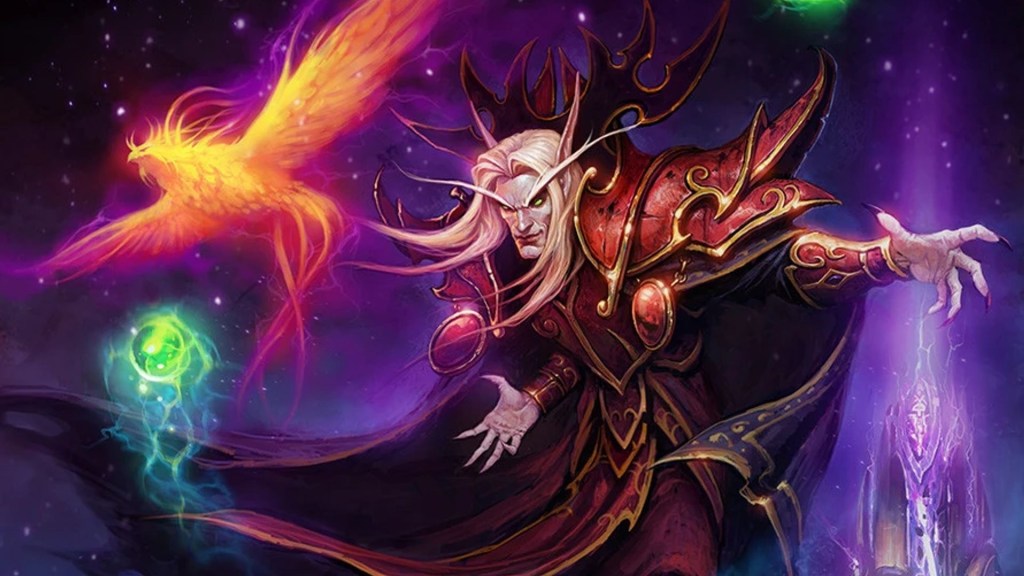
The Blood Elves were first added to the Horde back in The Burning Crusade, but now that the Skyborne have been added to the game, it seems very unlikely that the Blood Elves will be made playable as well. The devastated Kingdom of Quel’Thalas seems like a natural area to explore; however, being both already well-established and physically connected to the Eastern Plaguelands.
If Blood Elves aren’t going to be playable, however, then that opens up a lot of wonderful new opportunities for their fate. Rather than being a low-level area like it was in The Burning Crusade, let it flow from the high-level Eastern Plaguelands into another level 60 area. In the lore, around this point in time, the Blood Elves would be struggling with their own dependency on magic and were filling the hole with demonic fel energy and power forcefully ripped from other creatures.
By the end of The Burning Crusade, they no longer had this problem and were settled back into the wider world, but in World of Warcraft Forever, things don’t need to have such an immediately happy ending. Let these demonically charged elves indulge in their more selfish, villainous angle, and let them be just as big a threat as the undead Scourge that continues to ravage their lands.
Obviously, there would be allied Elves calling you to their aid, but this also opens up the opportunity to bring in the local Forest Trolls – the Amani. In the World of Warcraft timeline, these Amani were driven to desperate measures when the Blood Elves joined the Horde, but if these elves are our enemies, that opens up interesting opportunities.
The Scourge
In World of Warcraft: Forever, the return of the Lich King, the cruel master of the undead Scourge, will likely never come. Even if we were to visit Northrend, he should be stuck upon the Frozen Throne in Icecrown Citadel, commanding his legions from a distance. We will likely face off against the minions of the Scourge, such as the fanatical Cult of the Damned, and its head, the Lich Kel’thuzad.
Where the potentially interesting deviation emerges is in World of Warcraft: Forever’s playable classes. In Wrath of the Lich King, players could make Death Knights, the armoured lieutenants of the Scourge. However, that required a pretty specific series of events in the lore.
If the timeline does not progress, then it’s unlikely that the Lich King will attempt to come to the Plaguelands, that the paladin Tirion Fordring will not take up the legendary blade of the Ashbringer, and that control over what will become the playable Death Knights will not be broken. Therefore, playable Death Knights are not inevitable.
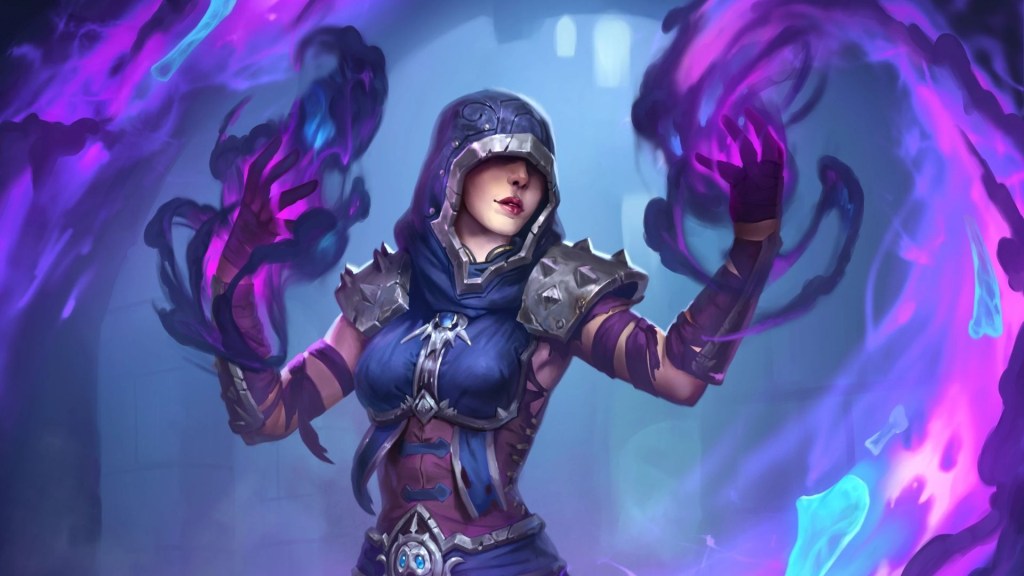
Rather, it could be fun if instead we got a different kind of undead-focused playable class – a Necromancer. The Warcraft community has wanted a Necromancer class for a long time, but it simply had too many overlaps with Death Knights and Warlocks. In World of Warcraft: Forever, there’s a new opportunity to give these bone-botherers their time in the sun.
Orcs and the Horde

Although he became Warchief of the Horde in Cataclysm, Garrosh Hellscream had actually emerged into World of Warcraft back in The Burning Crusade. Garrosh is a huge figure in shaping the narrative of the game, but back at the beginning, he was stuck in Outland, beyond the Dark Portal. If that portal is never going to be explored, then the very nature of the Horde is changed.
It isn’t simply that Garrosh replaced fan-favourite character Thrall, but rather the impact that he had overall. He pushed the Orcs to become more aggressive, rapidly militarised the Horde, and advocated for greater focus on conquering territory. While there’s conflict between the Alliance and Horde, back in vanilla the Horde was a lot more focused on spirituality and survival.
Without Garrosh, the Horde is left to grow in a different direction. As well as allowing for the cold war on Azeroth to remain cold, it also lets the game continue to have a focus on the non-Orcish parts of the Horde. Under Garrosh, Trolls, Tauren, and Forsaken were all sidelined for a lot of the Horde narrative, even before he was actually Warchief. In World of Warcraft: Forever, we’ve got a greater chance to see these often-ignored groups actually be important to the story.
Pre-Cataclysm zones

In the Cataclysm expansion, World of Warcraft was turned upside down. All of the original vanilla zones were recreated to reflect the fact that they had been ravaged by disasters, natural and unnatural, caused by the return of the mad dragon Deathwing. By the time players had gotten to new areas like Mount Hyjal, they were embroiled in some expansion-specific devastation.
In World of Warcraft: Forever, though, that doesn’t have to be the case. We already know that Mount Hyjal will be accessible in its pre-Cataclysm state, which opens up the opportunity for other areas to get this same treatment. Areas like the Goblin island of Kezan, Worgen-infested lands of Gilneas, or the contested land of the Twilight Highlands would all feel different with this treatment.
It goes beyond just Cataclysm-specific areas, though. The home of the Zandalari Trolls couldn’t be visited until Battle for Azeroth, but it had been horribly devastated during the Cataclysm, which had pushed the Zandalari to many desperate acts of villainy across multiple expansions. In Forever, we could see a Zandalar pre-Cataclysm – though whether they would now be friends or foes would be quite the question.
Old Gods

The Old Gods are a group of strange eldritch abominations in World of Warcraft, bringing not-so-subtle Lovecraftian influence to the setting. They first emerged all the way back in vanilla WoW, when players could take on the Old God C’thun in Ahn’Qiraj. The problem is that Blizzard hadn’t quite established a lot of its lore yet, so C’thun, supposedly one of the strongest and strangest beings on Azeroth, was defeated without much plot relevance.
Other Old Gods have been able to have far more buildup and influence, from the ambient maddening effect of Yogg-Saron to the Mists of Pandaria expansion focusing on the corruption of Y’Shaarj, and N’zoth getting close to claiming the world for its own. Yet in Forever, it’s likely that only C’thun will get much of a chance to show up in person.
This is a perfect opportunity to use the Old Gods in a way more in line with their influences. C’thun can stay as a major enemy, though hopefully with more respect for its name, but the other Old Gods should remain distant and unknowable entities. Their corruption should seep into our adventures, something we must fight against but never be able to truly stop, or even really understand.
WoW Forever has a chance to do something that World of Warcraft has always struggled with, and that’s to make the Old Gods actually scary. It could be a lesson that Blizzard would do well to learn; not everything should be killable, no matter how cool you think it would be.
FAQs
World of Warcraft: Forever is free to access for anyone who already owns an active, standard subscription to the game.
The confirmed World of Warcraft: Forever release date is November 4, 2026.
Yes, World of Warcraft remains an incredibly popular and relevant game in 2026. The MMORPG still averages between 10 and 15 million monthly players worldwide.