Image credit: Fairy Mount Games
After a summer of heatwaves, we need more games that remind us how beautiful the environment can be. Despite the extreme weather, there’s a startling lack of games focused on the environment and sustainability. Luckily, the demo for the whimsical indie strategy game Flame, Forest & Flood plays with these themes in a fun way, filling the flower-shaped hole in my heart.
This game is filled with strategy and whimsical art. I had the chance to preview the game for Kyusai ahead of its release date on November 19, 2026, and while the demo I tried only included so much, it shines some sunlight on what the full game may be like.
For the sake of transparency, another member of the Kyusai team is affiliated with Fairy Mount Games, working on their social media team.
Oasis in a dry land
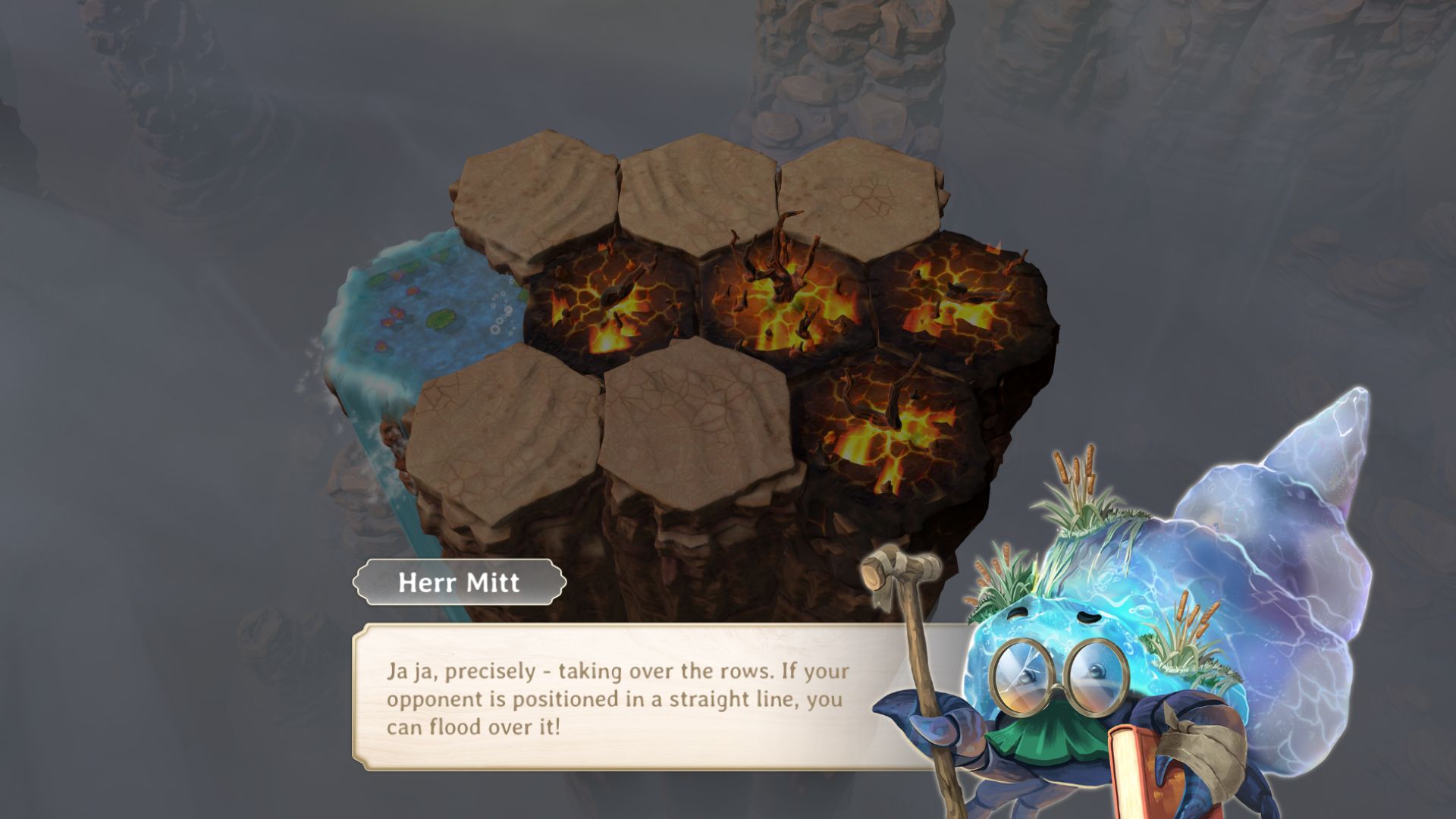
You start in the desert, a dry game board where you meet Herr Mitt, a friendly hermit crab with an affinity for water and a shimmering shell. He helps ease you into the gameplay, which is a simple case of spreading your chosen element – flame, forest, or flood – from one hexagonal tile to the next.
This simple strategy gameplay is similar to Chinese checkers or draughts at first. But, everything changes when Blaze, a cheeky fire cat, launches his attack. We find out we can extinguish his flames with our water, and learn that each of the elements has a symbiotic relationship to one another: fire burns the forest, the forest soaks up the flood, and the water extinguishes the flames .
Treat them like the Fire, Water, and Grass types in Pokémon, and their relationship becomes even easier to understand.
You get a choice of which element to play, which means there will always be an element you are strong against and weak against in every round.
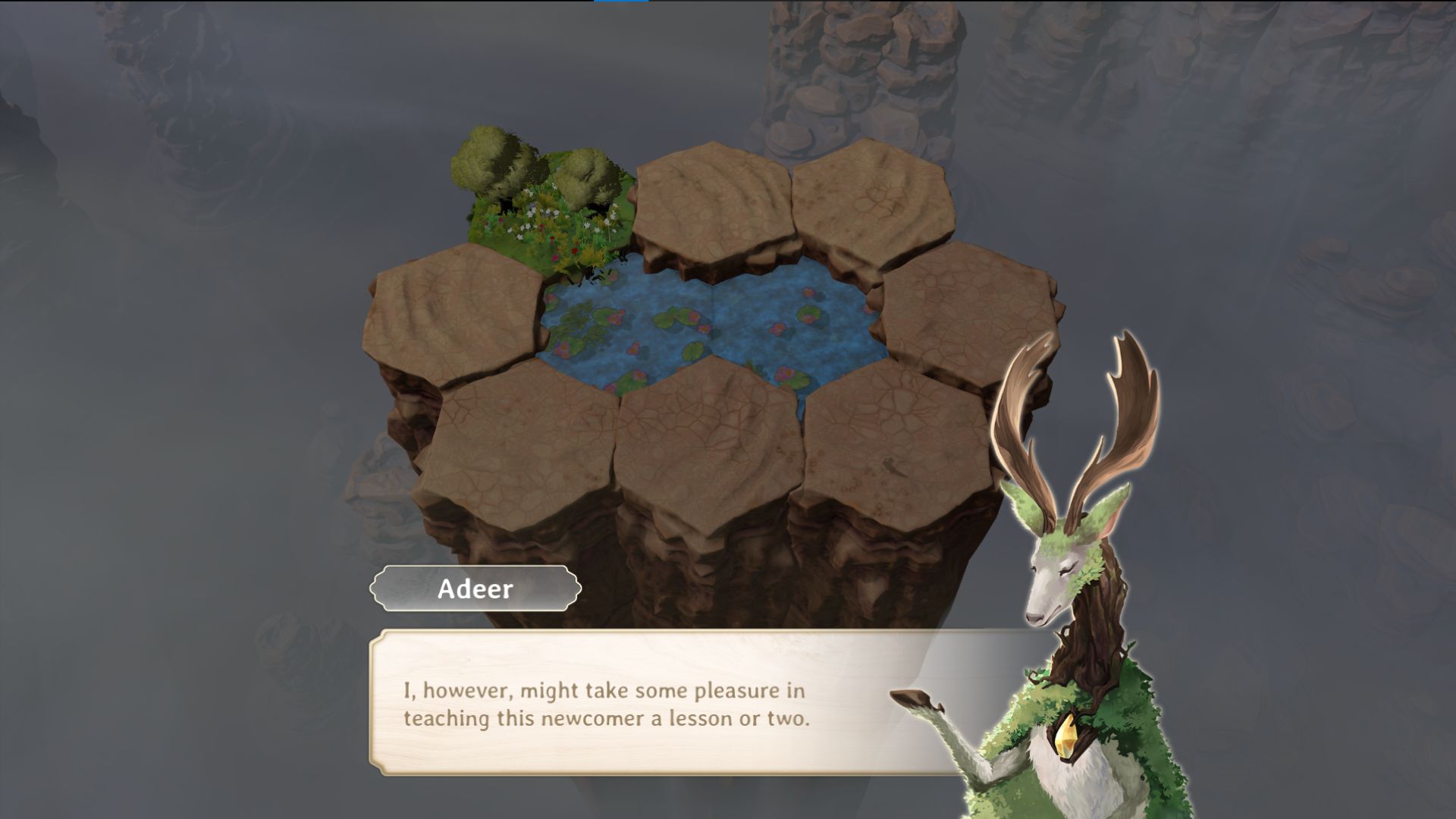
That’s where Adeer, the patron of the forest, comes in to advise us how to move our elements off of a tile and onto a neighboring one. Although this dodge mechanic and the elements’ relationship are simple gameplay elements on their own, together, they make a layered gameplay system full of strategic potential.
Springing strategy
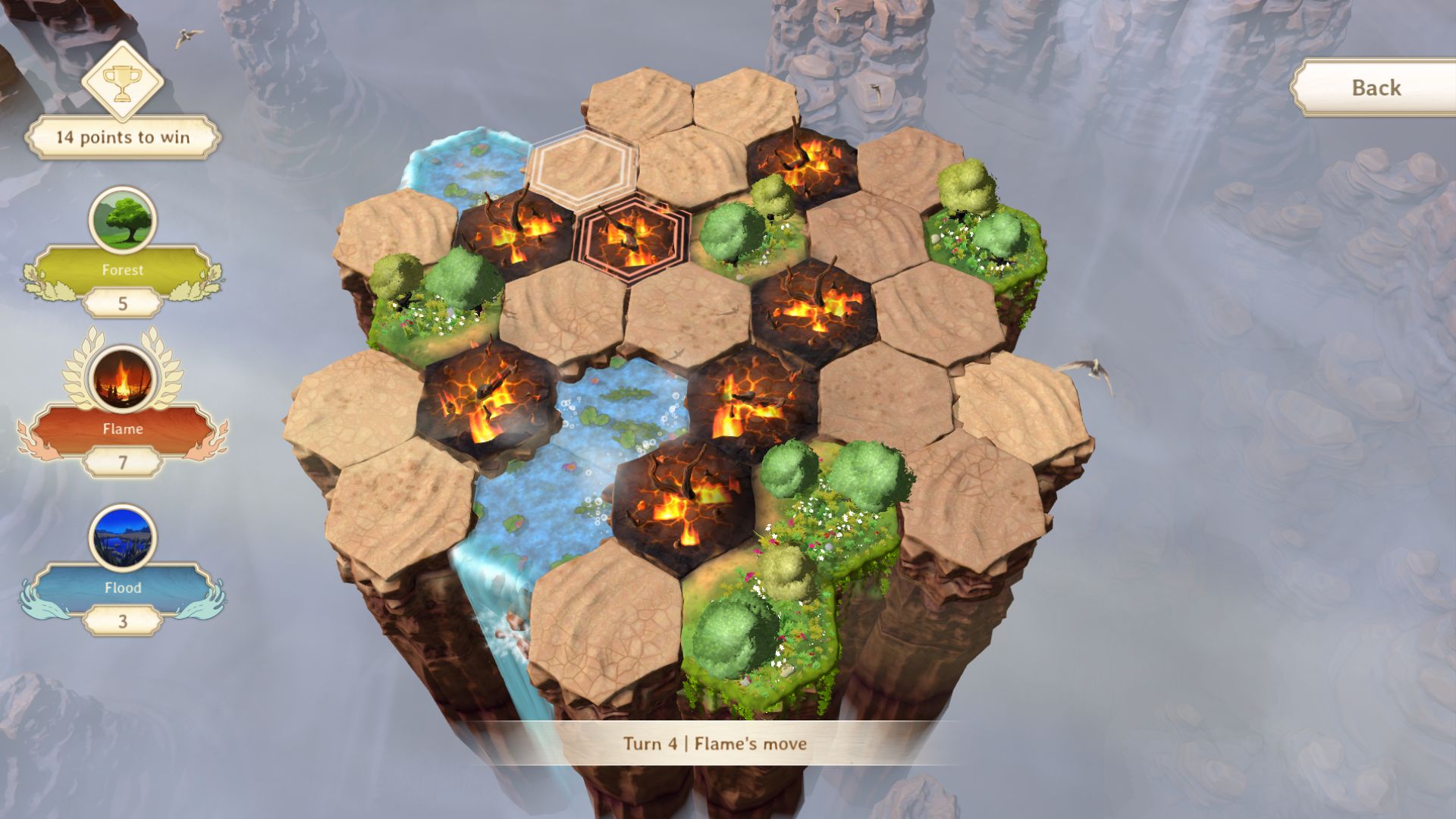
Making the relationships between elements simple to understand keeps the game relaxing and easy to play, but it can quickly become more in-depth depending on how you choose to play. By tailoring the game boards to your liking and adapting your gameplay style, you can get much more strategic in your approach to bringing life to the desert.
The demo included three game boards, in the shape of a circle, a clover, and a shield, respectively. You can choose how densely you want these game boards to be filled with the elements at the start, meaning you’ll want to adapt your approach depending on how you start. While you can change all of these settings yourself, you’ll still need to adapt on the fly whether you’re in charge of the layout or not.
Every match, whether single-player or against friends, locally or online, will have three players. While everyone starts in the same place, I found every match I played quickly shifted in the favour of one element.
With some carefully timed dodges and by anticipating where your opponents will move at the start, you can easily secure your win early on. Play the first few turns right, and the match will likely go well for you. But your opponents will likely do the same, meaning I often found the beginning of matches was the most engaging part.
Garden of cosmos
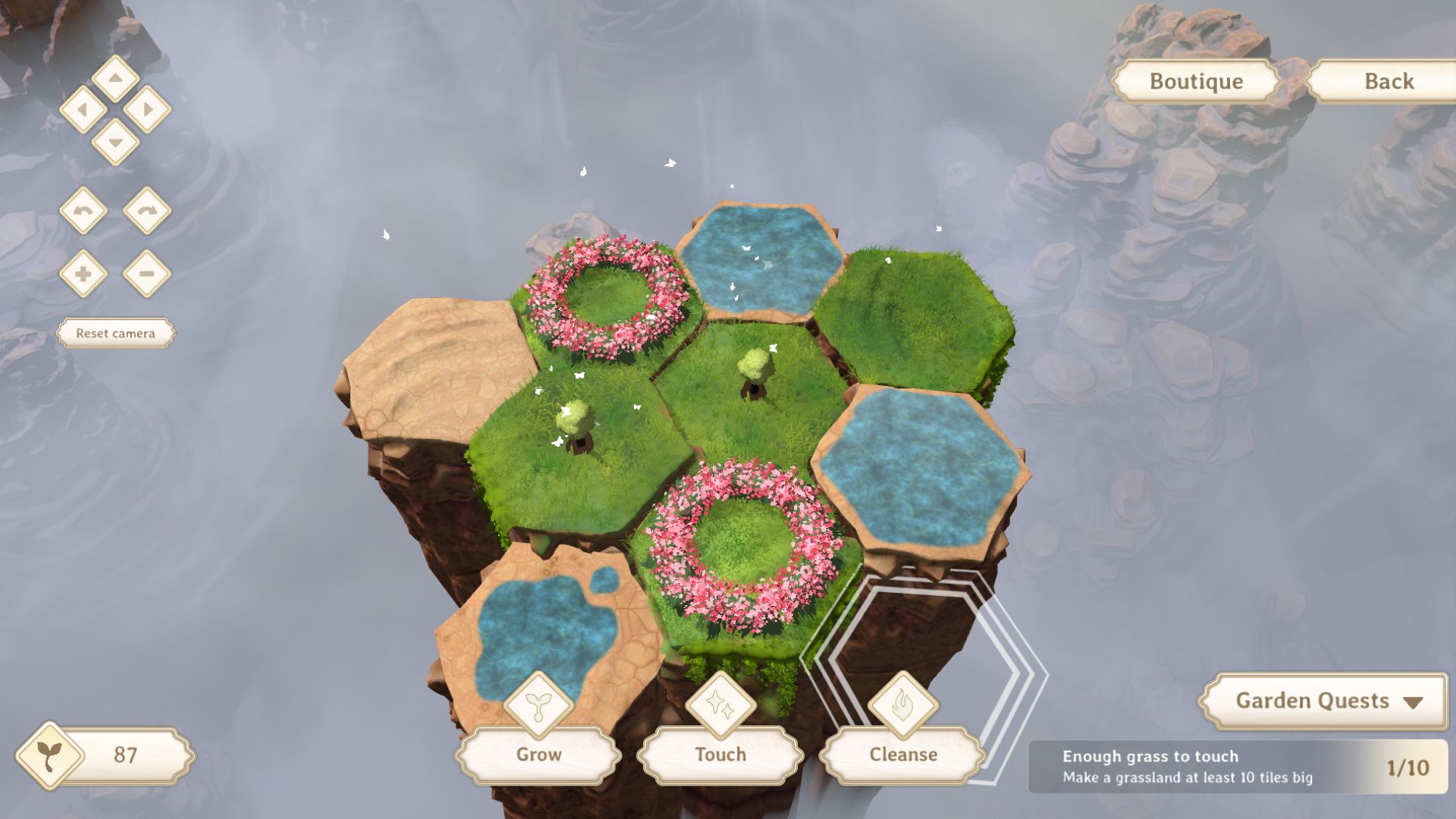
While matches all have very different lengths, each match is unique and bite-sized. This makes the inclusion of Garden quests a welcome addition, which are specific challenges to complete during matches that will earn in-game points when completed.
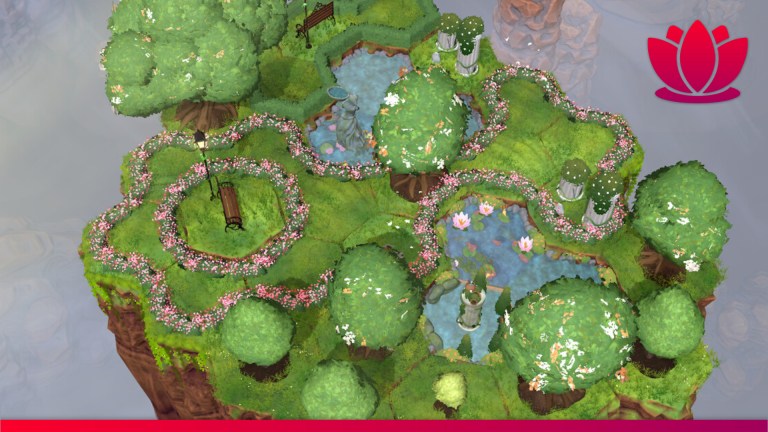
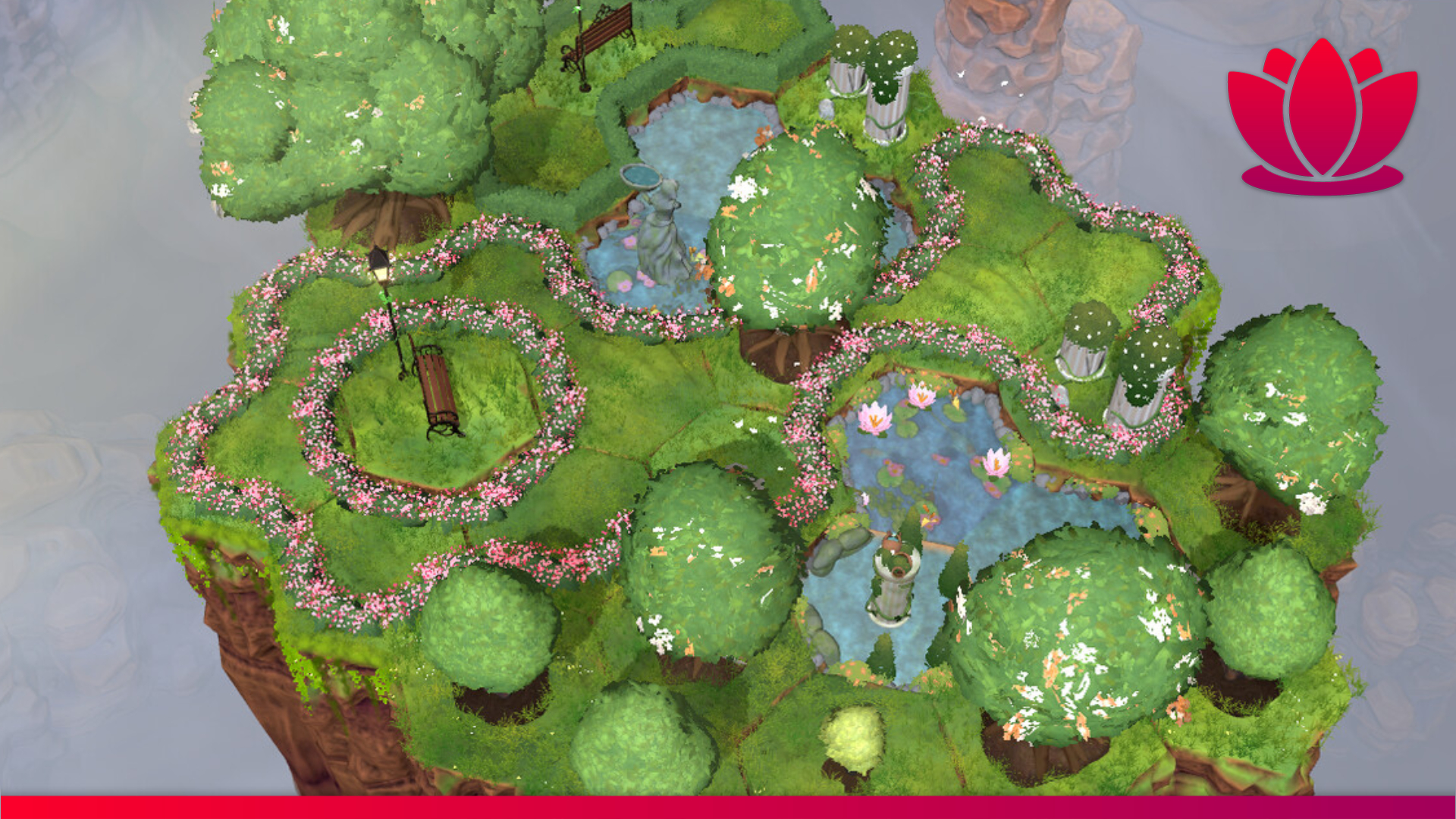
You can redeem these points in the garden, a relaxing zone where you can take a step back to create your very own ecosystem using the elements. By decorating this space with the fireflies, butterflies, and flowers that you can redeem with points, you’ll soon have your own cozy space where you can watch life go by.
This is also where the 3D models making up the ecosystems of each tile shine best. I have only seen a handful of decorations available, but those that I have seen are cute, colorful, and carefully crafted.
It’s a delight to see artists for the game also be credited, with the credits including the names of the artists and linked ArtStation accounts to make it easier to follow their work.
Cycle of life
While Flame, Forest & Flood is banking on one style of gameplay, I could see this style being varied, engaging, and consistently fun for those who are willing to explore it.
There’s a harmony and stability to this gameplay, making it a comforting experience when added with the whimsical visuals. I see it tailored not only to cozy game lovers, but to anyone who enjoys playing relaxing strategy or board games with friends.
The consistency in the demo suggests that it gives a great picture of what it will be like overall. While many games, indie or otherwise, have entirely avoided the release date of the industry-shaking GTA 6, Flame, Forest & Flood is providing a more cozy, element-filled option for strategists and casual players this fall.
The demo is a lovely flower that’s still just a bud, so I’m looking forward to seeing the full game bloom into its own come November.
FAQs
Cozy games is an umbrella term that means games that give you a sense of comfort and relaxation. While what brings you comfort can be different for everyone, there is often a warm and whimsical style to these games that helps players feel relaxed.
There is no one best strategy game, but StarCraft, the Fire Emblem series, and Flame, Forest & Flood are just some examples of great strategy games.
Research undertaken by therapists and students focused on cozy games suggests that they might be beneficial to the players’ mental health.

About The Author