Image credit: Em Stonham for Kyusai/tobyfox
Deltarune is a prime example of how to blend silliness and whimsy with tense combat and heavy themes. After falling in love with Undertale, I had high hopes for the first Chapter in 2018 – and Chapter 1: The Beginning exceeded my expectations ten times over.
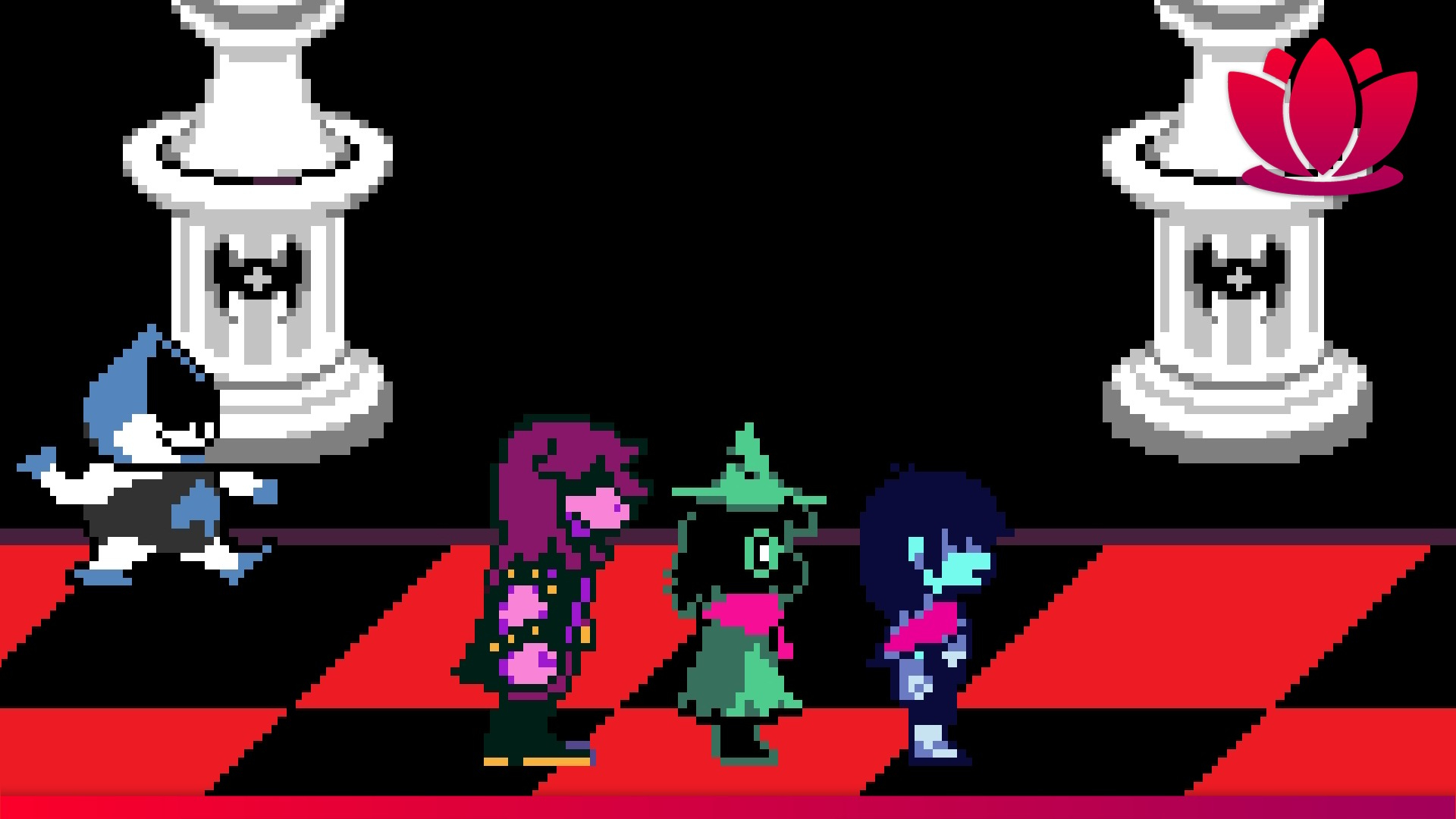
Introducing the player to Kris, Susie, and Ralsei, along with the best character in the series, Lancer, the Chapter is a joy to play through years later. Here’s a full review of Deltarune Chapter 1, completed on Nintendo Switch 2.
Please note that there will be heavy spoilers throughout this review, looking at key characters, boss fights, and story beats. I’d heavily recommend playing through the game before reading this review.
Setting the stage
The first Chapter of Deltarune came out on Halloween in 2018, laying the foundation for the second game in the Undertale series. It’s best described as a parallel story to Undertale, according to the Steam page; not quite a sequel or a prequel, but a secret third option.
I mentioned this at the beginning of the article, but wanted to reiterate that this is not a spoiler-free review. To summarize, the first Chapter of Deltarune is endearing and engaging in equal measures; if you’ve not played it yet, remedy this immediately.
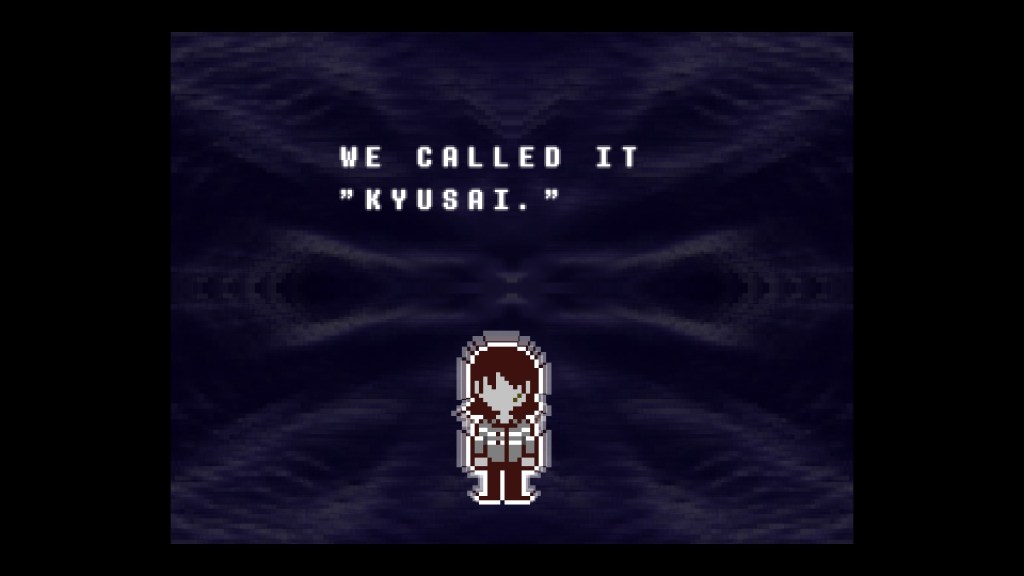
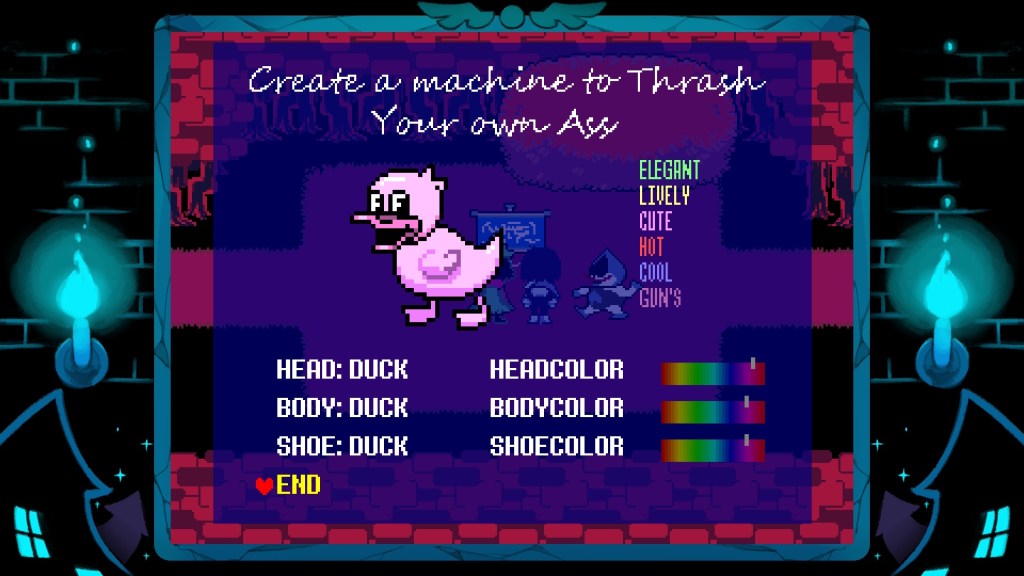
In The Beginning, you’re greeted with a mysterious opening sequence that lets you create a character, referred to as the Vessel by the community. After picking out its appearance, its name, and its favorite type of blood, the Vessel is praised as excellent – truly, excellent – then promptly discarded.
In this universe, your choices do not matter. You cannot pick who you play as, and must follow the path that’s been set for the seeming protagonist, Kris, instead.
It’s an awesome opening to the Chapter as it completely subverts the traditional RPG opening experience, and it sets the stage for the type of narrative that Deltarune is going for. It’s also intriguing to look back on this with Gaster goggles on and wonder who exactly is speaking to you in front of the swirling Depths background.

The game then introduces you to Kris and their mother, Toriel, with Kris being driven to school and arriving late, and being thrown into a group project with the class bully, Susie. Everyone appears to be terrified of Susie, including the teacher Alphys, who sends her with Kris to find some more chalk.
Susie is revealed to be the culprit of the chalk going missing – mmm, crunchy – and ends up threatening Kris over her snacky secret. After a brief bit of hallway violence, the pair end up going into a supply closet to find the chalk before promptly falling down into the darkness, ending up in the game’s first Dark World.
Dark Worlds are parallel worlds or planes of existence, centered around a Dark Fountain, a plume of void energy, seemingly, which grounds this alternate reality in one place.
The Chapter 1 Dark World features purple cliffs scattered with wiggling, alien-like plants and white foam, along with eye carvings and strange puzzles. There’s even a giant chessboard and a bake sale in the middle of a forest.
Susie and Kris initially think they’re alone, but as they make their way towards a castle in the distance, two new characters make their debut – Lancer, the son of the realm’s King, and Ralsei, the fluffy prince – revealing that the Light World duo are prophesied heroes, much to Susie’s annoyance.
The story unfolds from there, taking the aptly-dubbed Fun Gang trio (and for a while, Lancer) through the Dark World and to the castle where they end up having to face off against Lancer’s dad, the King.
Combat in Chapter 1 is a lot of fun. My favorite boss fight in Deltarune can be found just before the Fun Gang meets the King, featuring the former court jester and now secret boss, Jevil.
With mesmerizing bullet patterns, a strong visual style, and brilliant music, the Jevil fight is a grand example of what to expect from Deltarune’s secret bosses as you move forward. It’s fiendishly tricky if you’re not a bullet hell battler; this is the fight that I consider to have taught me how to play bullet hells.
I loved how Chapter 1 took the time to subtly teach the player about combat, too, largely through Lancer and Ralsei. Lancer squares up to the Fun Gang several times with his team of guys, but he picks only support characters for one battle, showing the player how this choice impacts the battle’s bullet patterns.
Quirky and memorable

The point where I fell in love with Deltarune was Lancer’s introduction and subsequent character arc.
He’s a deeply silly character – he doesn’t even have a walking animation, he just scoots along as a hyperactive PNG – but ends up grappling with mixed loyalties and betrayal, trying to help the Fun Gang while also sticking by his admittedly evil dad’s side.
Lancer skipping happily between goofy moments and emotional story beats had me hooked, and it set the stage for how Deltarune’s story would pan out. I find it’s fairly rare for a game not to take itself too seriously while still being able to deliver emotional or intense story beats, but that’s something that Deltarune nails.
There’s an impressive amount of depth to Deltarune’s world, which only expands as the Chapter rolls on and subsequent instalments are added.
I don’t think it’s an exaggeration to say that every single room in Deltarune Chapter 1 has an interesting secret, Easter egg, or lore snippet to pick up. If you’re fussed about games rewarding exploration and having something for every character to say, The Beginning will resonate with you.

The visuals in Deltarune are stunning, with a soft yet intricately detailed pixel art style. The aesthetic lends itself beautifully to the game’s world-building, with each secret or fun character interaction looking as good as it feels.
I also love being able to see the splash art behind the game screen while playing on the Nintendo Switch 2. The effervescent blue lanterns are cozy yet mysterious, and the warped buildings of Castle Town fit the vibe perfectly.
I’ve played through Deltarune Chapter 1 a myriad of times now, and I’ve never encountered any bugs, glitches, or visual quirks during my time with the game.
It runs smoothly and looks good, and the controls are intuitive as well. The only aspect of the controls that may throw people off is the combat if they’re unfamiliar with bullet hells, but as noted, the tutorial stage is informative and feels natural to play through.
If you’ve never played Deltarune – or Undertale, for that matter – you’re missing out. From the outside, I’m sure the fanbase looks like a group of geeks getting way too excited about their blorbos; the community is fairly obsessive, I’ll admit.
The obsession is deserved, though. The game is entrancing, with an intriguing storyline that lends itself naturally to theorycrafting and fun speculation, and the art style is equally mystical. If you’re a fan of story-led RPGs and bullet hell boss battles, Chapter 1 of Deltarune is a journey that’s worth embarking on.
FAQs
The first Chapter of Deltarune came out on October 31, 2018.
At the time of writing this article, there are five Chapters of Deltarune, with a sixth scheduled for a 2027 release and a seventh to follow afterwards.
Technically, you do not have to play Undertale to play Deltarune, but as someone who loves both games, you’ll have a much better time if you play the first game before digging into the 2018 release, both in terms of mechanics and lore.
The identity of the Knight is not currently known, although most Deltarune theorists point to it being one of the Holiday family members, likely December or Rudy.