Image credit: Blizzard Entertainment/Wizards of the Coast
World of Warcraft has landed as the first of the intended crossovers for Dungeons & Dragons, bringing the world of Azeroth to D&D 5th Edition. The new World of Warcraft sourcebook gives rules on how to translate the classes of World of Warcraft to the table, as well as adapting the playable races, professions, and even a few of the dungeons.
I’ve been very excited for the D&D World of Warcraft sourcebook, because it feels like the two really should go hand in hand. They’re both about dungeon-crawling adventurers in fantasy worlds filled with overlapping and confusing lore, obsessed with fighting and looting. Yet, while the sourcebook is functionally everything it needs to be, it’s not everything I wanted.
Time for another alt
The World of Warcraft sourcebook does a mostly fantastic job of guiding you in how to create your WoW character in D&D, so I was excited to get sent a copy by the team.
Each class, at the very least, has a guide on what options would best represent a direct translation, and then the book just keeps adding new content to better represent the game in D&D. These suggested builds are an excellent inclusion for new players and old to get the most out of the new class content.
The luckiest classes – the Death Knight and Demon Hunter – get new subclasses for the Paladin and Ranger, which cram huge overhauls into the base game in the name of getting the right feeling. Some classes, like the Monk and Rogue, update subclasses previously seen in older D&D sourcebooks. Others like the Mage add in new feats to specialise the characters, and pretty much all classes add in new spells.
There’s a mixture of different approaches to translate each WoW class – some with more care than others. The Fury Warrior and Assassination Rogue get absolutely nothing, while the recommended translation for the Restoration Shaman barely makes any sense, even with the overhauls the game has made to Barbarian to accommodate it.
The playable species of Warcraft are in a similar dichotomy. Some, like the undead Forsaken or the cyborg Mechagnomes, are near-perfect representations of how they are in-game, with whole new rules. Others, like the Goblin, barely represent the idea of how that species exists on Azeroth, just lifting rules from previous books because it’s easy.
You need to get lucky, because my Pandaren Brewmaster is thrilled, but a Worgen Rogue would feel quite hard done by.
All function, little form
The mechanics need to carry the World of Warcraft sourcebook, because the whole thing is very functional. There’s perishingly little personality throughout the book, as while there’s a framing that it’s all been collated by the quirky Bronze dragon Chromie, she never really adds flavour to things. Everything is very, VERY dry, obsessed, and caught out with just how dense the Warcraft lore is.
Part of this issue is that the whole book is untethered from a particular point in time in the Warcraft mythology.
It must cover everything from the very beginnings of Classic, all the way up to The War Within, where the book’s knowledge ends. Despite it releasing to coincide with World of Warcraft Forever, and during Midnight’s lifecycle, it doesn’t have any up-to-date lore. The playable Haranir released as part of Midnight are here, but they’ve perishingly little background info.
Faced with this huge challenge, it seems that the book’s response is to simply give up. It provides a lot of lore and will give as much mechanical help as possible, but it simply cannot be everything to everyone, and so it doesn’t try.
It out-and-out says right in the introduction that if you want to know more about the WoW setting, then you should seek out a wiki. If you’re not already invested in the world, then this book can’t help you; that’s too tall an ask.
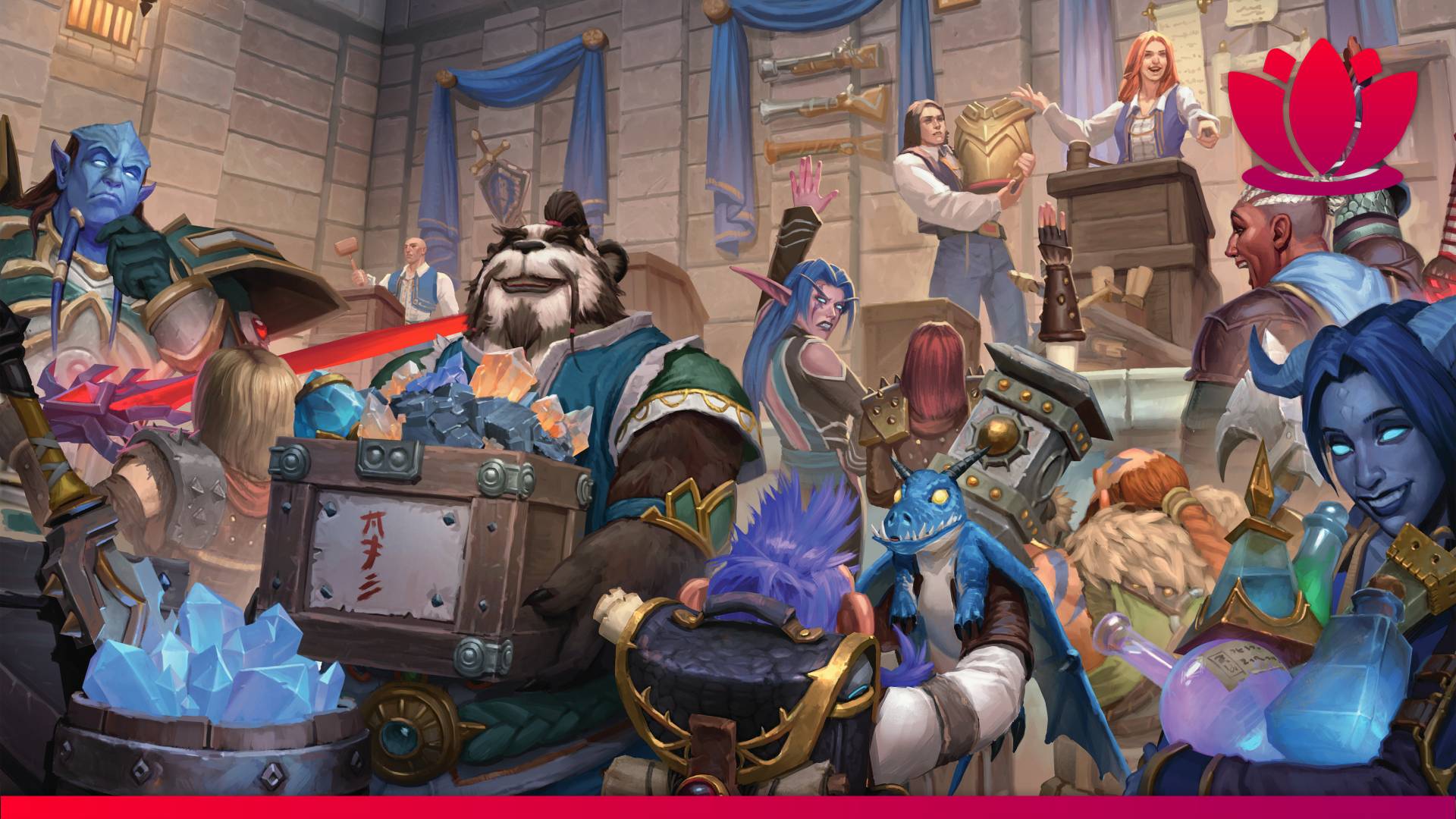
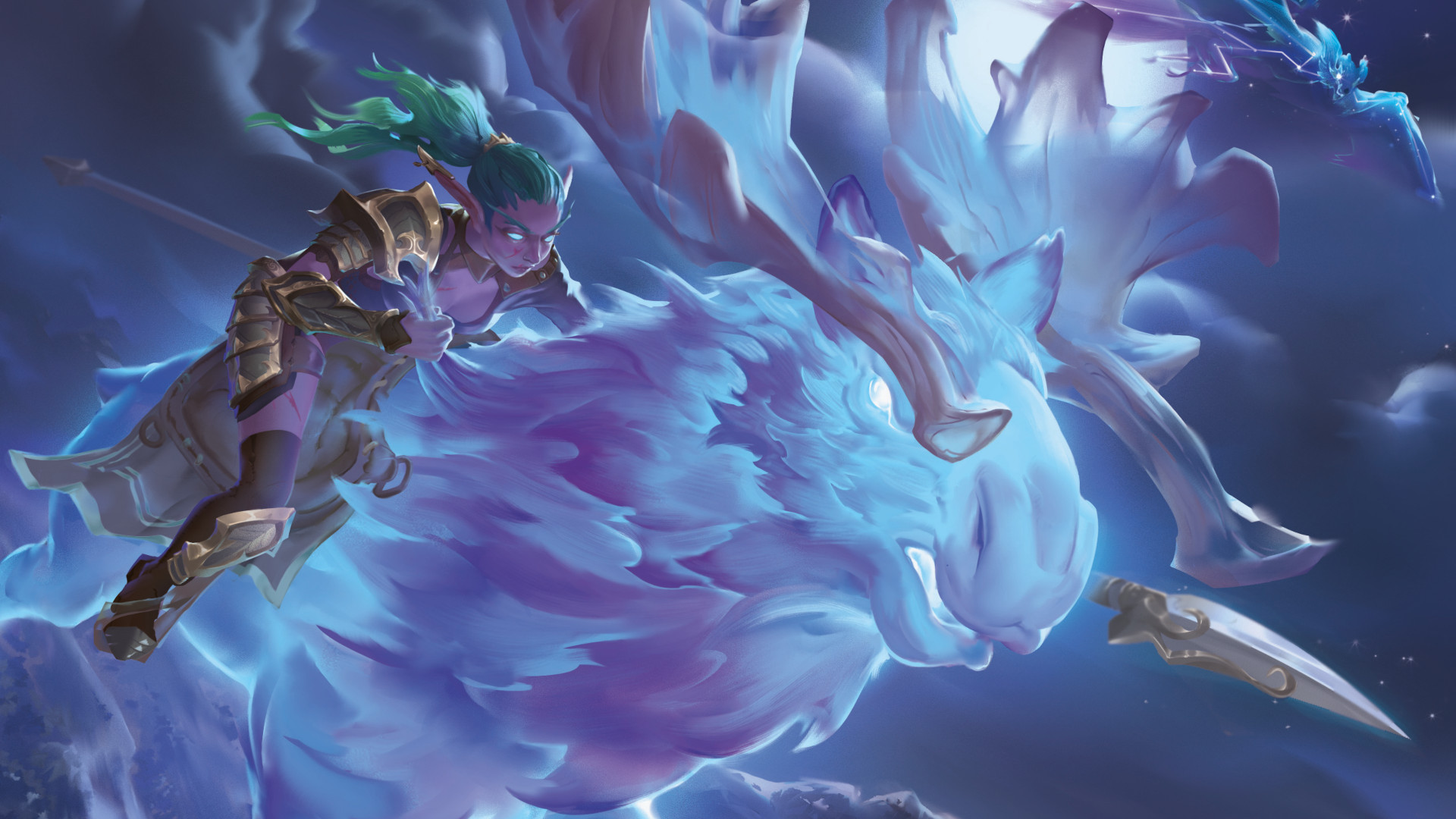
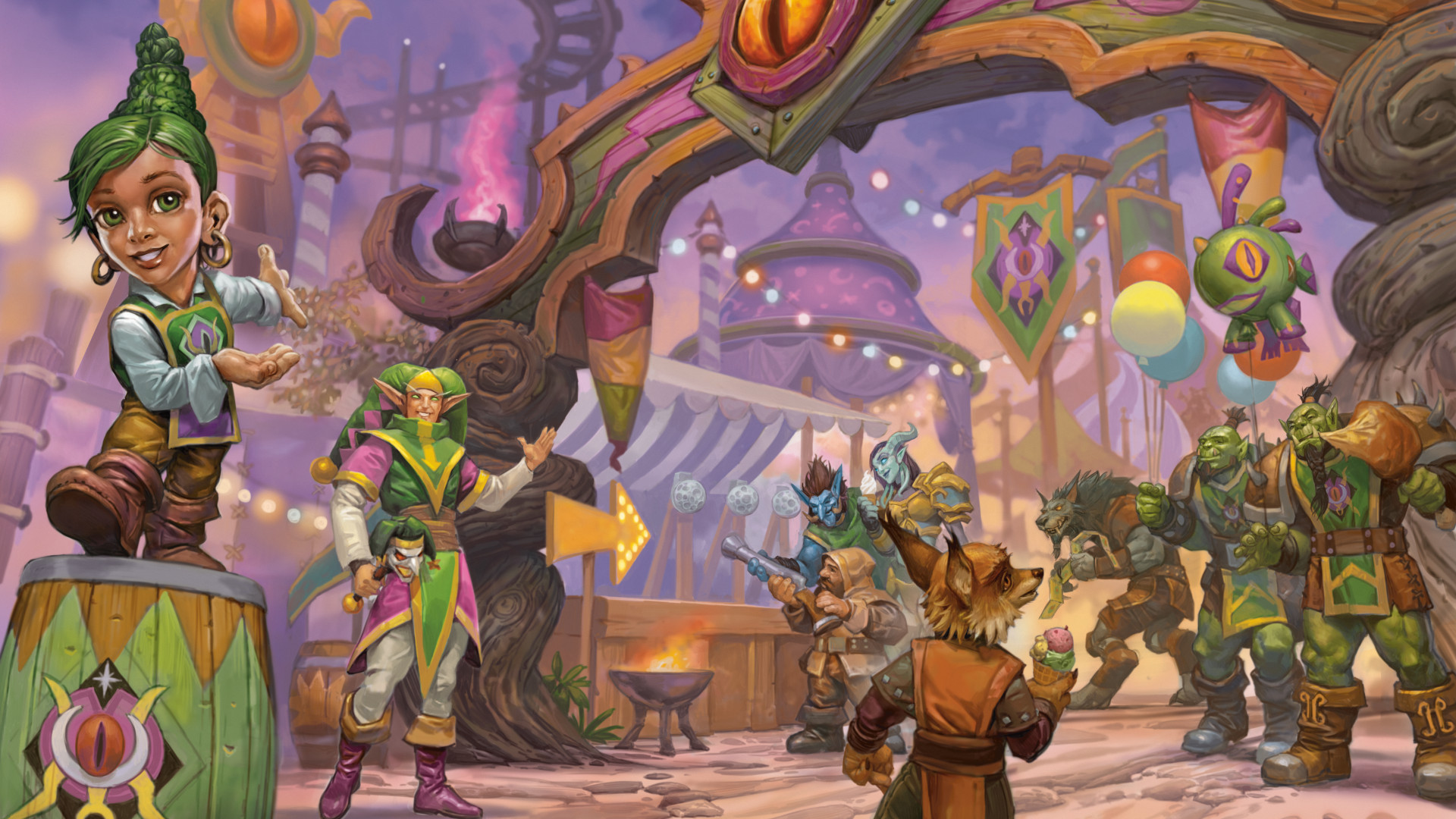
It also has a surprising amount of reused art, either from the WoW Trading Card Game or Hearthstone. Which is a shame, because the original art is infused with so much life and personality that it would have been great to have seen more of it, but if you’re familiar with the Warcraft universe, you’ll find yourself looking at many pieces you’ve already seen before.
Looking for group
So the book isn’t exactly a page-turner, which is something of an issue when trying to justify its purchase rather than just picking up the individual mechanical elements on something like D&D Beyond. The different spells, subclasses, and mechanical features are definitely worth looking at, and for me are enough cause to pay the cost of entry, but surely there must be more.
Other sourcebooks will offer in-depth examinations of different areas and their cultures, or provide insight into specific characters that could act as questgivers. The World of Warcraft sourcebook offers something less useful for running a campaign, and more useful for getting into the action – several dungeons to immediately jump into.
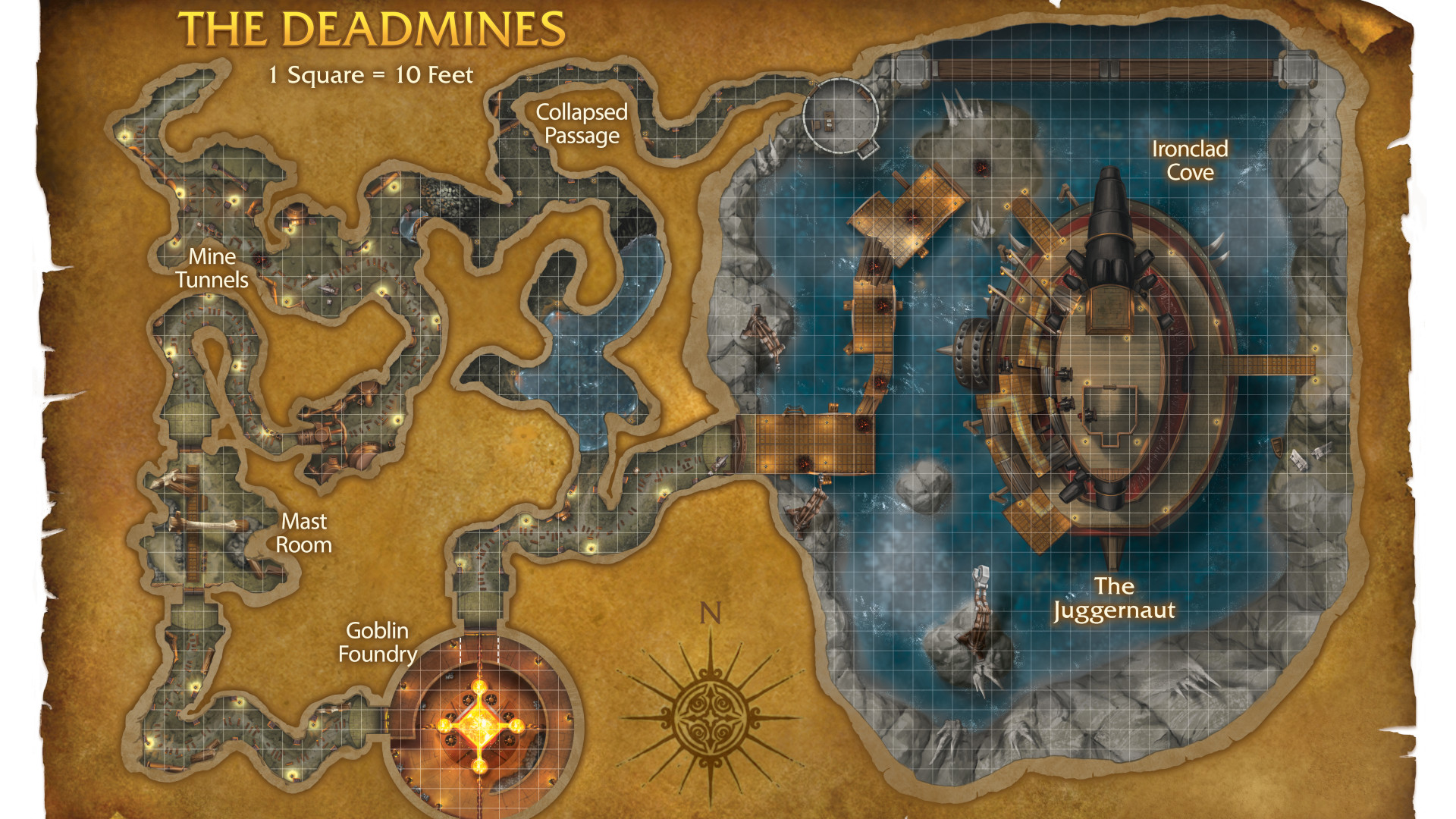
There are seven dungeons that you can run right away for various levels of adventurer and length of play, with detailed maps, different styles of enemy, loot tables, and even alternative bosses that you could include. This is where this sourcebook shines, and really highlights where World of Warcraft and Dungeons and Dragons really work well together.
Each of these dungeons is an adventure in and of itself, and then once those are done you can go away and use the expanded renown and profession rules during an abstract downtime. For those who want to come into a dungeon-crawling adventure, or who want to simulate that World of Warcraft feeling on the tabletop, it’s kind of perfect.
This sourcebook might leave a little too much to the Dungeon Master when it comes to setting up the world, but if there were intentions to release more dungeons – such as the Icecrown Citadel adventure that’s releasing at the same time – then the D&D World of Warcraft sourcebook has more than succeeded.
FAQs
The Dungeons and Dragons World of Warcraft sourcebook has an early-access release of November 3, 2026, and a general release of November 17, 2026.
There are quite a few new subclasses in the D&D World of Warcraft sourcebook. Paladins get the Oath of the Holy, and the Death Knight Oath of the Ebon Blade. Rangers get the Demon Hunter subclass; Barbarians get the Path of the Elements; Clerics get the Discipline and Shadow domains. There are also updated subclasses for the Monk with the Warrior of Mystic Brews, the Barbarian with the Path of the Spiritual Guardian, and the Rogue with the Swashbuckler.
Every playable race from World of Warcraft is playable, though not all of them get new rules. In addition, there are also rules to play the Taunka, Amani Trolls, and Krokul Draenei despite them not being playable in-game.