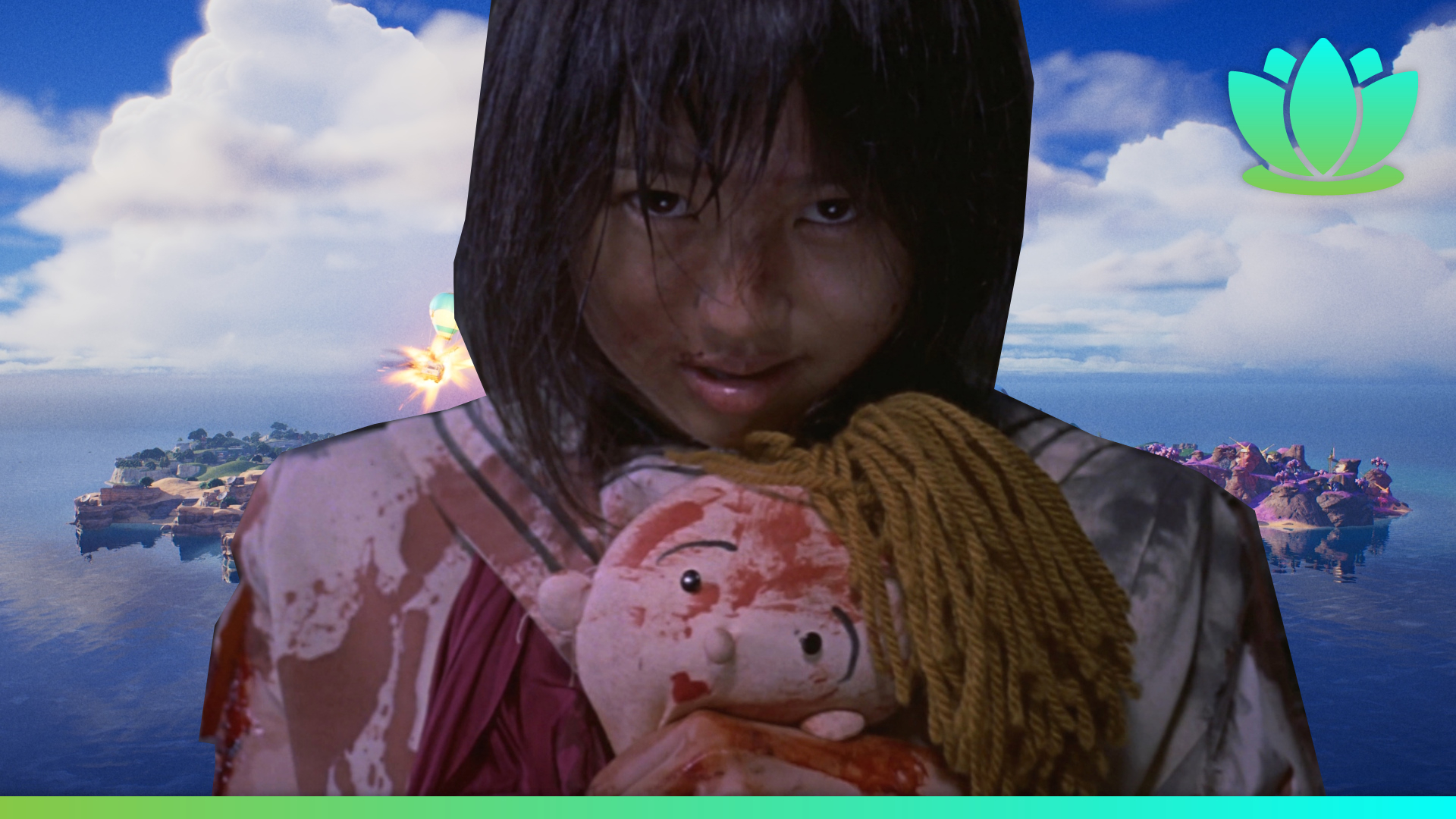
Image credit: Toei / Epic Games
There’s no getting around the fact that Fortnite is still the biggest game in the world. The battle royale third-person shooter has blossomed into its own ecosystem, featuring everything from Rocket League, Lego, and even a Guitar Hero-inspired game mode in Festival, but it’s still lacking the biggest lesson from its inspiration.
Battle Royale took audiences by storm in 2000 for its brutal and grounded take on what would happen in a fascist totalitarian dystopian society. In short, 42 students are dropped onto an island equipped with some kind of defensive or offensive item over a three day period. It’s a case of kill or be killed until only one person remains.
In Fortnite, you drop into the island against 100 players where you land only armed with a pickaxe and must find melee or ranged weaponry throughout the island to try to stay alive. It’s all well and good in theory, sure, but the drop-based RNG means that firefights can often be one-sided, particularly if clusters of players gravitate towards crowded POIs; a lot could change if Epic Games followed Battle Royale closer.
Starting with weapons changes the stakes
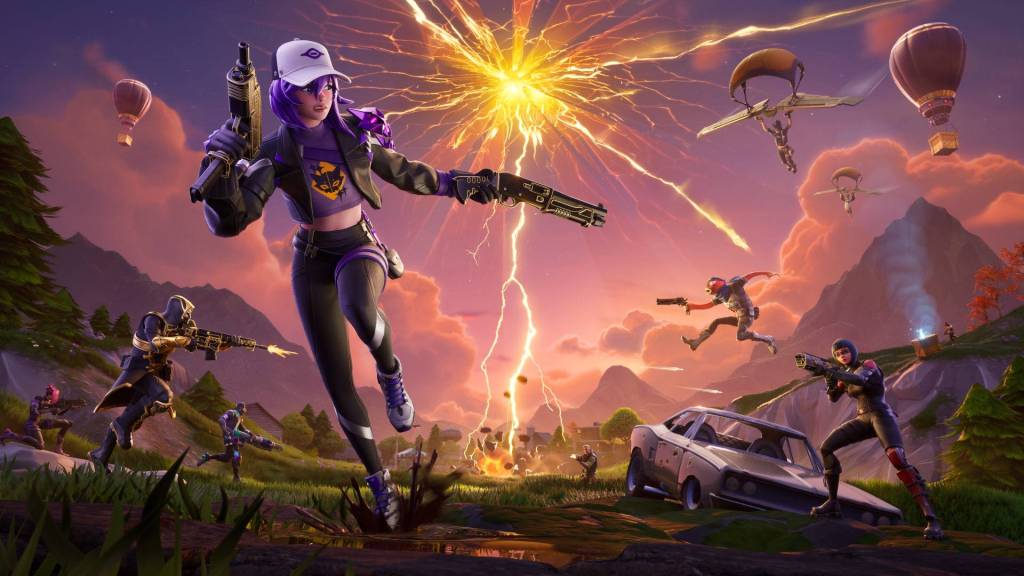
Instead of finding firearms in chests or throughout a POI, the dynamics of Fortnite would become far more intense if every combatant started with a weapon of varying quality. In Battle Royale, there’s a vast gap in lethality with each student’s assigned weapon. Yes, the likes of Ryuhei Sasagawa and Hirono Shimizu started with an Uzi or M1911A1, but the nuances are far more exciting.
That’s because other students in Battle Royale were expected to keep themselves alive with far less practical weaponry. Pistols and rifles are a rarity as far less conventional items were handed to kids, such as a paper fans, coat hangers, pot lids, binoculars, forks, ropes, GPS trackers, and stun guns into the mix.
As such, a new Fortnite game mode could see players drop onto the map armed with a less lethal weapon and they would need to employ guerilla tactics to get ahead. Without the guarantee of a weapon drop, and ammunition wholly limited to a single magazine, fights would require more strategy to live through.
Melee fights in Fortnite need to be more viable
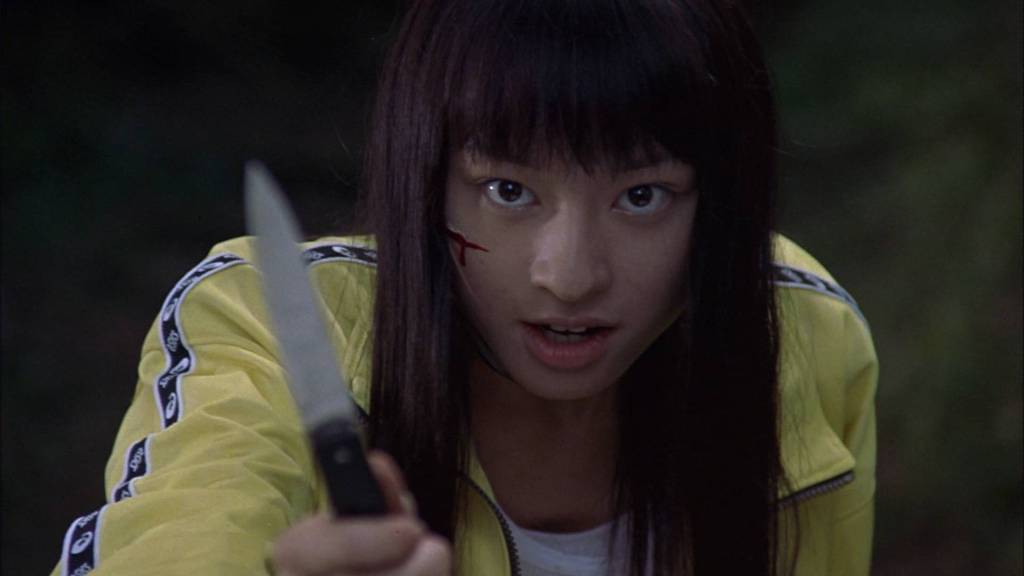
While Fortnite has its pickaxe to start with, the game has impressed with a variety of melee weapons throughout its updates. Battle Royale saw kids fighting with hand axes, katanas, kitchen knives, machetes, switch blades, boxing gloves and hammers. Powered by Unreal Engine 5, and benefitting from a ragdoll physics update, a real emphasis could be placed on fighting from a more grounded perspective.
If a combatant had a pistol or a rifle, things would become far more one-sided, but this is a problem Fortnite already suffers with. By limiting ammunition to a single round, it would prioritize smarter, more considered aiming, which would give melee fighters more of a chance to hold their own.
It’s unlikely most Fortnite players could one-tap their opponents from a distance, which means unloading four or five shots into the body from a moderate distance (roughly half a magazine) into a risky affair. Suddenly, heading into battle with a knife, katana or hammer isn’t such a death sentence.
Engagements could become a volatile game of risk versus reward. Hiding in shrubbery or dilapidated buildings to jump someone with a pistol, shotgun or rifle may be worth it if they’re yet to unload, but you could risk catching a bullet only to end up with an empty gun.
Epic Games is always adding new, creative game modes to Fortnite, so by leaning on the namesake of its inspiration, could make for a fresh new twist.
FAQs
Battle Royale refers to large scale fighting where a numbers are thinned out until only one person (or group) remains.
Every Fortnite game mode is free for all users with the exception of the horde-based Save the World. Epic Games makes money primarily from the Fortnite Item Shop, selling cosmetics at a premium.
A crown in Fortnite indicates a player has previously achieved a Victory Royale (or won a game).
No, Battle Royale is not based on a true story. Instead, it’s a fictionalized account of what would happen if Japan had won World War 2, and the country’s extremism escalated into culling its own young people. Other similar ideas in popular media include The Hunger Games.