An alleged industry insider, Nate the Hate, has claimed that a remake of The Legend of Zelda: Ocarina of Time could be released this year. The franchise as a whole celebrates its 40th anniversary in 2026, making (arguably) the best game in the series prime for a reimagining for a modern audience. With that said, it makes me ask whether it’s really needed and how faithful it would really be?
The case for remaking Ocarina of Time in 2026
There’s no getting around the fact that Ocarina of Time is an old game. The Nintendo 64 classic was released in November 1998, as the first title in the franchise to fully embrace the then-new power of the third dimension. It was released a full five years after Link’s Awakening for the Game Boy, which itself was remade for the Switch in 2019.
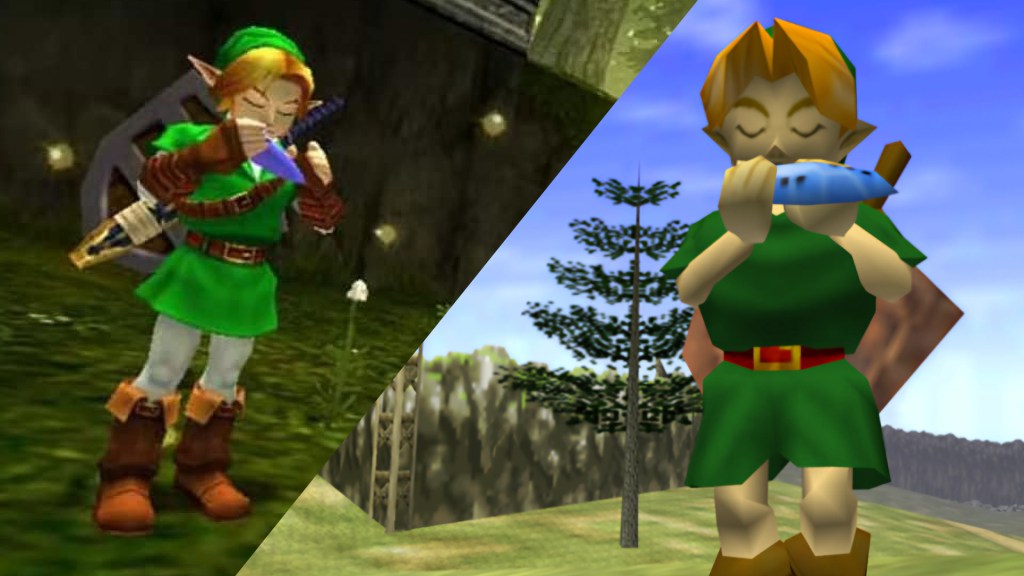
It’s fair to say that primitive 3D graphics, with their jagged low-polygon counts, small textures, and lacklustre lighting, don’t hold a candle to what was possible with sprite work from around the same time (or earlier). For all the innovations that Ocarina of Time brought to the series, including a fully movable 3D camera, Z-targeting combat system, and refined, detailed level design, it’s (arguably) harder to revisit.
Compare the base release of Ocarina of Time against its mainline console predecessor, A Link to the Past. The seminal top-down RPG is considerably older, having been released in April 1992 for a far weaker system, the 16-bit Super Nintendo. Side-by-side, the 3D action-adventure game boasts superior controls, a more immersive world, and enhanced combat, but it’s far uglier and clunkier as a result.
That’s the cost of progress. Innovation comes through strife, and Ocarina of Time is a consequence of that. Do dated visuals and of-the-time clunk detract from one of the greatest games of all time? I don’t think so, but there’s something else that needs to be addressed here.
Ocarina of Time was already remade once before
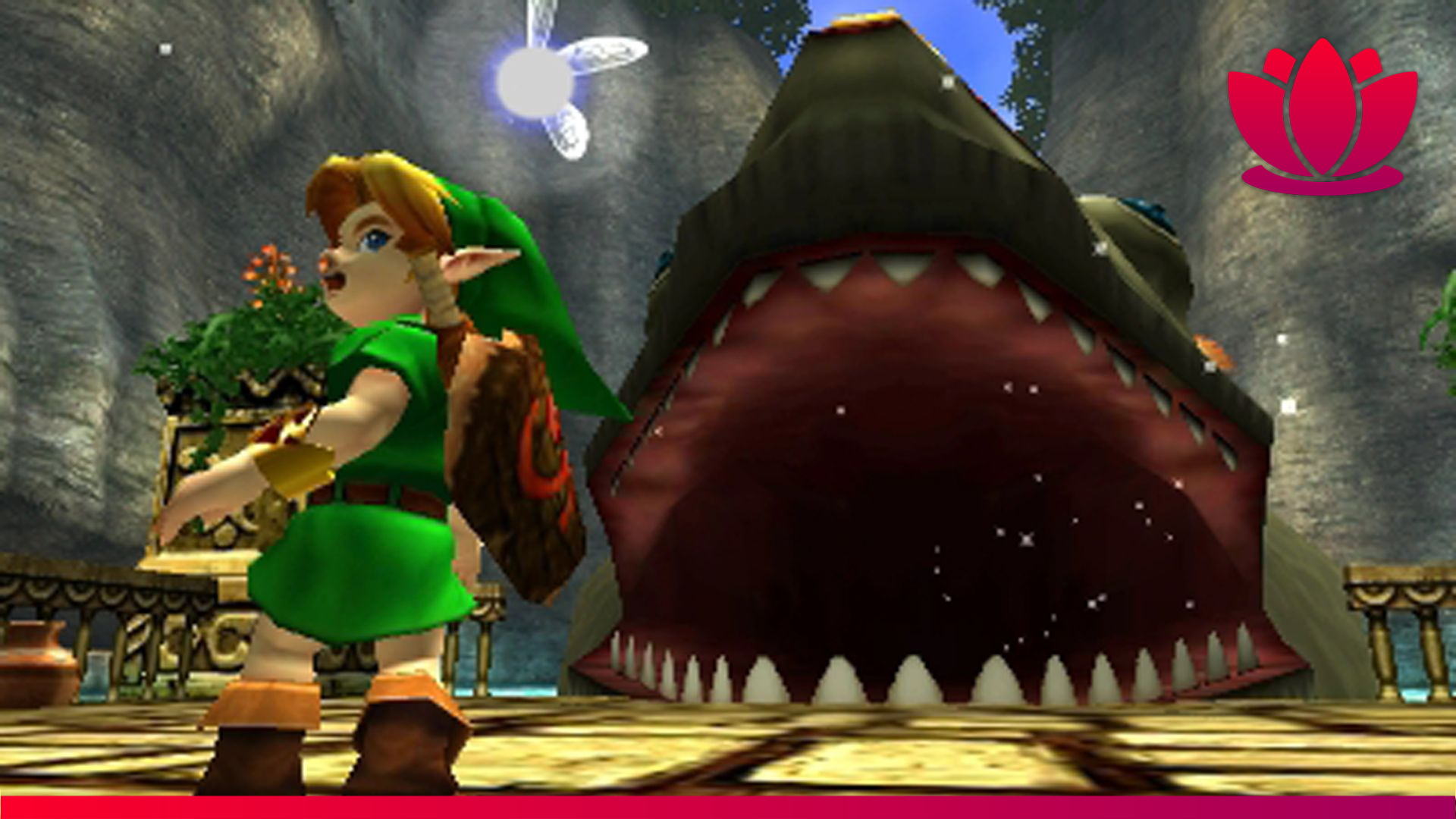
The Legend of Zelda: Ocarina of Time 3D debuted in the early months of the Nintendo 3DS’ lifespan. While on the surface it seemed like a straight conversion to the company’s then-new handheld (similar to Splinter Cell 3D and Rayman 3D), it was actually a ground-up remake.
Ocarina of Time 3D featured superior, higher-resolution visuals, a solid 30 fps rather than the inconsistent framerate of the original, and quality-of-life improvements: four item slots instead of three, quick-item switching, and gyro aiming. There was also Master Quest and a Boss Rush mode included by default, making it the definitive way to play.
But there’s a problem here. This version of the game was exclusive to the 3DS, as the remake was never brought to the Nintendo Switch. It’s believed that The Legend of Zelda: Ocarina of Time 3D sold 6.44 million copies in its lifetime, accounting for just under 10% of the lifetime 3DS hardware sales. Those are good numbers, sure, but people are still missing out.
More time has passed since the Ocarina of Time 3D remake launched than since the 3DS version launched after the N64 original. There are teenagers now who never played the remake of the action-adventure game, let alone the 64-bit original from nearly 30 years ago. As such, remaking OoT would appeal to a new generation, and for a much more successful system generation (Switch/Switch 2).
What should an Ocarina of Time remake look like?
Many gamers have speculated on exactly what a modern Ocarina of Time remake could look like. One of the most famous examples is an Unreal Engine 5 proof-of-concept by CryZENx, a game designer with nearly 250,000 YouTube subscribers.
This full playthrough, by The Game Archivist, showcases many of the iconic locations from Ocarina of Time, including The Great Deku Tree, the fields of Hyrule, and even the Fire Temple. Despite the new emergent lighting, the overall look and feel of the 1998 original is (largely) maintained, even if the visuals are far and away what we can realistically expect from Switch or Switch 2 hardware.
Nintendo has been faithful with its remakes in the past. As mentioned previously, the Link’s Awakening remake retained the top-down gameplay, map, combat, and narrative of the original, but changed the art style to a more Chibi look.
Ocarina of Time has a distinct art style; it’s not as grounded or “realistic” as Twilight Princess, nor is it cell-shaded like Wind Waker or as colorful as Skyward Sword. As such, it will be a delicate balance in faithfully reimaginging the game for a new audience.
Less is more here. What I don’t want to see is a betrayal of the game, turning it into something Ocarina of Time never was. A remake should update the resolution, double the framerate, improve the lighting, and follow the 3DS version’s example while getting it running on Switch/Switch 2. There’s no need to fix what isn’t broken.
FAQs
While there’s no native Ocarina of Time Switch port, you can play the N64 original via the Nintendo Switch Online Expansion Pak. It’s essentially the same version that was on the Wii Virtual Console, and not the enhanced 3DS port.
No Ocarina of Time remake has been officially confirmed by Nintendo yet; however, an alleged industry insider, Nate the Hate, claims it could come out this year.
Majora’s Mask is considered the darkest Legend of Zelda game for its light horror aesthetic, end-of-the-world narrative, and overall gloomy atmosphere.
While it’s up for debate if Ocarina of Time is the best game ever made, a case can be made. The 1998 title tops Metacritic’s list of the best games, with a 99 Metascore.